Monoclonal Antibodies
Anti-Mannose Receptor/CD206 Monoclonal Antibody for WB, IF-P, IHC-P, ELISA - P22897
Item Number : CM0008934
Price varies based on specs and customizations
- Application
- WB, IF-P, IHC-P, ELISA
- Cross Reactivity
- Human
- Protein Weight
- 166kDa

Shipping:
Contact us to get shipping details Enjoy On-time Dispatch Guarantee.
Why Choose Us
Easy ordering process, quality products, and dedicated support for your business success.
Core Product Specifications and Parameters
| Parameter | Value |
|---|---|
| Product Name | Mannose Receptor/CD206 Rabbit mAb |
| Remarks/Alias | MMR; hMR; CD206; MRC1L1; CLEC13D; CLEC13DL; bA541I19.1 |
| Species | Human |
| GeneID (human) | 4360 |
| GeneID | 4360 |
| Immunogen | Recombinant protein|Recombinant fusion protein containing a sequence corresponding to amino acids 19-1389 of human Mannose Receptor/CD206 (NP_002429.1). |
| Source | Rabbit |
| Category | Monoclonal Antibodies |
| Application | WB, IF-P, IHC-P, ELISA |
| Cross Reactivity | Human |
| SWISS | P22897 |
| Protein Weight | 166kDa |
| Shipping | Ice bag |
Biological Background: Mannose Receptor/CD206 Function and Localization
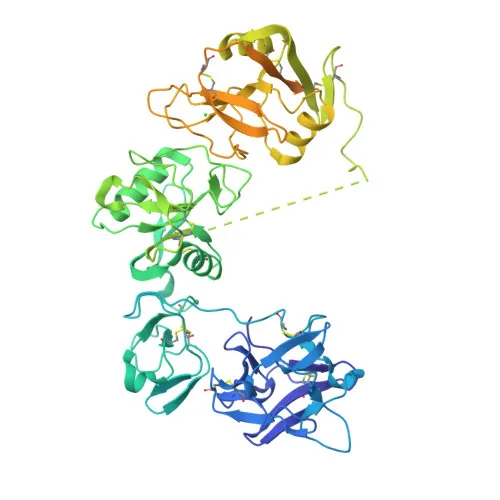
- Macrophage mannose receptor 1 (MMR, CD206) is a multi-domain transmembrane glycoprotein belonging to the C-type lectin family, primarily expressed on tissue macrophages.
- It mediates endocytosis of glycoproteins by binding sulfated and non-sulfated polysaccharide chains through its extracellular lectin domains.
- Functions as a phagocytic receptor for a broad range of pathogens, including bacteria and fungi, aiding in innate immune clearance.
- Serves as a cellular entry receptor for Dengue virus via interaction with its envelope protein E, and also interacts with Hepatitis B virus envelope protein.
- The receptor contains multiple C-type lectin domains, an extracellular region with fibronectin type II repeats, a transmembrane helix, and a short cytoplasmic tail.
- Expressed on the cell surface and in early endosomes, it recycles constitutively between the plasma membrane and endosomal compartments.
- The protein undergoes post-translational modifications including N-linked glycosylation and disulfide bond formation, critical for its structural integrity.
- Alternative splicing generates multiple isoforms, which may exhibit tissue-specific or functional differences.",
Experimental Guidance and Technical Tips
- The immunogen covers nearly the full-length extracellular region (aa 19–1389), suggesting the antibody may target multiple epitopes; it is well suited for western blotting under denaturing conditions.
- For immunofluorescence (IF-P) and immunohistochemistry (IHC-P), optimize fixation protocols (e.g., 4% PFA or methanol) to preserve antigenicity, and include permeabilization steps if detecting intracellular pools.
- In ELISA applications, consider pairing this antibody with a validated capture antibody to develop a sensitive sandwich assay for soluble or membrane-bound receptor detection.
- Validate antibody specificity in relevant macrophage cell lines (e.g., THP-1, U937) or primary human monocyte-derived macrophages; include appropriate positive and negative controls.
CamelBio: Your One-Stop Sourcing Bridge
CamelBio provides diagnostic manufacturers and research laboratories with comprehensive access to IVD raw materials, including this anti-Mannose Receptor/CD206 monoclonal antibody for studies in immunology, infectious disease, and macrophage biology. We offer one-stop supply solutions covering validated antibody pairs, bulk recombinant proteins, and ancillary reagents to streamline your assay development and production workflows. Contact us to discuss custom conjugation, technical consulting, and procurement for your next project.
Product Datasheet
Anti-Mannose Receptor/CD206 Monoclonal Antibody for WB, IF-P, IHC-P, ELISA - P22897
REQUEST A QUOTE
Our professional team will reply to you within one business day. Please feel free to contact us!