Polyclonal Antibodies
Anti-LRRK1 Polyclonal Antibody for WB, ELISA - Q38SD2
Item Number : CM0024055
Price varies based on specs and customizations
- Application
- WB, ELISA
- Cross Reactivity
- Human
- Protein Weight
- 225kDa

Shipping:
Contact us to get shipping details Enjoy On-time Dispatch Guarantee.
Why Choose Us
Easy ordering process, quality products, and dedicated support for your business success.
Core Product Specifications and Parameters
| Parameter | Value |
|---|---|
| Product Name | LRRK1 Rabbit pAb |
| Remarks/Alias | OSMD; RIPK6; Roco1; LRRK1 |
| Species | Human |
| GeneID (Human) | 79705 |
| GeneID | 79705 |
| Immunogen | Recombinant fusion protein containing a sequence corresponding to amino acids 10-90 of human LRRK1 (NP_078928.3) |
| Source | Rabbit |
| Category | Polyclonal Antibodies |
| Application | WB, ELISA |
| Cross Reactivity | Human |
| SWISS | Q38SD2 |
| Protein Weight | 225kDa |
| Shipping | Ice bag |
Biological Background: LRRK1 Function and Localization
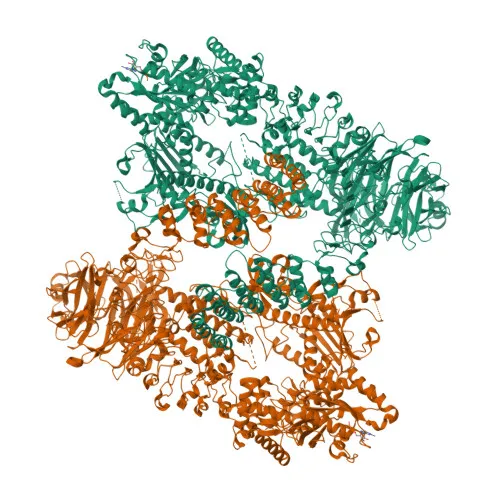
- LRRK1 (Leucine-rich repeat serine/threonine-protein kinase 1), also known as OSMD, RIPK6, or Roco1, is a large multidomain kinase containing leucine-rich repeats (LRRs), ANK repeats, ROC GTPase domain, kinase domain, and WD40 repeats.
- It functions as a serine/threonine-protein kinase that phosphorylates RAB proteins, primarily RAB7A, in a protein kinase C (PKC)-dependent manner, thereby regulating intracellular vesicle trafficking (PubMed:36040231, PubMed:37558661, PubMed:37857821). Related references: PMID:36040231 PMID:37558661 PMID:37857821
- LRRK1 acts as a negative regulator of bone mass by promoting the maturation of osteoclasts, linking its activity to bone remodeling and metabolic bone diseases.
- Subcellularly, LRRK1 localizes to the cytoplasm and cell membrane, consistent with its role in membrane-associated signaling and trafficking.
- The protein harbors ATP- and GTP-binding sites and requires divalent cations (Mg²⁺, Mn²⁺) for enzymatic activity, and is subject to phosphorylation for regulation.
Experimental Guidance and Technical Tips
- The immunogen corresponds to the N-terminal region (amino acids 10–90) of human LRRK1. This region is not within the kinase domain, so the antibody may recognize both inactive and active forms.
- For Western blot, a band around 225 kDa is expected. Optimize denaturation conditions (e.g., mild heating or room temperature incubation) to minimize aggregation of this large protein.
- ELISA can be used for quantitative detection; consider pairing with a capture antibody targeting a different epitope to avoid competition.
- Cross-reactivity is validated for human; test in other species if needed, as sequence homology may allow detection.
CamelBio: Your One-Stop Sourcing Bridge
CamelBio provides comprehensive raw material solutions for IVD developers, connecting you with high-quality antibodies like this anti-LRRK1 polyclonal antibody to support bone metabolism and intracellular trafficking research. Our supply chain covers validated polyclonal and monoclonal antibodies, antibody pairs, and bulk ancillary reagents, along with technical consulting to streamline assay development. For rare or emerging targets, CamelBio’s global sourcing network ensures a tailored, one-stop procurement experience from concept to clinic.
REQUEST A QUOTE
Our professional team will reply to you within one business day. Please feel free to contact us!