Polyclonal Antibodies
Anti-LRG1 Rabbit Polyclonal Antibody for WB, IF-P, ELISA - P02750
Item Number : CM0025741
Price varies based on specs and customizations
- Application
- WB, IF-P, ELISA
- Cross Reactivity
- Human, Mouse, Rat
- Protein Weight
- 38kDa

Shipping:
Contact us to get shipping details Enjoy On-time Dispatch Guarantee.
Why Choose Us
Easy ordering process, quality products, and dedicated support for your business success.
Core Product Specifications and Parameters
| Parameter | Value |
|---|---|
| Product Name | LRG1 Rabbit pAb |
| Remarks/Alias | LRG; HMFT1766; LRG1 |
| Species | Human |
| Gene ID (Human) | 116844 |
| Gene ID | 116844 |
| Immunogen | Recombinant fusion protein containing a sequence corresponding to amino acids 36-347 of human LRG1 (NP_443204.1). |
| Source | Rabbit |
| Category | Polyclonal Antibodies |
| Application | WB, IF-P, ELISA |
| Cross Reactivity | Human, Mouse, Rat |
| SWISS | P02750 |
| Protein Weight | 38kDa |
| Shipping | Ice bag |
Biological Background: LRG1 Function and Localization
- LRG1 encodes leucine-rich alpha-2-glycoprotein, a secreted plasma protein characterized by leucine-rich repeats.
- The protein contains multiple leucine-rich repeats (LRRs), which are structural motifs commonly involved in protein-protein interactions.
- LRG1 is secreted from cells and found in plasma, indicating a primarily extracellular localization and function.
- The protein is a glycoprotein with documented disulfide bonds, suggesting post-translational modifications that may influence its structure and stability.
- A signal peptide is present at the N-terminus, directing the nascent protein to the endoplasmic reticulum for secretion.
- LRG1 has been identified through proteomics approaches as part of the human reference proteome, supporting its detection in plasma.
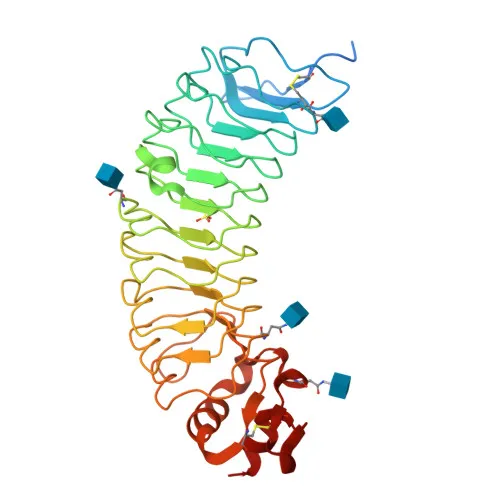
- Its three-dimensional structure has been experimentally determined, providing a basis for studying ligand interactions and conformational dynamics.
Experimental Guidance and Technical Tips
- The immunogen, a recombinant fragment spanning amino acids 36–347, covers the majority of the mature LRG1 protein, including the leucine-rich repeat region; this design may favor recognition of both native and partially denatured epitopes.
- For Western blot, consider running both reduced and non-reduced samples to evaluate potential disulfide-linked dimeric or oligomeric forms, as LRG1 contains disulfide bonds.
- The predicted molecular weight is approximately 38 kDa; however, glycosylation may lead to a higher apparent mass on SDS-PAGE. Validate with a relevant cell or plasma sample.
- In immunofluorescence experiments, LRG1 is secreted, so staining under non-permeabilizing conditions may detect extracellular or cell-surface-associated protein; intracellular detection may require permeabilization and co-staining with secretory pathway markers.
- The antibody cross-reacts with mouse and rat, enabling translational studies in these model organisms; optimization and validation with species-appropriate positive controls is recommended.
- For ELISA applications, the polyclonal nature can provide sensitive detection; consider careful titration and use of appropriate blocking steps, especially when testing plasma samples.
CamelBio: Your One-Stop Sourcing Bridge
CamelBio is a one-stop procurement partner for IVD raw materials, supporting diagnostic developers from initial concept to clinical application. This anti-LRG1 antibody aids in plasma biomarker research and immunoassay development, addressing needs in inflammation, cancer, and other disease areas. In addition to this product, we offer validated antibody pairs, optimized monoclonals and polyclonals, bulk ancillary reagents, and tailored sourcing for rare or emerging targets to streamline your supply chain.
REQUEST A QUOTE
Our professional team will reply to you within one business day. Please feel free to contact us!