Polyclonal Antibodies
Anti-LHCGR Polyclonal Antibody for WB, IF-P, ELISA - P22888
Item Number : CM0020050
Price varies based on specs and customizations
- Application
- WB, IF-P, ELISA
- Cross Reactivity
- Mouse
- Protein Weight
- 71kDa/78kDa

Shipping:
Contact us to get shipping details Enjoy On-time Dispatch Guarantee.
Why Choose Us
Easy ordering process, quality products, and dedicated support for your business success.
Core Product Specifications and Parameters
| Parameter | Value |
|---|---|
| Product Name | LHCGR Rabbit pAb |
| Remarks/Alias | LHCGR; HHG; LCGR; LGR2; LH/CG-R; LH/CGR; LHR; LHRHR; LSH-R; ULG5; lutropin-choriogonadotropic hormone receptor |
| Species | Human |
| Gene ID (Human) | 3973 |
| Gene ID | 3973 |
| Immunogen | Synthetic Peptide |
| Source | Rabbit |
| Category | Polyclonal Antibodies |
| Application | WB, IF-P, ELISA |
| Cross Reactivity | Mouse |
| SWISS | P22888 |
| Protein Weight | 71kDa/78kDa |
| Shipping | Ice bag |
Biological Background: LHCGR Function and Localization
- LHCGR encodes the lutropin-choriogonadotropic hormone receptor, also known as luteinizing hormone receptor (LHR). The gene yields multiple isoforms via alternative splicing.
- The receptor mediates the actions of lutropin (LH) and choriogonadotropin (CG) through G protein-coupled signaling, activating adenylate cyclase (PubMed:11847099). Related references: PMID:11847099
- LHCGR is a member of the glycoprotein hormone receptor subfamily within the G protein-coupled receptor (GPCR) superfamily, characterized by a large extracellular domain containing leucine-rich repeats.
- The protein localizes to the cell membrane, consistent with its function as a transmembrane receptor.
- LHCGR is subject to several post-translational modifications, including N-linked glycosylation, palmitoylation, sulfation, and disulfide bond formation, which are critical for receptor function and stability.
- Tissue expression is primarily restricted to gonadal and thyroid cells, reflecting its central role in reproductive hormone signaling.
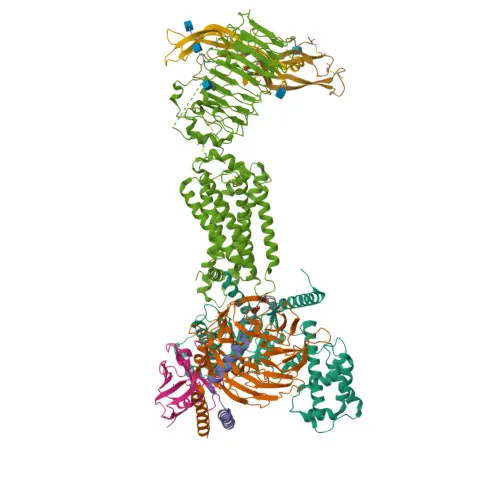
- Clinically, mutations in LHCGR are associated with disease variants, and the protein has been structurally characterized by 3D-structure determination.
Experimental Guidance and Technical Tips
- The immunogen is a synthetic peptide within amino acids 200–300 of human LHCGR (NP_000224.2). This region may be selected for conserved sequence characteristics, potentially supporting cross-reactivity with mouse LHCGR as indicated by the product specifications.
- For Western blot (WB), expected bands may be observed around the calculated molecular weight of 71–78 kDa based on the supplied protein weight; note that post-translational modifications can cause shifts.
- In immunofluorescence-paraffin (IF-P), consider appropriate permeabilization and antigen retrieval methods for membrane targets; validation in relevant gonadal or thyroid tissue samples is recommended.
- For ELISA applications, pairing with a suitable detection antibody and confirming linearity and sensitivity in the intended sample matrix (e.g., serum, plasma) is advised.
CamelBio: Your One-Stop Sourcing Bridge
CamelBio supplies diagnostic manufacturers, laboratories, and research institutes with a comprehensive portfolio of IVD raw materials, including validated antibody pairs and optimized monoclonal/polyclonal antibodies for targets like LHCGR, a key GPCR in reproductive endocrinology. Beyond individual reagents, we provide bulk ancillary reagents and facilitate rare target raw-material sourcing to support your assay development from concept to clinic. Let CamelBio be your trusted B2B partner in building robust, reproducible diagnostic solutions.
REQUEST A QUOTE
Our professional team will reply to you within one business day. Please feel free to contact us!