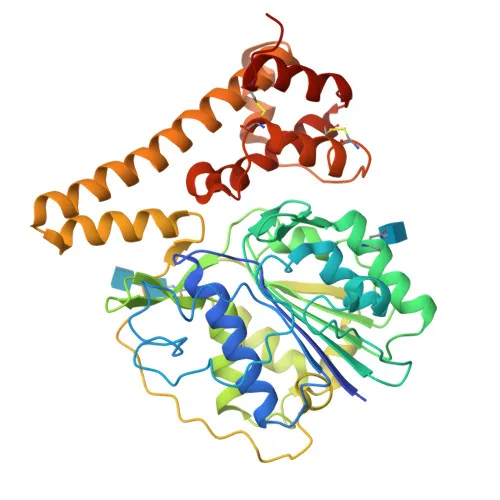
Monoclonal Antibodies
Anti-Legumain (LGMN) Rabbit Monoclonal Antibody for WB, IF-P, IHC-P, ELISA - Q99538
Item Number : CM0006974
Price varies based on specs and customizations
- Application
- WB, IF-P, IHC-P, ELISA
- Cross Reactivity
- Human, Mouse, Rat
- Protein Weight
- 42kDa/49kDa

Shipping:
Contact us to get shipping details Enjoy On-time Dispatch Guarantee.
Why Choose Us
Easy ordering process, quality products, and dedicated support for your business success.
Core Product Specifications and Parameters
| Parameter | Specification |
|---|---|
| Product Name | Legumain (LGMN) Rabbit mAb |
| Remarks/Alias | LGMN; AEP; LGMN1; PRSC1; legumain; Legumain (LGMN) |
| Species | Human |
| Gene ID | 5641 |
| Immunogen | Recombinant fusion protein containing a sequence corresponding to amino acids 26-288 of human Legumain (LGMN). (NP_005597.3) |
| Source | Rabbit |
| Category | Monoclonal Antibodies |
| Application | WB, IF-P, IHC-P, ELISA |
| Cross Reactivity | Human, Mouse, Rat |
| SWISS | Q99538 |
| Protein Weight | 42kDa/49kDa |
| Shipping | Ice bag |
Biological Background: Legumain Function and Localization
- Legumain, also known as asparaginyl endopeptidase (AEP), is a cysteine protease with strict specificity for hydrolysis of asparaginyl bonds; it can also slowly cleave aspartyl bonds under acidic conditions. Related references: PMID:23776206
- It plays a critical role in MHC class II antigen presentation by processing proteins in the lysosomal/endosomal system. Related references: PMID:9872320
- In cross-presenting dendritic cells, legumain mediates MHC class I antigen presentation by cleaving and maturing Perforin-2 (MPEG1), facilitating antigen translocation into the cytosol.
- Legumain is required for normal lysosomal protein degradation in renal proximal tubules and for degradation of internalized EGFR, thereby regulating cell proliferation.
- The protein localizes predominantly to lysosomes and is ubiquitously expressed, with highest abundance in kidney, heart, and placenta.
- Legumain is synthesized as a zymogen, undergoes autoproteolytic activation, and exists as multiple isoforms through alternative splicing; it contains disulfide bonds and N-linked glycosylation sites.
Experimental Guidance and Technical Tips
- The immunogen (amino acids 26-288) corresponds to the legumain proform lacking the signal peptide, so the antibody may recognize both proform (~49 kDa) and mature enzyme (~42 kDa) in Western blot.
- For WB, consider loading adequate protein and using appropriate blocking agents, as legumain may appear as a doublet due to processing or glycosylation differences.
- In IF-P and IHC-P, anticipate punctate, lysosomal staining; include organelle markers to verify localization.
- The antibody cross-reacts with mouse and rat legumain, enabling comparative studies across species; however, validate in your sample system as expression levels and processing may vary.
CamelBio: Your One-Stop Sourcing Bridge
CamelBio serves as a comprehensive IVD raw-material partner, streamlining procurement for diagnostic manufacturers and research laboratories. Beyond the Legumain (LGMN) antibody, we offer a broad portfolio of validated antibody pairs, optimized monoclonal/polyclonal antibodies, bulk ancillary reagents, and specialized sourcing for rare targets—supporting your projects from antigen presentation research to lysosomal function assays. Contact us to discuss how our global supply network can accelerate your development pipeline.
Product Datasheet
Anti-Legumain (LGMN) Rabbit Monoclonal Antibody for WB, IF-P, IHC-P, ELISA - Q99538
REQUEST A QUOTE
Our professional team will reply to you within one business day. Please feel free to contact us!