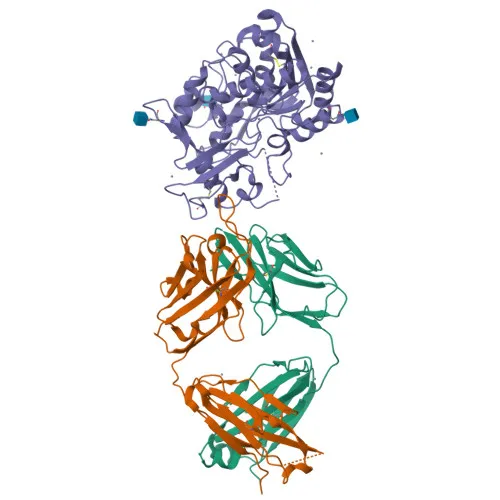
Polyclonal Antibodies
Anti-LCAT Rabbit Polyclonal Antibody for WB and ELISA - P04180
Item Number : CM0015797
Price varies based on specs and customizations
- Application
- WB, ELISA
- Cross Reactivity
- Mouse
- Protein Weight
- 50kDa

Shipping:
Contact us to get shipping details Enjoy On-time Dispatch Guarantee.
Why Choose Us
Easy ordering process, quality products, and dedicated support for your business success.
Core Product Specifications and Parameters
| Parameter | Value |
|---|---|
| Product Name | LCAT Rabbit pAb |
| Remarks/Alias | LCAT |
| Species | Human |
| Gene ID (Human) | 3931 |
| Gene ID | 3931 |
| Immunogen | Recombinant fusion protein containing a sequence corresponding to amino acids 25-440 of human LCAT (NP_000220.1) |
| Source | Rabbit |
| Category | Polyclonal Antibodies |
| Application | WB, ELISA |
| Cross Reactivity | Mouse |
| SWISS | P04180 |
| Protein Weight | 50kDa |
| Shipping | Ice bag |
Biological Background: LCAT Function and Localization
-
LCAT (Phosphatidylcholine-sterol acyltransferase), also known as lecithin-cholesterol acyltransferase, is a central enzyme in extracellular lipoprotein metabolism, synthesized predominantly in the liver and secreted into plasma. It catalyzes the conversion of cholesterol and phosphatidylcholines (lecithins) to cholesteryl esters and lysophosphatidylcholines on the surface of high and low density lipoproteins (HDLs and LDLs), facilitating reverse cholesterol transport (PubMed:10329423, PubMed:19065001, PubMed:26195816). Related references: PMID:10329423 PMID:19065001 PMID:26195816
-
The enzyme displays substrate specificity for plasma 16:0-18:2 or 18:O-18:2 phosphatidylcholines, contributing to the regulation of lipoprotein composition (PubMed:8820107). Related references: PMID:8820107
-
In the brain, LCAT is produced by astrocytes and esterifies free cholesterol on nascent APOE-containing lipoproteins, influencing cerebrospinal fluid APOE and APOA1 levels. Together with APOE and ABCA1, it is essential for the maturation of glial-derived lipoproteins and the remodeling of HDL particles into their spherical forms (PubMed:10722751). Related references: PMID:10722751
-
LCAT harbors an intrinsic platelet-activating factor acetylhydrolase (PAF-AH) activity, catalyzing both the hydrolysis of PAF to lyso-PAF and the transacetylation of PAF to 1-hexadecanoyl-sn-glycero-3-phosphocholine, linking lipoprotein metabolism to inflammatory mediator regulation (PubMed:8016111). Related references: PMID:8016111
-
The enzyme also esterifies (24S)-hydroxycholesterol (cerebrosterol) to produce 24(S)OH-C monoesters, a reaction potentially relevant to brain cholesterol homeostasis (PubMed:24620755). Related references: PMID:24620755
-
As a secreted protein, LCAT acts primarily in the extracellular space, including plasma and cerebrospinal fluid, where it modifies circulating lipoproteins. It is a glycoprotein containing a signal peptide and disulfide bonds critical for its structural integrity.
-
Tissue expression is highest in the liver, brain, and testes, with significant detection in blood plasma and cerebral spinal fluid, consistent with its roles in systemic and neural lipid metabolism.
-
Pathogenic variants in LCAT are associated with corneal dystrophy and disorders of HDL metabolism, underscoring its clinical relevance in lipid-related diseases.
Experimental Guidance and Technical Tips
- The immunogen spans nearly the full length of human LCAT (amino acids 25–440), suggesting that the antibody may recognize multiple epitopes and is suitable for detecting both native and denatured protein.
- For Western blotting, use standard SDS-PAGE and transfer conditions; the predicted molecular weight is approximately 50 kDa. Due to the polyclonal nature, multiple bands may appear; include appropriate negative and positive controls.
- Cross-reactivity with mouse LCAT has been reported, making this antibody a candidate for studies in murine models; however, validate species-specific reactivity in your experimental system.
- In ELISA applications, optimize the coating antigen concentration and antibody dilution to achieve the desired sensitivity, as polyclonal antibodies may exhibit varied binding characteristics.
CamelBio: Your One-Stop Sourcing Bridge
CamelBio provides a comprehensive portfolio of IVD raw materials, including validated antibody pairs, optimized monoclonal and polyclonal antibodies, and bulk ancillary reagents, facilitating research from concept to clinic. This anti-LCAT antibody supports investigations into cholesterol metabolism and cardiovascular disease. For specialized needs such as rare target sourcing, custom antibody development, or technical consultation, CamelBio offers integrated solutions to accelerate your diagnostic or research projects.
REQUEST A QUOTE
Our professional team will reply to you within one business day. Please feel free to contact us!