Polyclonal Antibodies
Anti-LAT1/SLC7A5 Polyclonal Antibody for WB, IF/ICC, ELISA - Q01650
Item Number : CM0028993
Price varies based on specs and customizations
- Application
- WB, IF/ICC, ELISA
- Cross Reactivity
- Human, Mouse, Rat
- Protein Weight
- 55kDa

Shipping:
Contact us to get shipping details Enjoy On-time Dispatch Guarantee.
Why Choose Us
Easy ordering process, quality products, and dedicated support for your business success.
Core Product Specifications and Parameters
| Parameter | Value |
|---|---|
| Product Name | LAT1/SLC7A5 Rabbit pAb |
| Remarks/Alias | E16; CD98; LAT1; 4F2LC; MPE16; D16S469E; LAT1/SLC7A5 |
| Species | Human |
| Gene ID (Human) | 8140 |
| Gene ID | 8140 |
| Immunogen | Recombinant fusion protein containing a sequence corresponding to amino acids 1-125 of human LAT1/SLC7A5 (NP_003477.4) |
| Source | Rabbit |
| Category | Polyclonal Antibodies |
| Application | WB, IF/ICC, ELISA |
| Cross Reactivity | Human, Mouse, Rat |
| SWISS | Q01650 |
| Protein Weight | 55kDa |
| Shipping | Ice bag |
Biological Background: LAT1/SLC7A5 Function and Localization
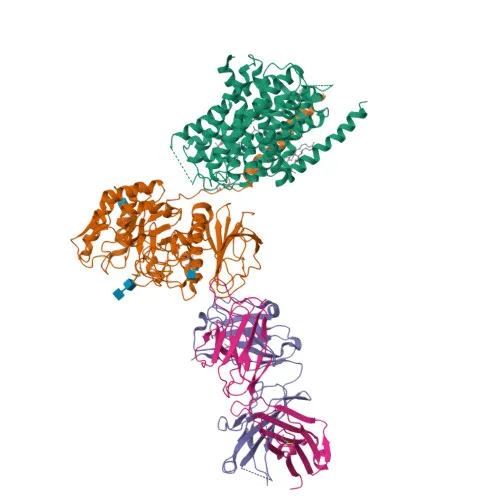
- LAT1/SLC7A5 encodes the large neutral amino acids transporter small subunit 1, also known as 4F2 light chain, CD98 light chain, E16, and hLAT1. It functions as a sodium-independent, high-affinity transporter that heterodimerizes with SLC3A2 to mediate cellular uptake of large neutral amino acids such as phenylalanine, tyrosine, leucine, histidine, methionine, tryptophan, valine, isoleucine, and alanine. Related references: PMID:10049700 PMID:10574970 PMID:11557028
- The transporter operates as an amino acid exchanger, mediating both influx and efflux of substrates, and is thought to play a role in the transport of L-DOPA across the blood-brain barrier. Related references: PMID:11557028 PMID:12117417 PMID:12225859
- Beyond amino acids, the SLC7A5-SLC3A2 complex transports thyroid hormones (T2, T3, T4) and is involved in the cellular uptake of 3-iodo-L-tyrosine (MIT) and 3,5-diiodo-L-tyrosine (DIT). Related references: PMID:11564694 PMID:26305885 PMID:38661522
- When associated with LAPTM4B, the heterodimer is recruited to lysosomal membranes, promoting leucine uptake into lysosomes and activating mTORC1 signaling. Related references: PMID:25998567
- LAT1 also mediates the uptake of toxic methylmercury (MeHg) when presented as L-cysteine or D,L-homocysteine complexes, and it is involved in the transport of L-nitrosocysteine (L-CNSO), affecting cellular nitrosothiol activity. Related references: PMID:12117417 PMID:15769744
- Subcellularly, the protein localizes to the apical cell membrane, the plasma membrane, and the lysosome membrane.
- Expression is detected in placenta (syncytiotrophoblast layer), adult lung, liver, brain, skeletal muscle, and many other tissues, with elevated levels in several tumor cell lines. Related references: PMID:11389679
- In hepatitis C virus infection, the SLC3A2-SLC7A5 complex facilitates viral entry and enhances mTORC1 signaling via L-leucine uptake, contributing to pathogenesis.
Experimental Guidance and Technical Tips
- The immunogen corresponds to the N‑terminal region (aa 1‑125) of human LAT1/SLC7A5; the polyclonal antibody may recognize multiple epitopes within this domain and potentially also detect splice variants or fragments containing this region.
- For Western blotting, the predicted molecular weight is approximately 55 kDa, but additional bands (e.g., glycosylated forms or the SLC3A2 heterodimer) may be observed under non‑reducing conditions; include appropriate controls and validate in the relevant sample system.
- In immunofluorescence/immunocytochemistry, permeabilization is required to access the intracellular N‑terminus; consider co‑staining with membrane markers to confirm expected plasma membrane or lysosomal localization.
- This antibody has been shown to cross‑react with mouse and rat samples, making it suitable for comparative studies, but always confirm specificity by knockdown or knockout controls when possible.
- For ELISA applications, the polyclonal nature may provide high sensitivity as a capture or detection reagent; however, lot‑to‑lot consistency should be verified if used in quantitative assays. Consider pairing with a monoclonal antibody for sandwich ELISA.
CamelBio: Your One-Stop Sourcing Bridge
CamelBio supports diagnostic manufacturers and research teams with a comprehensive portfolio of IVD raw materials, including validated antibody pairs, optimized monoclonal and polyclonal antibodies, and bulk ancillary reagents. For targets like LAT1/SLC7A5—a key transporter in amino acid metabolism and cancer—CamelBio can source rare raw materials and provide one-stop procurement solutions to streamline your development workflow.
REQUEST A QUOTE
Our professional team will reply to you within one business day. Please feel free to contact us!