Polyclonal Antibodies
Anti-KRR1 Polyclonal Antibody for WB, IF/ICC, ELISA - Q13601
Item Number : CM0026006
Price varies based on specs and customizations
- Application
- WB, IF/ICC, ELISA
- Cross Reactivity
- Human, Mouse, Rat
- Protein Weight
- 44kDa

Shipping:
Contact us to get shipping details Enjoy On-time Dispatch Guarantee.
Why Choose Us
Easy ordering process, quality products, and dedicated support for your business success.
Core Product Specifications and Parameters
| Parameter | Value |
|---|---|
| Product Name | KRR1 Rabbit pAb |
| Remarks/Alias | HRB2; RIP-1; KRR1 |
| Species | Human |
| Gene ID (Human) | 11103 |
| Immunogen | Recombinant fusion protein containing a sequence corresponding to amino acids 1-381 of human KRR1 (NP_008974.5). |
| Source | Rabbit |
| Category | Polyclonal Antibodies |
| Application | WB, IF/ICC, ELISA |
| Cross Reactivity | Human, Mouse, Rat |
| SWISS | Q13601 |
| Protein Weight | 44kDa |
| Shipping | Ice bag |
Biological Background: KRR1 Function and Localization
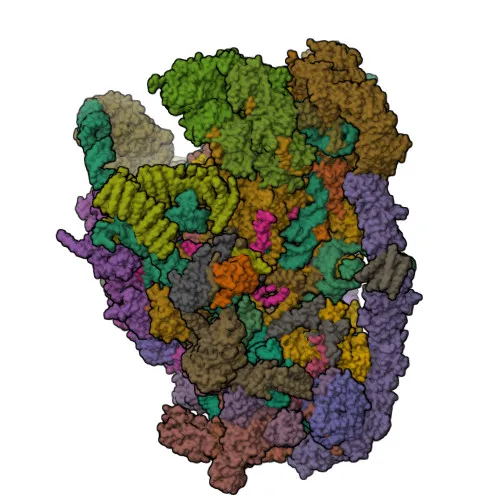
- KRR1 (KRR-R motif-containing protein 1), also known as HIV-1 Rev-binding protein 2 (HRB2) or Rev-interacting protein 1 (Rip-1), is a component of the small subunit (SSU) processome, the first precursor of the small eukaryotic ribosomal subunit.
- It plays a critical role in ribosome biogenesis by participating in the assembly of the SSU processome in the nucleolus, where it contributes to pre-rRNA folding, modifications, rearrangements, and cleavage.
- As part of a multiprotein complex, KRR1 associates with the nascent pre-rRNA, ribosomal proteins, and RNA chaperones to promote correct ribosomal RNA processing and targeted degradation by the RNA exosome.
- KRR1 localizes predominantly to the nucleolus within the nucleus, consistent with its function in early ribosome assembly; it is also detected in the cytoplasm.
- Post-translational modifications of KRR1 include acetylation, phosphorylation, and isopeptide bond formation (ubiquitination), which may regulate its activity or interactions.
- The protein is subject to alternative splicing, generating multiple isoforms that may have distinct roles or expression patterns.
- Keywords associated with KRR1 include ribonucleoprotein, ribosome biogenesis, RNA-binding, and rRNA processing, underscoring its central involvement in translational machinery assembly.
Experimental Guidance and Technical Tips
- This polyclonal antibody, raised against a recombinant fusion protein covering nearly the full-length human KRR1, is suited for Western blot (WB), immunofluorescence (IF/ICC), and ELISA applications.
- For WB, consider reducing SDS-PAGE and using a standard blocking buffer; the predicted protein weight is 44 kDa, though post-translational modifications may result in slight mobility shifts.
- In IF/ICC, anticipate nucleolar staining pattern with possible weaker cytoplasmic signal; permeabilization is required to detect nuclear/nucleolar localization.
- Cross-reactivity with mouse and rat has been reported; verify specificity in your model system before large-scale experiments.
- As a polyclonal reagent, batch-to-batch variability should be controlled; consider pre-adsorption tests for high-specificity requirements.
- For ELISA, pairing with a capture antibody may be needed; optimal dilutions for all assays should be empirically determined.
CamelBio: Your One-Stop Sourcing Bridge
CamelBio provides diagnostic manufacturers, laboratories, and research institutes with one-stop access to IVD raw materials, technical services, and consulting—covering every stage from concept to clinic. For studies on ribosome biogenesis and nucleolar processes, our offerings include validated antibody pairs, optimized monoclonal and polyclonal antibodies, bulk ancillary reagents, and rare target raw-material sourcing. Let CamelBio streamline your procurement and accelerate your research.
REQUEST A QUOTE
Our professional team will reply to you within one business day. Please feel free to contact us!