Polyclonal Antibodies
Anti-KPNA1 Rabbit Polyclonal Antibody for WB, IHC-P, ELISA - P52294
Item Number : CM0023511
Price varies based on specs and customizations
- Application
- WB, IHC-P, ELISA
- Cross Reactivity
- Human, Mouse, Rat
- Protein Weight
- 60 kDa

Shipping:
Contact us to get shipping details Enjoy On-time Dispatch Guarantee.
Why Choose Us
Easy ordering process, quality products, and dedicated support for your business success.
Core Product Specifications and Parameters
| Parameter | Value |
|---|---|
| Product Name | KPNA1 Rabbit pAb |
| Remarks/Alias | RCH2; SRP1; IPOA5; NPI-1; KPNA1 |
| Species | Human |
| Gene ID (Human) | 3836 |
| Gene ID | 3836 |
| Immunogen | Recombinant fusion protein containing a sequence corresponding to amino acids 1-300 of human KPNA1 (NP_002255.3) |
| Source | Rabbit |
| Category | Polyclonal Antibodies |
| Application | WB, IHC-P, ELISA |
| Cross Reactivity | Human, Mouse, Rat |
| SWISS | P52294 |
| Protein Weight | 60 kDa |
| Shipping | Ice bag |
Biological Background: KPNA1 Function and Localization
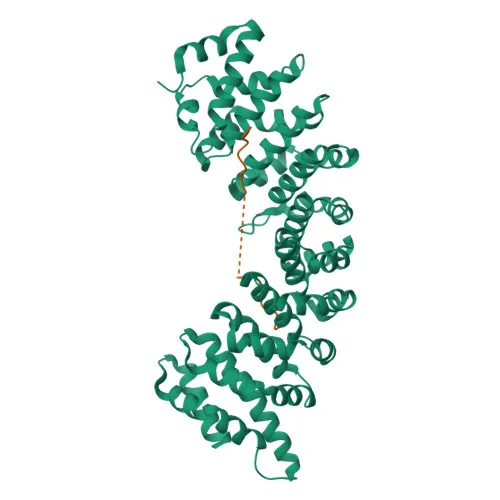
- KPNA1 (importin subunit alpha-5) is a 60 kDa adapter protein that functions as a karyopherin, mediating the nuclear import of cargo proteins (Alt Names: RCH2, SRP1, IPOA5, NPI-1; Gene: KPNA1).
- It binds directly to cargo proteins containing classical nuclear localization signals (NLS), either simple or bipartite motifs, and forms a ternary complex with importin-beta (KPNB1) for translocation through the nuclear pore complex. Related references: PMID:27713473, PMID:7892216, PMID:8692858
- The directionality of nuclear import is RanGTP-dependent; RanGTP binds to importin-beta in the nucleus, triggering dissociation of the import complex and recycling of importins back to the cytoplasm. Related references: PMID:7892216
- KPNA1 is ubiquitously expressed and shuttles between the cytoplasm and nucleus (SUBCELLULAR LOCATION: Cytoplasm, Nucleus).
- It has been implicated in the nuclear import of viral proteins, such as human cytomegalovirus UL84, recognizing a non-classical NLS during infection.
- Post-translational modifications include acetylation, phosphorylation, and ubiquitin-like conjugation (Proteomics identification), which may regulate its activity and interactions.
Experimental Guidance and Technical Tips
- For Western blot, expect a band at approximately 60 kDa. Use appropriate lysis buffers and loading controls.
- In IHC-P, optimize antigen retrieval conditions (e.g., heat-induced epitope retrieval with citrate buffer pH 6.0) and validate staining patterns in relevant tissues.
- Due to sequence homology among importin alpha family members, verify target specificity by siRNA knockdown or knockout controls if necessary.
- Cross-reactivity with human, mouse, and rat has been indicated; confirm in your specific experimental system before large-scale use.
- The immunogen spans the N-terminal region (aa 1–300), which may detect multiple isoforms sharing this domain; consult sequence alignments to assess isoform recognition.
CamelBio: Your One-Stop Sourcing Bridge
CamelBio is your trusted one-stop partner for IVD raw material sourcing, offering validated antibody pairs, optimized monoclonal and polyclonal antibodies, bulk ancillary reagents, and rare target raw materials. Our KPNA1 rabbit polyclonal antibody supports nuclear transport research and diagnostic assay development. Leverage our supply capabilities to streamline your procurement and accelerate your workflow from concept to clinic.
REQUEST A QUOTE
Our professional team will reply to you within one business day. Please feel free to contact us!