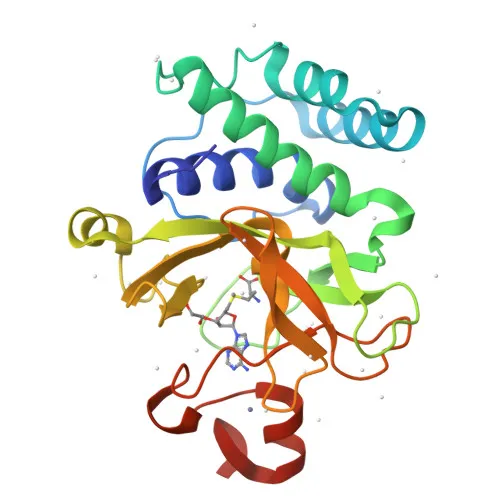
Polyclonal Antibodies
Anti-KMT5C Rabbit Polyclonal Antibody for IF-P and ELISA - Q86Y97
Item Number : CM0027692
Price varies based on specs and customizations
- Application
- IF-P, ELISA
- Cross Reactivity
- Human
- Protein Weight
- 52kDa

Shipping:
Contact us to get shipping details Enjoy On-time Dispatch Guarantee.
Why Choose Us
Easy ordering process, quality products, and dedicated support for your business success.
Core Product Specifications and Parameters
| Parameter | Value |
|---|---|
| Product Name | KMT5C Rabbit pAb |
| Remarks/Alias | SUV420H2; Suv4-20h2 |
| Species | Human |
| GeneID (Human) | 84787 |
| GeneID | 84787 |
| Immunogen | Recombinant fusion protein containing a sequence corresponding to amino acids 2-248 of human KMT5C (NP_116090.2). |
| Source | Rabbit |
| Category | Polyclonal Antibodies |
| Application | IF-P, ELISA |
| Cross Reactivity | Human |
| SWISS | Q86Y97 |
| Protein Weight | 52kDa |
| Shipping | Ice bag |
Biological Background: KMT5C Function and Localization
- KMT5C, also known as SUV420H2 or Suv4-20h2, is a histone-lysine N-methyltransferase that specifically catalyzes the conversion of monomethylated histone H4 lysine 20 (H4K20me1) to dimethylated (H4K20me2) and dimethylated to trimethylated (H4K20me3), with some activity on unmodified H4K20 in vitro. Related references: PMID:24396869
- This enzyme is critical for transcriptional repression and maintenance of genome integrity, functioning mainly in pericentric heterochromatin to establish constitutive heterochromatin. H4K20 trimethylation serves as an epigenetic tag for gene silencing.
- KMT5C is targeted to histone H3 through interactions with RB1 family proteins (RB1, RBL1, RBL2) and plays a central role in DNA damage repair by facilitating TP53BP1 foci formation and non-homologous end-joining (NHEJ). Related references: PMID:28114273
- The protein is localized to the nucleus and chromosomes, consistent with its role in chromatin modification. It may also participate in class switch recombination.
- Post-translational modifications include phosphorylation, as indicated by proteomics identification, and the protein is a zinc metalloenzyme with S-adenosyl-L-methionine binding.
- Alternative splicing generates multiple isoforms, contributing to functional diversity.
Experimental Guidance and Technical Tips
- The immunogen spans amino acids 2–248 of human KMT5C, covering the N-terminal domain. Consider this when designing experiments to detect various isoforms or truncated forms.
- For immunofluorescence (IF-P), optimize permeabilization and fixation protocols suitable for nuclear antigens. Include knockout or peptide blocking controls to confirm specificity.
- In ELISA applications, the antibody may be used with recombinant KMT5C protein or cell lysates expressing the target. Validate reactivity in the relevant sample system.
- As a polyclonal antibody, batch-to-batch consistency should be evaluated. Titration assays are recommended to determine optimal working concentrations for each application.
CamelBio: Your One-Stop Sourcing Bridge
CamelBio supports diagnostic manufacturers and research teams with a comprehensive portfolio of IVD raw materials, including validated antibodies for chromatin biology and epigenetic research. Our sourcing capabilities encompass bulk ancillary reagents, optimized monoclonal/polyclonal antibodies, and assistance with rare target procurement. For your KMT5C-related projects, we provide seamless access to high-quality reagents that accelerate development from concept to clinic.
REQUEST A QUOTE
Our professional team will reply to you within one business day. Please feel free to contact us!