Polyclonal Antibodies
Anti-KLRK1 Polyclonal Antibody for WB, ELISA - P26718
Item Number : CM0028341
Price varies based on specs and customizations
- Application
- WB, ELISA
- Cross Reactivity
- Human, Mouse
- Protein Weight
- 25kDa

Shipping:
Contact us to get shipping details Enjoy On-time Dispatch Guarantee.
Why Choose Us
Easy ordering process, quality products, and dedicated support for your business success.
Core Product Specifications and Parameters
| Parameter | Value |
|---|---|
| Product Name | KLRK1 Rabbit pAb |
| Remarks/Alias | KLR; CD314; NKG2D; NKG2-D; D12S2489E; KLRK1 |
| Species | Human |
| Gene ID (Human) | 22914 |
| Immunogen | Recombinant fusion protein containing a sequence corresponding to amino acids 77-216 of human KLRK1 (NP_031386.2) |
| Source | Rabbit |
| Category | Polyclonal Antibodies |
| Application | WB, ELISA |
| Cross Reactivity | Human, Mouse |
| SWISS | P26718 |
| Protein Weight | 25kDa |
| Shipping | Ice bag |
Biological Background: KLRK1 (NKG2-D) Function and Localization
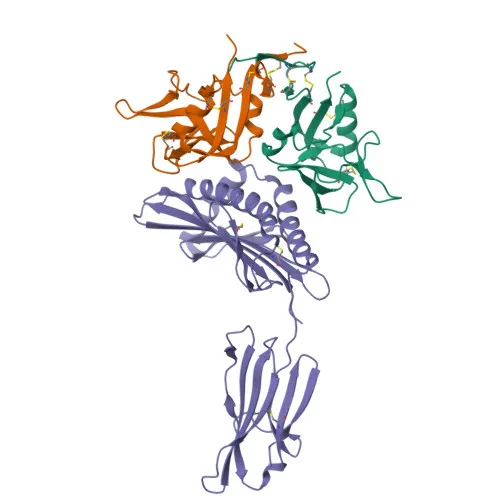
- NKG2-D, encoded by the KLRK1 gene (also designated D12S2489E, NKG2D), is also known as killer cell lectin-like receptor subfamily K member 1, CD314, or NK cell receptor D. It is a type II integral membrane protein.
- Functions as an activating and costimulatory receptor pivotal for immunosurveillance. It recognizes stress-inducible MHC class I-related ligands (e.g., MICA, MICB, ULBP1-6) on tumor and virus-infected cells, triggering NK cell cytotoxicity and CD8+ T-cell costimulation.
- Signaling through NKG2-D involves calcium influx and leads to perforin-mediated elimination of target cells and expression of TNF-alpha.
- Located on the cell membrane, it is expressed primarily on natural killer (NK) cells, CD8+ alpha-beta T-cells, gamma-delta T-cells, and interferon-producing killer dendritic cells (IKDCs).
- Post-translational modifications include glycosylation and disulfide bond formation. It contains a signal-anchor and a single transmembrane helix.
- Beyond antitumor immunity, NKG2-D participates in bone marrow graft rejection and may regulate NK cell differentiation and survival.
Experimental Guidance and Technical Tips
- The immunogen (amino acids 77–216) corresponds to the extracellular domain of human KLRK1, suggesting recognition of multiple epitopes, which can enhance sensitivity in WB and ELISA.
- For WB, use reducing conditions and whole-cell lysates from human or mouse NK cell lines (e.g., NK-92). The predicted molecular weight is ~25 kDa, but glycosylation may cause a shift to higher masses; validate with a positive control.
- In ELISA, the antibody can be used as a capture or detection reagent; however, optimal working concentrations must be determined experimentally. Validate cross-reactivity in mouse samples, as the supplier reports reactivity with both human and mouse proteins.
- An appropriate secondary antibody (anti-rabbit) and blocking buffer are required. Avoid freeze-thaw cycles to maintain stability.
CamelBio: Your One-Stop Sourcing Bridge
CamelBio is a comprehensive IVD raw-material sourcing partner, enabling diagnostic manufacturers and research institutes to accelerate development from concept to clinic. For KLRK1/NKG2-D-focused immunosurveillance research, we offer validated antibody pairs, optimized polyclonal antibodies, bulk ancillary reagents, and support for rare target raw-material procurement. Our integrated supply chain ensures consistent, high-quality materials for your assays.
REQUEST A QUOTE
Our professional team will reply to you within one business day. Please feel free to contact us!