Polyclonal Antibodies
Anti-KLRB1 Polyclonal Antibody for WB, ELISA - Q12918
Item Number : CM0024705
Price varies based on specs and customizations
- Application
- WB, ELISA
- Cross Reactivity
- Human, Mouse, Rat
- Protein Weight
- 25kDa

Shipping:
Contact us to get shipping details Enjoy On-time Dispatch Guarantee.
Why Choose Us
Easy ordering process, quality products, and dedicated support for your business success.
Core Product Specifications and Parameters
| Parameter | Value |
|---|---|
| Product Name | KLRB1 Rabbit pAb |
| Remarks/Alias | NKR; CD161; CLEC5B; NKR-P1; NKRP1A; NKR-P1A; hNKR-P1A; KLRB1 |
| Species | Human |
| Gene ID (Human) | 3820 |
| Gene ID | 3820 |
| Immunogen | Recombinant fusion protein containing a sequence corresponding to amino acids 73-140 of human KLRB1 (NP_002249.1) |
| Source | Rabbit |
| Category | Polyclonal Antibodies |
| Application | WB, ELISA |
| Cross Reactivity | Human, Mouse, Rat |
| SWISS | Q12918 |
| Protein Weight | 25kDa |
| Shipping | Ice bag |
Biological Background: KLRB1 Function and Localization
- KLRB1 encodes the killer cell lectin-like receptor subfamily B member 1, also known as CD161, NKR-P1A, and CLEC5B. It is a C-type lectin inhibitory receptor expressed on natural killer (NK) cells and memory T cells.
- The receptor plays an inhibitory role in NK cell cytotoxicity. Activation triggers acid sphingomyelinase (SMPD1) stimulation, leading to elevated intracellular ceramide levels.
- KLRB1 activation also stimulates AKT1/PKB and RPS6KA1/RSK1 kinases and enhances anti-CD3-induced T-cell proliferation.
- It functions as a lectin that binds terminal Gal-alpha(1,3)Gal and N-acetyllactosamine epitopes, and it interacts with CLEC2D/LLT1 as a ligand.
- Through LLT1 binding, KLRB1 inhibits NK cell-mediated cytotoxicity and interferon-gamma secretion in target cells.
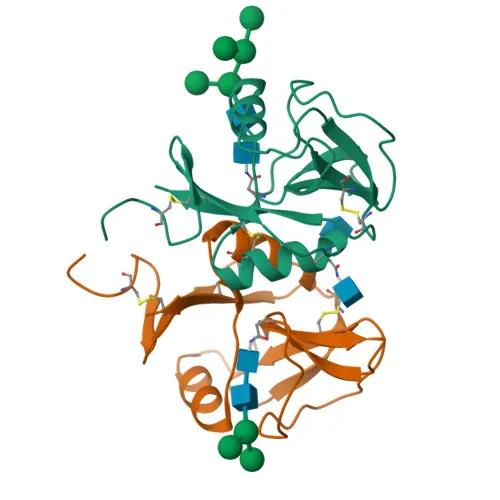
- Subcellular localization: KLRB1 is a membrane protein with a single transmembrane helix and a signal-anchor.
- It is predominantly expressed in a subset of NK cells in the intestinal epithelium and liver, and in peripheral blood T-cells with a memory antigenic phenotype.
- Post-translational modifications include glycosylation and a disulfide bond, characteristic of C-type lectin receptors.
Experimental Guidance and Technical Tips
- The immunogen consists of a recombinant fusion protein covering amino acids 73-140 of human KLRB1 (NP_002249.1), which lies within the extracellular C-type lectin domain. This region may facilitate recognition of the native receptor.
- For Western blot (WB), a band at approximately 25 kDa is predicted under reducing conditions; validate detection using lysates from NK cell lines or tissues known to express KLRB1 (e.g., intestinal epithelium, liver).
- In ELISA applications, consider using the antibody to capture or detect recombinant KLRB1; optimization of coating buffer and blocking conditions is advised.
- Reported cross-reactivity with mouse and rat KLRB1 suggests potential utility across species; nonetheless, confirm specificity via sequence alignment and appropriate controls in your experimental system.
- As a polyclonal antibody, lot-to-lot consistency should be verified in critical assays; consider additional purification steps if high specificity is required.
CamelBio: Your One-Stop Sourcing Bridge
CamelBio specializes in supplying high-quality IVD raw materials and technical support from concept to clinic. For immunology research and diagnostic development, we offer validated antibody pairs, optimized polyclonal antibodies, and bulk ancillary reagents. Our sourcing expertise ensures reliable access to rare targets like KLRB1 (CD161) to accelerate your assay development.
REQUEST A QUOTE
Our professional team will reply to you within one business day. Please feel free to contact us!