Polyclonal Antibodies
Anti-KLK6 Rabbit Polyclonal Antibody for WB, ELISA - Q92876
Item Number : CM0015958
Price varies based on specs and customizations
- Application
- WB, ELISA
- Cross Reactivity
- Human, Mouse, Rat
- Protein Weight
- 26kDa

Shipping:
Contact us to get shipping details Enjoy On-time Dispatch Guarantee.
Why Choose Us
Easy ordering process, quality products, and dedicated support for your business success.
Core Product Specifications and Parameters
| Parameter | Value |
|---|---|
| Product Name | KLK6 Rabbit pAb |
| Remarks/Alias | hK6; Bssp; Klk7; SP59; PRSS9; PRSS18; KLK6 |
| Species | Human |
| GeneID (Human) | 5653 |
| GeneID | 5653 |
| Immunogen | Synthetic peptide, A synthetic peptide corresponding to a sequence within amino acids 100 to the C-terminus of human KLK6 (NP_002765.1) |
| Source | Rabbit |
| Category | Polyclonal Antibodies |
| Application | WB, ELISA |
| Cross Reactivity | Human, Mouse, Rat |
| SWISS | Q92876 |
| Protein Weight | 26kDa |
| Shipping | Ice bag |
Biological Background: Kallikrein-6 Function and Localization
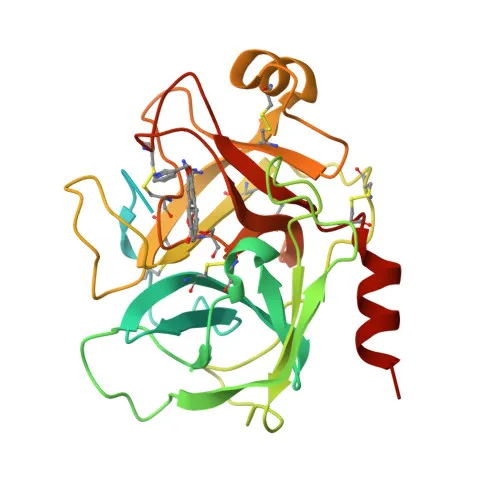
- Kallikrein-6 (neurosin, protease M, PRSS9, PRSS18, zyme) is a serine protease encoded by the KLK6 gene; alternative splicing generates multiple isoforms.
- It preferentially cleaves substrates with Arg at P1 and Ser/Pro at P2, exhibiting activity against amyloid precursor protein, myelin basic protein, gelatin, casein, and extracellular matrix components (fibronectin, laminin, vitronectin, collagen).
- KLK6 degrades alpha-synuclein and prevents its polymerization, suggesting involvement in Parkinson disease and other synucleinopathies.
- It may regulate axon outgrowth after spinal cord injury and promotes tumor cell migration, with neutralizing antibodies reducing invasion and metastasis.
- Subcellular localization includes secretion, nucleus (nucleolus), cytoplasm, mitochondria, and microsomes.
- Highest levels are found in milk, cerebrospinal fluid, and nipple aspirate fluid; tissues with prominent expression include salivary glands, lung, colon, fallopian tube, placenta, breast, pituitary, and kidney. In brain, it localizes to gray matter neurons and pathological inclusions (Lewy bodies).
- It is synthesized as a zymogen, undergoes autocatalytic cleavage, and contains disulfide bonds and glycosylation sites.
- Post-translational modifications include signal peptide removal and N-linked glycosylation, which may influence activity and localization.
Experimental Guidance and Technical Tips
- The immunogen sequence (aa 100–C-terminus) is conserved across human, mouse, and rat KLK6, supporting cross-reactivity, but validation in the relevant sample system is advised.
- For Western blot, the predicted molecular weight is ~26 kDa; glycosylation can cause higher apparent MW. Reduce and denature samples appropriately and verify with molecular weight markers.
- For ELISA, consider coating with recombinant KLK6 protein or use a sandwich format with a matched detection antibody; optimize coating pH and blocking conditions for your assay.
- As a polyclonal antibody, lot-to-lot variations may occur; include positive and negative controls to confirm performance in your experimental system.
CamelBio: Your One-Stop Sourcing Bridge
As a dedicated IVD raw-material supplier, CamelBio provides a comprehensive portfolio including validated antibody pairs, optimized monoclonal and polyclonal antibodies, and bulk ancillary reagents to support your diagnostic development. The KLK6 Rabbit pAb is suitable for research in neurodegeneration and cancer biomarkers, and CamelBio can facilitate access to rare-target raw materials and one-stop technical consultation from concept to clinic.
REQUEST A QUOTE
Our professional team will reply to you within one business day. Please feel free to contact us!