Polyclonal Antibodies
Anti-KLF4 Rabbit Polyclonal Antibody for WB, IHC-P, ELISA - Q60793
Item Number : CM0031005
Price varies based on specs and customizations
- Application
- WB, IHC-P, ELISA
- Cross Reactivity
- Human, Mouse, Rat
- Protein Weight
- 52 kDa

Shipping:
Contact us to get shipping details Enjoy On-time Dispatch Guarantee.
Why Choose Us
Easy ordering process, quality products, and dedicated support for your business success.
Core Product Specifications and Parameters
| Parameter | Value |
|---|---|
| Product Name | KLF4 Rabbit pAb |
| Remarks/Alias | EZF; Zie; Gklf |
| Species | Mouse |
| GeneID (Human) | 9314 |
| GeneID | 16600 |
| Immunogen | Recombinant fusion protein containing a sequence corresponding to amino acids 1-115 of mouse KLF4 (NP_034767.2) |
| Source | Rabbit |
| Category | Polyclonal Antibodies |
| Application | WB, IHC-P, ELISA |
| Cross Reactivity | Human, Mouse, Rat |
| SWISS | Q60793 |
| Protein Weight | 52 kDa |
| Shipping | Ice bag |
Biological Background: KLF4 Function and Localization
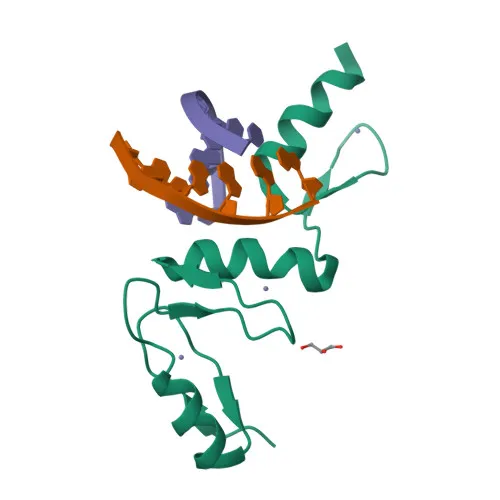
- Krueppel-like factor 4 (KLF4; also known as epithelial zinc finger protein EZF, gut-enriched krueppel-like factor GKLF, or ZIE) is a zinc-finger transcription factor encoded by the Klf4 gene in mouse.
- It functions as both a transcriptional activator and repressor, binding the 5'-CACCC-3' core sequence and auto-regulating its own promoter.
Related references: PMID:10431239, PMID:10556311, PMID:15358627 - KLF4 plays a critical role in embryonic development by regulating key transcription factors and is essential for maintaining embryonic stem cell pluripotency while preventing differentiation.
Related references: PMID:10431239, PMID:10556311, PMID:15358627 - It is involved in epithelial cell differentiation, is required for establishing the skin barrier function, and contributes to postnatal maturation and maintenance of the ocular surface.
- KLF4 contributes to the down-regulation of p53/TP53 transcription.
- The protein localizes to both the nucleus and cytoplasm.
- Tissue specificity: Highest expression in the colon, with lower levels in testis, lung, and small intestine.
- Additional characteristics include DNA-binding zinc-finger repeats, phosphorylation, and ubiquitin-like conjugation (UniProt keywords: DNA-binding, Zinc-finger, Phosphoprotein, Ubl conjugation).
Experimental Guidance and Technical Tips
- The immunogen covers the N-terminal region (amino acids 1–115) of mouse KLF4; perform epitope mapping if isoform specificity is critical.
- For Western blot, a band near 52 kDa is expected; validate in relevant cell or tissue lysates (e.g., colon, testis) expressing endogenous KLF4.
- For immunohistochemistry (paraffin), standard antigen retrieval and blocking steps are recommended; optimize antibody dilution experimentally.
- The antibody cross-reacts with human and rat KLF4 based on homology, but confirm cross-reactivity in your specific assay conditions.
- Polyclonal antibodies may exhibit lot-to-lot variability; consider including appropriate positive and negative controls.
CamelBio: Your One-Stop Sourcing Bridge
CamelBio is your one-stop partner for IVD raw material sourcing, supporting diagnostic manufacturers and researchers from concept to clinic. For KLF4 research in stem cell biology, epithelial differentiation, or cancer, we provide validated antibody pairs, optimized monoclonal/polyclonal antibodies, and bulk ancillary reagents. Inquire about custom sourcing for rare targets or large-scale supply to accelerate your project's timeline.
REQUEST A QUOTE
Our professional team will reply to you within one business day. Please feel free to contact us!