Polyclonal Antibodies
Anti-KLF15 Polyclonal Antibody for WB, ELISA - Q9UIH9
Item Number : CM0030309
Price varies based on specs and customizations
- Application
- WB, ELISA
- Cross Reactivity
- Human
- Protein Weight
- 44kDa

Shipping:
Contact us to get shipping details Enjoy On-time Dispatch Guarantee.
Why Choose Us
Easy ordering process, quality products, and dedicated support for your business success.
Core Product Specifications and Parameters
| Parameter | Value |
|---|---|
| Product Name | KLF15 Rabbit pAb |
| Remarks/Alias | KKLF; KLF15 |
| Species | Human |
| GeneID (Human) | 28999 |
| GeneID | 28999 |
| Immunogen | Recombinant fusion protein containing a sequence corresponding to amino acids 1-260 of human KLF15 (NP_054798.1) |
| Source | Rabbit |
| Category | Polyclonal Antibodies |
| Application | WB, ELISA |
| Cross Reactivity | Human |
| SWISS | Q9UIH9 |
| Protein Weight | 44kDa |
| Shipping | Ice bag |
Biological Background: KLF15 Function and Localization
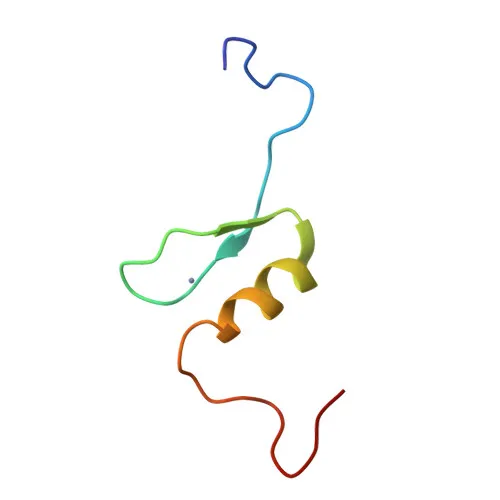
- KLF15 (Krueppel-like factor 15), also known as Kidney-enriched krueppel-like factor, is a member of the KLF family of zinc-finger transcription factors.
- It acts as a transcriptional regulator by binding to specific DNA elements, such as the GA element of the CLCNKA promoter and the KCNIP2 promoter, influencing circadian expression in the heart.
- KLF15 functions as a repressor of CCN2 expression, thereby playing a role in controlling cardiac fibrosis, and is also involved in inhibiting cardiac hypertrophy through suppression of MEF2A and GATA4.
- It is involved in podocyte differentiation and inhibits MYOCD activity, highlighting its importance in renal and cardiovascular biology.
- The protein is a negative regulator of TP53 acetylation and inhibits NF-kappa-B activation by repressing EP300-dependent RELA acetylation, implicating it in inflammatory and stress response pathways.
- Subcellular localization is primarily in the nucleus, consistent with its role as a transcription factor.
- Tissue expression is highest in liver, skeletal muscle, and kidney, with presence in cardiomyocytes; expression is reduced in cardiac tissue from patients with non-ischemic cardiomyopathy and aortic aneurysm, and in glomerular disease. It is not expressed in bone marrow or lymphoid tissues.
- Keywords associated with KLF15 include DNA-binding, zinc-finger, transcription regulation, and metal-binding, reflecting its structural and functional properties.
Experimental Guidance and Technical Tips
- The immunogen used to generate this antibody is a recombinant fusion protein covering the full-length KLF15 (1-260 aa). For Western blotting, consider that the predicted molecular weight is approximately 44 kDa. Validate the antibody's specificity in your experimental system using appropriate positive and negative controls.
- This polyclonal antibody is suitable for WB and ELISA applications with human samples. For other species, cross-reactivity has not been tested; verify sequence homology before use.
- Given KLF15's role in transcriptional regulation, nuclear extraction protocols may enhance detection in WB. Optimize blocking and antibody dilution for your specific tissue or cell type.
CamelBio: Your One-Stop Sourcing Bridge
CamelBio is your trusted one-stop partner for IVD raw materials, offering comprehensive solutions from concept to clinic. We provide validated antibody pairs, optimized polyclonal antibodies, and bulk ancillary reagents to support your assay development for transcription factor targets like KLF15. Whether you need this anti-KLF15 antibody for cardiac or kidney disease research, or require custom sourcing for rare targets, our B2B platform ensures reliable supply and technical consultation to accelerate your diagnostic development.
REQUEST A QUOTE
Our professional team will reply to you within one business day. Please feel free to contact us!