Polyclonal Antibodies
Anti-KLF10 Polyclonal Antibody for WB, ELISA - Q13118
Item Number : CM0018610
Price varies based on specs and customizations
- Application
- WB, ELISA
- Cross Reactivity
- Mouse, Rat

Shipping:
Contact us to get shipping details Enjoy On-time Dispatch Guarantee.
Why Choose Us
Easy ordering process, quality products, and dedicated support for your business success.
Core Product Specifications and Parameters
| Parameter | Value |
|---|---|
| Product Name | KLF10 Rabbit pAb |
| Remarks/Alias | EGRA; TIEG; TIEG1; EGR-alpha; KLF10 |
| Species | Human |
| Gene ID (Human) | 7071 |
| Immunogen | Recombinant protein |
| Source | Rabbit |
| Category | Polyclonal Antibodies |
| Application | WB, ELISA |
| Cross Reactivity | Mouse, Rat |
| SWISS | Q13118 |
| Protein Weight | 53kDa |
| Shipping | Ice bag |
Biological Background: KLF10 Function and Localization
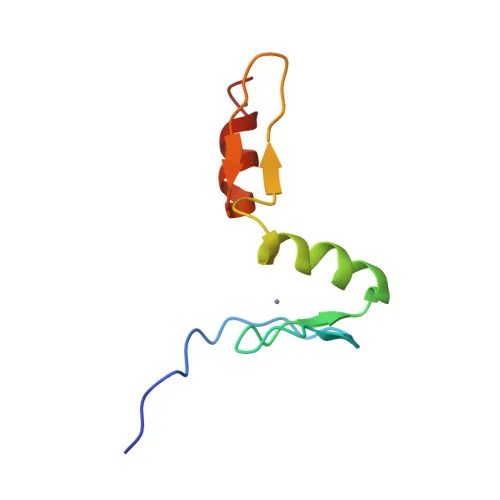
- KLF10 (Krueppel-like factor 10), also known as TIEG1 or EGR-alpha, is a zinc finger transcriptional repressor belonging to the Krüppel-like factor family.
- It binds to the specific DNA consensus sequence 5'-GGTGTG-3' and acts as a transcriptional repressor, modulating expression of target genes.
- KLF10 plays a critical role in the regulation of circadian rhythms by repressing the core clock gene ARTNL/BMAL1, thereby influencing circadian gene expression in the liver.
- It participates in metabolic regulation by controlling the circadian expression of genes involved in lipogenesis, gluconeogenesis, and glycolysis; notably, it directly represses PCK2, a key enzyme in gluconeogenesis.
- The protein localizes to the nucleus where it exerts its transcriptional regulatory functions.
- KLF10 contains multiple zinc finger motifs that facilitate DNA binding, and it is subject to post-translational modifications including phosphorylation and ubiquitination.
- Alternative splicing generates distinct isoforms of KLF10, potentially expanding its functional diversity.
- The protein may also be involved in cell cycle regulation, suggesting a broader role in cellular proliferation control.
Experimental Guidance and Technical Tips
- When using for Western blot, consider that the antibody targets a recombinant immunogen spanning amino acids 161–365, which may recognize KLF10 at the predicted molecular weight of approximately 53 kDa.
- Validate antibody specificity in the relevant sample system, as polyclonal antibodies may exhibit background binding; perform appropriate controls.
- For ELISA applications, titrate the antibody to determine optimal working concentrations for your specific assay format.
- Take advantage of cross-reactivity with mouse and rat to enable translational research across species; verify reactivity in your experimental model.
CamelBio: Your One-Stop Sourcing Bridge
CamelBio provides diagnostic manufacturers and research laboratories with comprehensive access to IVD raw materials, including this high-quality anti-KLF10 polyclonal antibody for applications such as WB and ELISA. Whether you require bulk quantities of validated antibodies, optimized antibody pairs, or ancillary reagents for your research into transcriptional regulation and circadian biology, our one-stop sourcing bridge facilitates seamless procurement from concept to clinic.
REQUEST A QUOTE
Our professional team will reply to you within one business day. Please feel free to contact us!