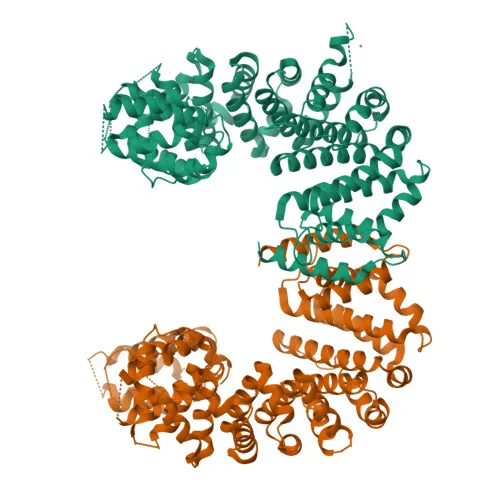
Polyclonal Antibodies
Anti-KIAA1524 (CIP2A) Rabbit Polyclonal Antibody for WB, ELISA - Q8TCG1
Item Number : CM0015031
Price varies based on specs and customizations
- Application
- WB, ELISA
- Cross Reactivity
- Human, Mouse, Rat
- Protein Weight
- 102kDa

Shipping:
Contact us to get shipping details Enjoy On-time Dispatch Guarantee.
Why Choose Us
Easy ordering process, quality products, and dedicated support for your business success.
Core Product Specifications and Parameters
| Parameter | Value |
|---|---|
| Product Name | KIAA1524 Rabbit pAb |
| Remarks/Alias | p90; NOCIVA; KIAA1524 |
| Species | Human |
| GeneID (Human) | 57650 |
| GeneID | 57650 |
| Immunogen | Recombinant fusion protein containing a sequence corresponding to amino acids 681-905 of human KIAA1524 (NP_065941.2). |
| Source | Rabbit |
| Category | Polyclonal Antibodies |
| Application | WB, ELISA |
| Cross Reactivity | Human, Mouse, Rat |
| SWISS | Q8TCG1 |
| Protein Weight | 102kDa |
| Shipping | Ice bag |
Biological Background: KIAA1524/CIP2A Function and Localization
-
Protein CIP2A (KIAA1524), also known as p90 autoantigen or NOCIVA, is an inhibitor of protein phosphatase PP2A, promoting anchorage-independent cell growth and tumor formation by preventing dephosphorylation and thus stabilizing the MYC oncoprotein in human malignancies. Related references: PMID:17632056
-
In response to genome instability, CIP2A forms a complex with TOPBP1 to tether chromosome fragments from shattered micronuclei during mitosis, ensuring clustered segregation to a single daughter cell nucleus and facilitating re-ligation with limited chromosome scattering and loss. Related references: PMID:35121901 PMID:35842428 PMID:37165191 PMID:37316668
-
The protein is predicted to contain coiled-coil domains and exists in multiple isoforms due to alternative splicing.
-
Subcellular localization is primarily cytoplasmic, with association to chromosomes during mitosis, consistent with its role in mitotic chromosome handling.
-
CIP2A is expressed at low levels in most normal tissues but is overexpressed in head-and-neck squamous cell carcinomas and liver cancer cells, highlighting its relevance in cancer biology.
-
Post-translational modifications include acetylation and phosphorylation, which may regulate its activity and interactions.
Experimental Guidance and Technical Tips
- The immunogen covers the C-terminal region (aa 681-905) of human KIAA1524, which is likely to generate antibodies recognizing the full-length protein and possibly some isoforms; consider sequence alignment to assess isoform coverage.
- For Western blot (WB), a band around 102 kDa is expected; validate detection in relevant human, mouse, or rat tissue/cell lysates, as cross-reactivity is predicted.
- ELISA applications should be optimized using recombinant protein or cell lysates; consider pairing with a detection antibody for sandwich ELISA development.
- Due to the polyclonal nature, lot-to-lot consistency should be verified in the intended assay system.
CamelBio: Your One-Stop Sourcing Bridge
CamelBio provides diagnostic manufacturers and research laboratories with streamlined access to IVD raw materials, including validated polyclonal antibodies like this anti-KIAA1524/CIP2A product for cancer and genome instability research. Our offerings span from optimized antibody pairs and bulk ancillary reagents to rare target sourcing, supporting every stage from concept to clinic. Let CamelBio be your trusted partner in building robust immunoassays and accelerating biomarker discovery.
Product Datasheet
Anti-KIAA1524 (CIP2A) Rabbit Polyclonal Antibody for WB, ELISA - Q8TCG1
REQUEST A QUOTE
Our professional team will reply to you within one business day. Please feel free to contact us!