Polyclonal Antibodies
Anti-KHK Rabbit Polyclonal Antibody for WB, ELISA - P50053
Item Number : CM0026073
Price varies based on specs and customizations
- Application
- WB, ELISA
- Cross Reactivity
- Human, Mouse, Rat
- Protein Weight
- 33kDa

Shipping:
Contact us to get shipping details Enjoy On-time Dispatch Guarantee.
Why Choose Us
Easy ordering process, quality products, and dedicated support for your business success.
Core Product Specifications and Parameters
| Parameter | Value |
|---|---|
| Product Name | KHK Rabbit pAb |
| Remarks/Alias | FRUCTU; KHK |
| Species | Human |
| GeneID (Human) | 3795 |
| GeneID | 3795 |
| Immunogen | Recombinant fusion protein containing a sequence corresponding to amino acids 1-298 of human KHK (NP_000212.1) |
| Source | Rabbit |
| Category | Polyclonal Antibodies |
| Application | WB, ELISA |
| Cross Reactivity | Human, Mouse, Rat |
| SWISS | P50053 |
| Protein Weight | 33kDa |
| Shipping | Ice bag |
Biological Background: Ketohexokinase (KHK) Function and Localization
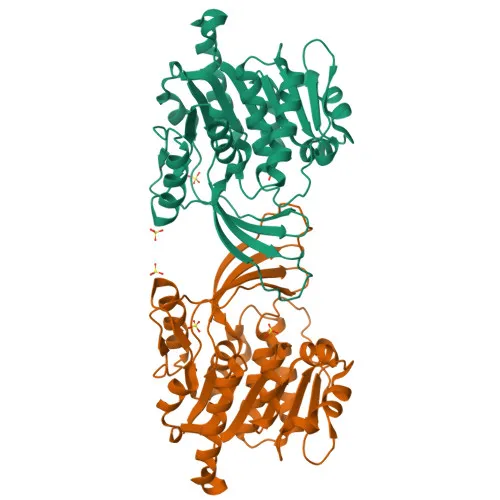
- Ketohexokinase (KHK), also known as hepatic fructokinase, is a member of the carbohydrate kinase family, encoded by the KHK gene in humans. It catalyzes the conversion of fructose to fructose-1-phosphate, a key step in fructose metabolism.
- The enzyme plays a central role in dietary fructose processing, particularly in the liver where fructose is rapidly phosphorylated for glycolysis or lipogenesis. Alternative splicing generates tissue-specific isoforms, with the highly active isoform predominant in liver, kidney, and small intestine.
- KHK is most abundantly expressed in liver, kidney, gut, spleen and pancreas, with lower levels in adrenal, muscle, brain and eye, reflecting its metabolic tissue distribution.
- Classified as a transferase, KHK contains ATP- and nucleotide-binding domains essential for its kinase activity. The protein has a molecular weight of ~33 kDa (mature form).
- Post-translational regulation and disease variant associations (e.g., in essential fructosuria) have been documented, with structural studies providing insights into substrate specificity and inhibitor design.
Experimental Guidance and Technical Tips
- The immunogen used for this antibody is a recombinant fusion protein covering amino acids 1-298 of human KHK (NP_000212.1). This N-terminal region is expected to be immunogenic across species, consistent with the observed cross-reactivity with mouse and rat.
- For Western blot (WB), the predicted band size is approximately 33 kDa. Ensure appropriate positive control lysates (e.g., liver, kidney) are included and optimize blocking/detection conditions for your specific experimental setup.
- In ELISA applications, this polyclonal antibody can be employed as a capture or detection reagent; however, pairing with matched antibody sets may require further optimization for sensitivity and specificity.
- Cross-reactivity with mouse and rat suggests epitope conservation, but always validate in the relevant sample system before quantitative assays.
- Additional applications such as immunohistochemistry (IHC) or immunofluorescence (IF) have not been tested; consider performing in-house validation if needed.
CamelBio: Your One-Stop Sourcing Bridge
CamelBio offers diagnostic developers, researchers, and IVD manufacturers streamlined access to high-quality raw materials, technical services, and consultative support from concept to commercialization. For carbohydrate metabolism and metabolic disorder studies, this anti-KHK antibody can be integrated into assay development workflows. As your one-stop sourcing partner, we supply validated antibody pairs, optimized monoclonal and polyclonal antibodies, bulk ancillary reagents, and can assist in procuring rare-target raw materials to accelerate your IVD projects.
REQUEST A QUOTE
Our professional team will reply to you within one business day. Please feel free to contact us!