Polyclonal Antibodies
Anti-KDM7A Polyclonal Antibody for IHC-P and ELISA - Q6ZMT4
Item Number : CM0019132
Price varies based on specs and customizations
- Application
- IHC-P, ELISA
- Cross Reactivity
- Human, Mouse, Rat
- Protein Weight
- 106kDa

Shipping:
Contact us to get shipping details Enjoy On-time Dispatch Guarantee.
Why Choose Us
Easy ordering process, quality products, and dedicated support for your business success.
Core Product Specifications and Parameters
| Parameter | Value |
|---|---|
| Product Name | KDM7A Rabbit pAb |
| Remarks/Alias | JHDM1D; KDM7A |
| Species | Human |
| GeneID (Human) | 80853 |
| GeneID | 80853 |
| Immunogen | Synthetic peptide corresponding to a sequence within amino acids 840-941 of human KDM7A (NP_085150.1) |
| Source | Rabbit |
| Category | Polyclonal Antibodies |
| Application | IHC-P, ELISA |
| Cross Reactivity | Human, Mouse, Rat |
| SWISS | Q6ZMT4 |
| Protein Weight | 106kDa |
| Shipping | Ice bag |
Biological Background: KDM7A Function and Localization
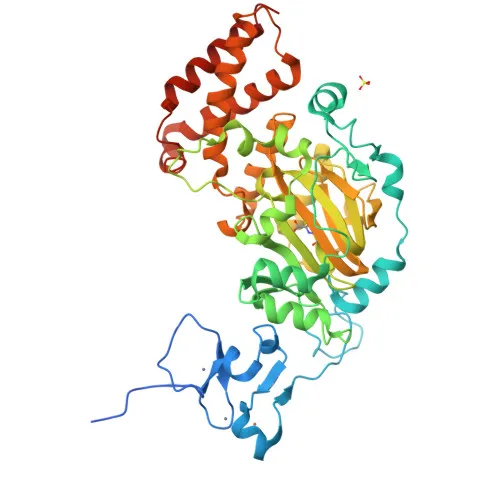
- KDM7A (Lysine-specific demethylase 7A), also known as JHDM1D or KIAA1718, is a histone demethylase belonging to the JmjC domain-containing family.
- It specifically demethylates dimethylated H3K9, H3K27, and H3K36 (H3K9me2, H3K27me2, H3K36me2), and monomethylated H4K20 (H4K20me1), playing a central role in histone code regulation. Related references: PMID:20023638 PMID:20622853
- Its demethylase activity is modulated by H3K4me3 binding: in the presence of H3K4me3, activity toward H3K27me2 is enhanced while activity toward H3K9me2 is suppressed. Related references: PMID:20023638
- KDM7A is required for brain development, underscoring its role in neurogenesis.
- It localizes to the nucleus, consistent with its function as a chromatin modifier.
- Keywords indicate it is a phosphoprotein and contains zinc-finger domains, suggesting regulation by phosphorylation and DNA/protein interactions.
- Alternative splicing of KDM7A generates multiple protein isoforms.
Experimental Guidance and Technical Tips
- As the immunogen corresponds to a C‑terminal peptide (aa 840–941), the antibody may recognize all isoforms containing this region; verify isoform specificity if required.
- For IHC‑P, consider using antigen retrieval methods and validate staining in positive control tissues such as brain, where KDM7A is expressed.
- In ELISA applications, use the immunogen peptide or recombinant KDM7A as a positive control and optimize coating and blocking conditions empirically.
- Being a polyclonal antibody, batch‑to‑batch variability may occur; include appropriate blocking steps to minimize non‑specific binding.
CamelBio: Your One-Stop Sourcing Bridge
CamelBio provides diagnostic manufacturers and research laboratories with one‑stop access to IVD raw materials, technical services, and consulting. Our portfolio includes validated antibody pairs, optimized monoclonal and polyclonal antibodies for chromatin-related targets like KDM7A, and bulk ancillary reagents to support histone modification research and neurodevelopment studies. From rare‑target sourcing to full development support, we bridge the gap between concept and clinic.
REQUEST A QUOTE
Our professional team will reply to you within one business day. Please feel free to contact us!