Monoclonal Antibodies
Anti-KDM4A Monoclonal Antibody for WB, ELISA - O75164
Item Number : CM0008601
Price varies based on specs and customizations
- Application
- WB, ELISA
- Cross Reactivity
- Human, Mouse
- Protein Weight
- 121kDa

Shipping:
Contact us to get shipping details Enjoy On-time Dispatch Guarantee.
Why Choose Us
Easy ordering process, quality products, and dedicated support for your business success.
Core Product Specifications and Parameters
| Parameter | Value |
|---|---|
| Product Name | KDM4A Rabbit mAb |
| Remarks/Alias | JMJD2; JHDM3A; JMJD2A; TDRD14A; KDM4A |
| Species | Human |
| Gene ID (Human) | 9682 |
| Gene ID | 9682 |
| Immunogen | Recombinant fusion protein containing a sequence corresponding to amino acids 550-650 of human KDM4A (O75164) |
| Source | Rabbit |
| Category | Monoclonal Antibodies |
| Application | WB, ELISA |
| Cross Reactivity | Human, Mouse |
| SWISS | O75164 |
| Protein Weight | 121kDa |
| Shipping | Ice bag |
Biological Background: KDM4A Function and Localization
-
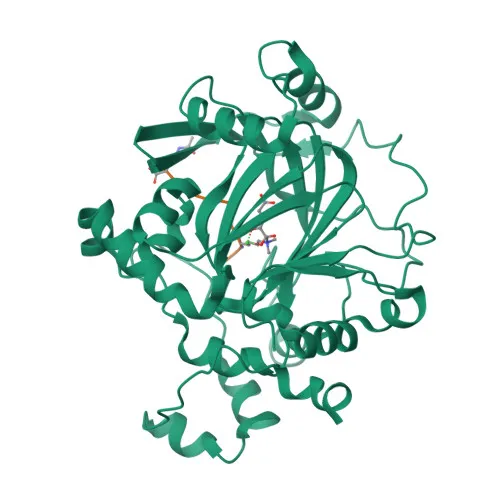
Lysine-specific demethylase 4A (KDM4A), also known as JMJD2A, specifically demethylates trimethylated 'Lys-9' and 'Lys-36' residues of histone H3, playing a central role in histone code regulation. It has no activity on mono- and dimethylated H3K9/K36, nor on H3K4, H3K27, or H4K20. Demethylation generates formaldehyde and succinate. Related references: PMID:16603238 PMID:26741168 PMID:21768309
-
In addition to histone H3, KDM4A demethylates histone H1-4 methylated at 'Lys-26' (H1.4K26me1, H1.4K26me2, and H1.4K26me3), extending its substrate specificity beyond core histones. Related references: PMID:19144645 PMID:30156264
-
KDM4A participates in transcriptional repression by recruiting histone deacetylases and NCOR1 to promoters of genes such as ASCL2 and E2F-responsive targets, linking histone demethylation to chromatin silencing. Related references: PMID:16024779
-
Crucial for muscle differentiation, KDM4A promotes transcriptional activation of the Myog gene by removing repressive chromatin marks at its promoter. Notably, it lacks the N-terminal demethylase domain, suggesting functional specialization.
-
Subcellular localization is predominantly nuclear, consistent with its role in chromatin modification and transcriptional regulation.
-
KDM4A is ubiquitously expressed across human tissues, reflecting its fundamental role in epigenetic maintenance.
-
KDM4A belongs to the JmjC domain-containing histone demethylase family (JMJD2 family), characterized by JmjC, JmjN domains, and zinc-finger motifs, and is classified as an iron-binding dioxygenase.
Experimental Guidance and Technical Tips
- The immunogen (amino acids 550–650) targets a conserved C-terminal region, which may contribute to cross-reactivity between human and mouse KDM4A; verify specificity in your experimental model.
- For Western blot, expect a band near 121 kDa; use low-percentage acrylamide gels and extended transfer times for efficient detection of high-molecular-weight proteins.
- In ELISA applications, consider using this antibody as a capture or detection reagent and validate its performance with recombinant KDM4A or cell lysates known to express the target.
CamelBio: Your One-Stop Sourcing Bridge
CamelBio serves as a comprehensive partner for IVD raw material procurement, offering a seamless bridge from concept to clinic. We provide validated antibody pairs, optimized monoclonal and polyclonal antibodies, bulk ancillary reagents, and specialized sourcing for rare epigenetic targets like KDM4A, supporting diagnostic manufacturers and research laboratories in chromatin biology and gene regulation studies.
REQUEST A QUOTE
Our professional team will reply to you within one business day. Please feel free to contact us!