Polyclonal Antibodies
Anti-KDM2A Rabbit Polyclonal Antibody for WB, ELISA - Q9Y2K7
Item Number : CM0023008
Price varies based on specs and customizations
- Application
- WB, ELISA
- Cross Reactivity
- Human, Mouse
- Protein Weight
- 133kDa

Shipping:
Contact us to get shipping details Enjoy On-time Dispatch Guarantee.
Why Choose Us
Easy ordering process, quality products, and dedicated support for your business success.
Core Product Specifications and Parameters
| Parameter | Specification |
|---|---|
| Product Name | KDM2A Rabbit pAb |
| Remarks/Alias | FBL7; CXXC8; FBL11; FBXL11; JHDM1A; LILINA; KDM2A |
| Species | Human |
| GeneID (human) | 22992 |
| GeneID | 22992 |
| Immunogen | Synthetic peptide|A synthetic peptide corresponding to a sequence within amino acids 1-100 of human KDM2A (NP_036440.1). |
| Source | Rabbit |
| Category | Polyclonal Antibodies |
| Application | WB, ELISA |
| Cross Reactivity | Human, Mouse |
| SWISS | Q9Y2K7 |
| Protein Weight | 133kDa |
| Shipping | Ice bag |
Biological Background: KDM2A Function and Localization
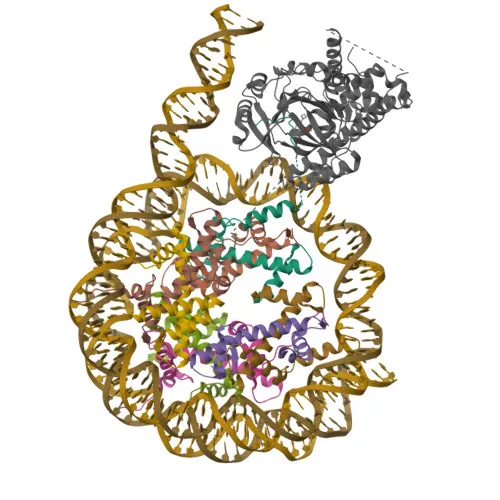
- KDM2A (also known as FBXL11, JHDM1A, CXXC8) is a member of the JmjC domain-containing histone demethylase family and an F-box protein containing leucine-rich repeats.
- It specifically demethylates 'Lys-36' of histone H3 (H3K36me2), with a preference for dimethylated H3K36 over monomethylated and trimethylated forms, playing a central role in histone code dynamics.
- KDM2A is required to maintain the heterochromatic state; it associates with centromeres and represses transcription of small non-coding RNAs encoded by satellite repeats, thereby sustaining centromeric integrity and genomic stability, particularly during mitosis.
- It regulates circadian gene expression by repressing the transcriptional activator activity of CLOCK-BMAL1 heterodimer and RORA in a catalytically-independent manner. Related references: PMID:26037310
- Subcellularly, KDM2A localizes to the nucleoplasm and associates with chromosomes, specifically centromeric regions.
- Tissue specificity: Widely expressed, with highest levels in brain, testis, ovary, followed by lung.
- KDM2A contains a CXXC-type zinc finger domain for DNA binding and a JmjC domain for demethylase activity. It is subject to post-translational modifications such as ADP-ribosylation and phosphorylation, and functions in a ubiquitin conjugation pathway as an F-box protein.
Experimental Guidance and Technical Tips
- The immunogen used for this antibody corresponds to a synthetic peptide spanning amino acids 1-100 of human KDM2A (N-terminal region), which is conserved in mouse. This suggests the antibody may recognize both human and mouse KDM2A.
- For Western blot, a specific band at ~133 kDa is expected for full-length KDM2A. Due to alternative splicing, multiple isoforms may be detected; validate using the appropriate control lysates.
- Consider using nuclear-enriched lysates from human or mouse tissues with high KDM2A expression (e.g., brain, testis, ovary) to enhance signal.
- As a polyclonal antibody, it may exhibit batch-to-batch variability; always perform initial validation with your experimental system.
- For ELISA, the antibody is suitable for detecting recombinant KDM2A or peptide antigens; optimize coating and detection conditions.
CamelBio: Your One-Stop Sourcing Bridge
CamelBio provides a comprehensive range of IVD raw materials, including validated monoclonal and polyclonal antibodies, antigen-grade recombinant proteins, and ancillary reagents. For epigenetics and chromatin research, we can source rare targets like histone demethylases and supply bulk quantities to support your diagnostic assay development. Whether you need antibody pairs, detection systems, or custom production, CamelBio is your reliable partner from concept to clinic.
REQUEST A QUOTE
Our professional team will reply to you within one business day. Please feel free to contact us!