Polyclonal Antibodies
Anti-KCNQ2 Rabbit Polyclonal Antibody for WB, ELISA - O43526
Item Number : CM0021846
Price varies based on specs and customizations
- Application
- WB, ELISA
- Cross Reactivity
- Human, Mouse, Rat
- Protein Weight
- 96kDa

Shipping:
Contact us to get shipping details Enjoy On-time Dispatch Guarantee.
Why Choose Us
Easy ordering process, quality products, and dedicated support for your business success.
Core Product Specifications and Parameters
| Parameter | Value |
|---|---|
| Product Name | KCNQ2 Rabbit pAb |
| Remarks/Alias | EBN, BFNC, DEE7, EBN1, ENB1, HNSPC, KV7.2, KCNA11, KCNQ2 |
| Species | Human |
| GeneID (Human) | 3785 |
| GeneID | 3785 |
| Immunogen | Recombinant fusion protein containing a sequence corresponding to amino acids 466-665 of human KCNQ2 (NP_742105.1) |
| Source | Rabbit |
| Category | Polyclonal Antibodies |
| Application | WB, ELISA |
| Cross Reactivity | Human, Mouse, Rat |
| SWISS | O43526 |
| Protein Weight | 96kDa |
| Shipping | Ice bag |
Biological Background: KCNQ2 Function and Localization
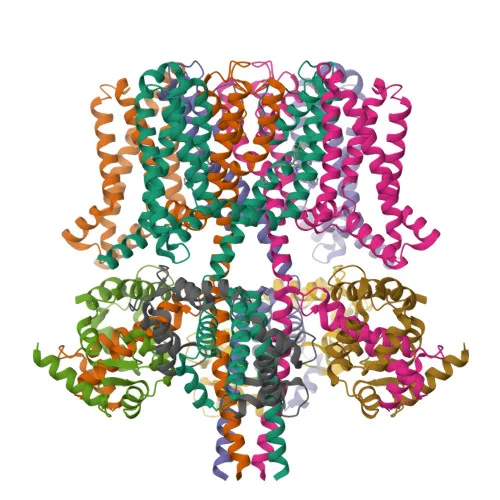
- KCNQ2 encodes potassium voltage-gated channel subfamily KQT member 2, also known as Kv7.2, KV7.2, KQT-like 2, and neuroblastoma-specific potassium channel subunit alpha KvLQT2.
- It is a pore-forming subunit of the voltage-gated potassium (Kv) M-channel, responsible for the M-current, a critical regulator of neuronal excitability. Related references: PMID:24277843 PMID:28793216 PMID:9836639
- The M-channel is typically composed of heterotetramers of KCNQ2 and KCNQ3 subunits. Related references: PMID:10781098 PMID:14534157 PMID:32884139
- The channel has a slowly activating and deactivating potassium conductance, determining subthreshold electrical excitability and synaptic responsiveness. Related references: PMID:14534157 PMID:28793216 PMID:9836639
- In vitro, the KCNQ2-KCNQ3 channel shows permeability to cations with affinity K(+) > Rb(+) > Cs(+) > Na(+), and association with SLC5A3/SMIT1 can alter ion selectivity. Related references: PMID:28793216
- The channel is suppressed by activation of muscarinic acetylcholine receptor CHRM1. Related references: PMID:10684873 PMID:10713961
- KCNQ2 is primarily localized to the cell membrane.
- In adult and fetal brain, KCNQ2 is highly expressed in neuronal cell bodies, with low levels in spinal cord and corpus callosum. Isoform 2 is preferentially expressed in differentiated neurons, while isoform 6 is prominent in fetal brain and brain tumors.
- Gene aliases include BFNC and DEE7, reflecting association with benign familial neonatal convulsions and developmental and epileptic encephalopathy 7.
Experimental Guidance and Technical Tips
- The immunogen is a recombinant fusion protein spanning amino acids 466–665 of human KCNQ2, a cytosolic C‑terminal region, which may favor detection of full‑length and certain splice variants.
- For Western Blot, an expected band at approximately 96 kDa may be observed in lysates from human, mouse, and rat brain tissues or neuronal cell lines; consider using appropriate loading controls.
- Validate antibody specificity with positive (e.g., KCNQ2‑overexpressing cells) and negative (e.g., siRNA knockdown) controls.
- For ELISA, the recombinant protein fragment can be used as a coating antigen or calibrator; optimize assay conditions empirically.
- Always titrate the antibody for your specific sample type and application to determine the optimal working dilution.
CamelBio: Your One-Stop Sourcing Bridge
As a dedicated IVD raw‑material partner, CamelBio streamlines your development with premium antibodies and reagents. Our KCNQ2 polyclonal antibody supports neuroscience and ion channel research, enabling the study of neuronal excitability. From validated monoclonal/polyclonal antibodies to bulk ancillary reagents and rare‑target sourcing, CamelBio provides one‑stop access to accelerate your workflow from concept to clinic.
REQUEST A QUOTE
Our professional team will reply to you within one business day. Please feel free to contact us!