Polyclonal Antibodies
Anti-KCNQ1 Rabbit Polyclonal Antibody for WB and ELISA - P51787
Item Number : CM0023338
Price varies based on specs and customizations
- Application
- WB, ELISA
- Cross Reactivity
- Human, Mouse, Rat
- Protein Weight
- 75kDa

Shipping:
Contact us to get shipping details Enjoy On-time Dispatch Guarantee.
Why Choose Us
Easy ordering process, quality products, and dedicated support for your business success.
Core Product Specifications and Parameters
| Parameter | Value |
|---|---|
| Product Name | KCNQ1 Rabbit pAb |
| Remarks/Alias | LQT; RWS; WRS; LQT1; SQT2; ATFB1; ATFB3; JLNS1; KCNA8; KCNA9; Kv1.9; Kv7.1; KVLQT1; KCNQ1 |
| Species | Human |
| Gene ID (Human) | 3784 |
| Gene ID | 3784 |
| Immunogen | Recombinant fusion protein containing a sequence corresponding to amino acids 250-549 of human KCNQ1 (NP_861463.1) |
| Source | Rabbit |
| Category | Polyclonal Antibodies |
| Application | WB, ELISA |
| Cross Reactivity | Human, Mouse, Rat |
| SWISS | P51787 |
| Protein Weight | 75kDa |
| Shipping | Ice bag |
Biological Background: KCNQ1 Function and Localization
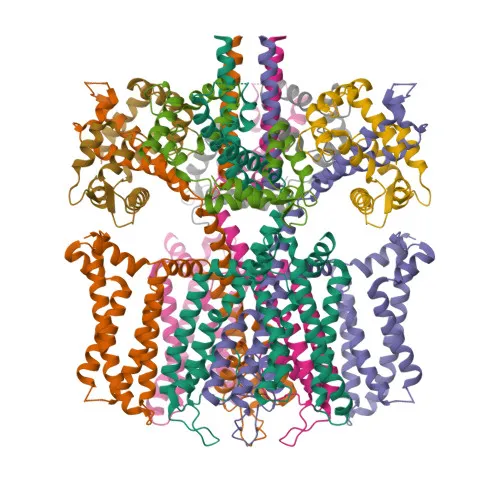
- The KCNQ1 gene encodes the pore-forming alpha subunit of the voltage-gated potassium channel Kv7.1 (KvLQT1), a member of the KQT-like channel family.
- In the heart, KCNQ1 associates with the KCNE1 beta subunit to form the slow delayed rectifier potassium current I(Ks), which is critical for cardiac action potential repolarization (PubMed:10646604, PubMed:11101505, PubMed:8900283).
Related references: PMID:10646604 PMID:11101505 PMID:8900283 - The channel localizes to the cell membrane, and is also found in cytoplasmic vesicles, early endosomes, the endoplasmic reticulum, and membrane rafts; in polarized epithelia, it is present at both apical and basolateral membranes.
- KCNQ1 is abundantly expressed in the heart, pancreas, prostate, kidney, small intestine, and peripheral blood leukocytes, with lower levels in the placenta, lung, spleen, colon, thymus, testis, and ovaries.
- Channel activity is regulated by phosphatidylinositol 4,5-bisphosphate (PIP2) (PubMed:25037568) and can be suppressed by muscarinic agonists such as oxotremorine-M (PubMed:10713961).
Related references: PMID:25037568 PMID:10713961 - An alternative splice isoform is non-functional alone but exerts a modulatory effect when co-expressed with the full-length channel.
- Mutations in KCNQ1 are associated with cardiac arrhythmias including long QT syndrome, short QT syndrome, and atrial fibrillation, as well as congenital deafness.
Experimental Guidance and Technical Tips
- For Western blotting, use reducing conditions and a whole-cell lysate from heart tissue or KCNQ1-expressing cell lines. A band of approximately 75 kDa should be detected; validate specificity in your sample system.
- For ELISA, the antibody may be suitable as a capture or detection reagent with recombinant KCNQ1 protein. Perform optimization and include appropriate controls.
- Sequence homology with human, mouse, and rat KCNQ1 supports cross-reactivity; however, we recommend verifying reactivity if using samples from other species.
CamelBio: Your One-Stop Sourcing Bridge
CamelBio is a one-stop partner for IVD manufacturers and research laboratories, offering validated antibody pairs, bulk ancillary reagents, and custom sourcing of rare raw materials. This anti-KCNQ1 polyclonal antibody aligns with cardiac ion channel and electrophysiology research, and we can assist with scaling your diagnostic or assay development needs. Reach out to explore our full portfolio of potassium channel antibodies and related reagents.
REQUEST A QUOTE
Our professional team will reply to you within one business day. Please feel free to contact us!