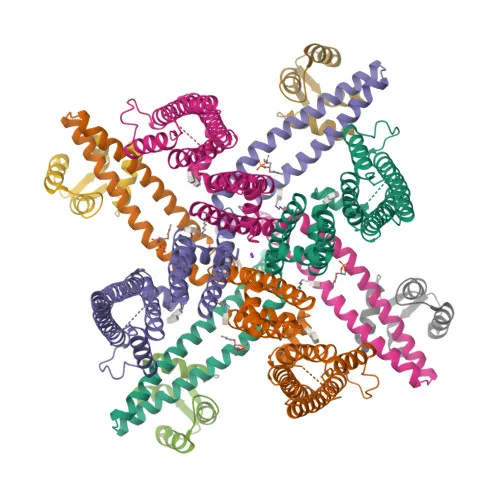
Polyclonal Antibodies
Anti-KCNN4 Rabbit Polyclonal Antibody for WB, ELISA - O15554
Item Number : CM0024693
Price varies based on specs and customizations
- Application
- WB, ELISA
- Cross Reactivity
- Human
- Protein Weight
- 48kDa

Shipping:
Contact us to get shipping details Enjoy On-time Dispatch Guarantee.
Why Choose Us
Easy ordering process, quality products, and dedicated support for your business success.
Core Product Specifications and Parameters
| Parameter | Value |
|---|---|
| Product Name | KCNN4 Rabbit pAb |
| Remarks/Alias | IK; IK1; SK4; DHS2; KCA4; hSK4; IKCA1; hKCa4; KCa3.1; hIKCa1; KCNN4 |
| Species | Human |
| GeneID (Human) | 3783 |
| GeneID | 3783 |
| Immunogen | Recombinant protein |
| Source | Rabbit |
| Category | Polyclonal Antibodies |
| Application | WB, ELISA |
| Cross Reactivity | Human |
| SWISS | O15554 |
| Protein Weight | 48kDa |
| Shipping | Ice bag |
Biological Background: KCNN4 Function and Localization
- KCNN4 encodes the intermediate conductance calcium-activated potassium channel protein 4, also designated KCa3.1, IKCa1, SK4, or the Gardos channel.
- Channel opening is triggered by calcium-dependent calmodulin binding, mediating voltage-independent potassium efflux with a single-channel conductance of ~25 pS and an inwardly rectifying current at depolarized potentials. Related references: PMID:10026195, PMID:10961988, PMID:11425865, PMID:9326665, PMID:9380751, PMID:9407042
- In vascular smooth muscle, KCNN4 contributes to membrane hyperpolarization induced by vasoactive factors, thereby controlling calcium influx during vascular contractility.
- In T-lymphocytes, KCNN4 activation following calcium influx sustains membrane hyperpolarization, promotes further calcium entry, and is required for maximal calcium influx and proliferation upon reactivation of naïve T-cells. Related references: PMID:26418693, PMID:17157250, PMID:18796614
- KCNN4 contributes to EGF-induced macropinocytosis via activation by phosphatidylinositol 3-phosphate (PI(3)P). Related references: PMID:24591580
- The protein localizes to the cell membrane and is enriched at ruffle membranes in cell projections.
- Widely expressed in non-excitable tissues, KCNN4 is implicated in hereditary hemolytic anemia and belongs to the calmodulin-binding potassium channel family with multiple transmembrane helices.
Experimental Guidance and Technical Tips
- The immunogen was designed using a recombinant fusion protein encompassing amino acids 288–427 of human KCNN4, located in the intracellular C-terminal domain. Consider validating reactivity in the relevant species and application.
- For Western blot (WB), a band at approximately 48 kDa is anticipated; include appropriate positive and negative controls and optimize blocking and antibody dilution conditions experimentally.
- For ELISA, utilize an indirect setup with the purified recombinant antigen or native protein lysates; cross-reactivity with other KCNN family members should be assessed.
- Since this is a polyclonal antibody, lot-to-lot consistency should be verified. Perform pilot experiments to determine optimal working dilutions.
CamelBio: Your One-Stop Sourcing Bridge
CamelBio is a dedicated supply-chain partner for IVD manufacturers, offering a comprehensive portfolio of raw materials from antigen to antibody. For researchers and developers focusing on ion channel targets like KCNN4, CamelBio provides bulk polyclonal and monoclonal antibody sourcing, matched pairs, and ancillary reagents to accelerate assay development. With our global sourcing network, we ensure reliable supply for even specialized targets such as calcium-activated potassium channels.
REQUEST A QUOTE
Our professional team will reply to you within one business day. Please feel free to contact us!