Polyclonal Antibodies
Anti-KCNK6 Rabbit Polyclonal Antibody for WB and ELISA - Q9Y257
Item Number : CM0019296
Price varies based on specs and customizations
- Application
- WB, ELISA
- Cross Reactivity
- Human, Mouse, Rat
- Predicted Molecular Weight
- 34kDa

Shipping:
Contact us to get shipping details Enjoy On-time Dispatch Guarantee.
Why Choose Us
Easy ordering process, quality products, and dedicated support for your business success.
Core Product Specifications and Parameters
| Parameter | Value |
|---|---|
| Product Name | KCNK6 Rabbit pAb |
| Remarks/Alias | TOSS; KCNK8; TWIK2; K2p6.1; TWIK-2; KCNK6 |
| Species | Human |
| Gene ID (Human) | 9424 |
| Gene ID | 9424 |
| Immunogen | Recombinant fusion protein containing a sequence corresponding to amino acids 254-313 of human KCNK6 (NP_004814.1). |
| Source | Rabbit |
| Category | Polyclonal Antibodies |
| Application | WB, ELISA |
| Cross Reactivity | Human, Mouse, Rat |
| SWISS | Q9Y257 |
| Protein Weight | 34kDa |
| Shipping | Ice bag |
Biological Background: KCNK6 Function and Localization
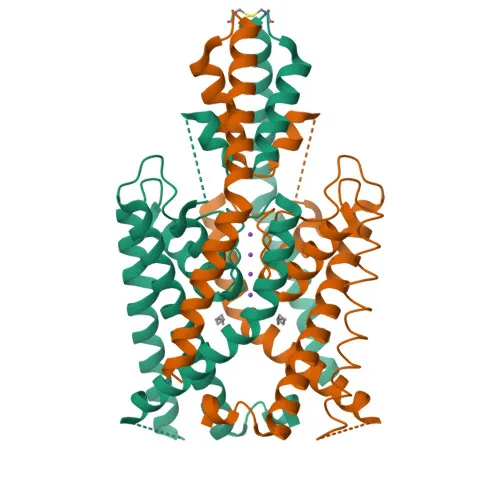
- KCNK6 (Potassium channel subfamily K member 6, also known as TWIK-2) functions as an outward rectifying K+ channel in endolysosomal membranes, regulating lysosome number and size. Related references: PMID:10887187, PMID:28381826
- In macrophages, KCNK6 cooperates with ATP-gated P2RX7 channels to facilitate K+ efflux, which triggers NLRP3 inflammasome activation upon bacterial infection (By similarity).
- Alternative splicing generates at least one isoform that does not display channel activity, indicating functional diversity.
- Subcellular localization is predominantly at the late endosome membrane and lysosome membrane.
- Tissue expression is broad but highest in placenta, pancreas, heart, colon, and spleen; lower in brain and absent in skeletal muscle.
- Contains disulfide bonds, N-linked glycosylation sites, and metal-binding residues, typical of potassium channel regulation.
- Belongs to the two-pore domain potassium channel family, characterized by six transmembrane helices and a pore-forming domain.
Experimental Guidance and Technical Tips
- The immunogen corresponds to a conserved intracellular region (amino acids 254–313), which may detect multiple KCNK6 isoforms. Validate specificity in the relevant sample system.
- For Western blot, the predicted molecular weight is approximately 34 kDa; post-translational modifications (e.g., glycosylation) may result in a slightly higher observed band.
- Cross-reactivity with mouse and rat is reported; consider using rodent tissue or cell lysates for comparative studies.
- For ELISA, pairing with a capture antibody or using the recombinant protein antigen as a standard can enhance assay performance.
- Buffer composition and sample preparation may influence detection; optimization under your experimental conditions is recommended.
CamelBio: Your One-Stop Sourcing Bridge
CamelBio provides a comprehensive portfolio of IVD antibodies and ancillary raw materials, supporting your research into potassium channels, lysosomal biology, and NLRP3 inflammasome pathways. We supply validated antibody pairs, optimized polyclonal and monoclonal reagents, and bulk ancillary materials to facilitate seamless assay development. Our dedicated sourcing services also cover rare targets, helping you bridge gaps from concept to clinical application.
REQUEST A QUOTE
Our professional team will reply to you within one business day. Please feel free to contact us!