Polyclonal Antibodies
Anti-KCND2 Polyclonal Antibody for WB, ELISA - Q9NZV8
Item Number : CM0028268
Price varies based on specs and customizations
- Application
- WB, ELISA
- Cross Reactivity
- Mouse
- Protein Weight
- 71kDa

Shipping:
Contact us to get shipping details Enjoy On-time Dispatch Guarantee.
Why Choose Us
Easy ordering process, quality products, and dedicated support for your business success.
Core Product Specifications and Parameters
| Parameter | Value |
|---|---|
| Product Name | KCND2 Rabbit pAb |
| Remarks/Alias | RK5; KV4.2; KCND2 |
| Species | Human |
| Gene ID (Human) | 3751 |
| Gene ID | 3751 |
| Immunogen | Recombinant fusion protein containing a sequence corresponding to amino acids 501-630 of human KCND2 (NP_036413.1). |
| Source | Rabbit |
| Category | Polyclonal Antibodies |
| Application | WB, ELISA |
| Cross Reactivity | Mouse |
| SWISS | Q9NZV8 |
| Protein Weight | 71kDa |
| Shipping | Ice bag |
Biological Background: KCND2 Function and Localization
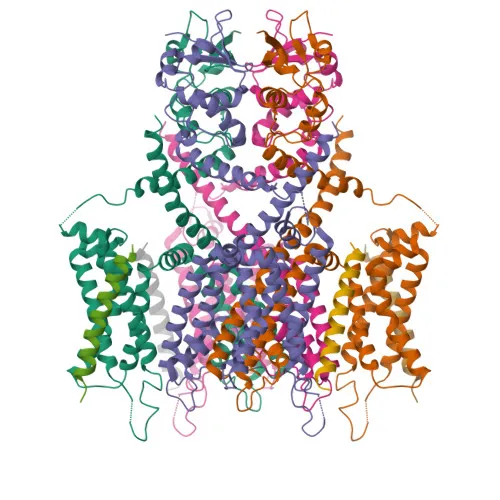
- KCND2 (KV4.2) is a member of the voltage-gated potassium channel subfamily D, primarily mediating the fast-inactivating A-type potassium current I_SA in brain neurons to regulate neuronal excitability.
- It forms homotetrameric and heterotetrameric potassium-selective channels that open and close in response to voltage changes across the membrane. Related references: PMID:10551270, PMID:11507158, PMID:14623880
- Channel surface expression and gating kinetics are strongly enhanced by auxiliary subunits KCNIP1-4 and DPP6/10, which shift activation and inactivation thresholds. Related references: PMID:14623880, PMID:14980201, PMID:15454437
- Depolarization drives the channel from a resting closed state through a non-conducting activated state before it either opens (O state) or inactivates (I state). Related references: PMID:35597238
- KCND2 localizes to the cell membrane, dendrites, postsynaptic membrane, and dendritic spines in neurons, consistent with its role in modulating synaptic signaling.
- Protein expression is highest in brain regions (amygdala, hippocampus, cerebellum, caudate nucleus, substantia nigra, thalamus) and ovary, while barely detectable in heart, kidney, liver, or lung.
- It undergoes phosphorylation and binds zinc, and genetic variants are implicated in autism spectrum disorder and epilepsy.
Experimental Guidance and Technical Tips
- The immunogen (aa 501-630) targets the intracellular C‑terminal region; consider this when probing for surface‑exposed epitopes or native conformations.
- For Western blotting, the predicted molecular weight is ~71 kDa; however, post‑translational modifications (e.g., phosphorylation) or interacting partners may shift the apparent band size.
- Validate the antibody in your specific sample system—for example, mouse brain lysate can serve as a positive control given the reported mouse cross‑reactivity.
- In ELISA applications, a recombinant KCND2 protein or cell lysate known to express the target may be used; assay conditions should be optimized empirically.
CamelBio: Your One-Stop Sourcing Bridge
CamelBio serves as a comprehensive IVD raw-material partner for diagnostic manufacturers and research labs, offering one-stop access to validated antibodies, antigen-grade proteins, and ancillary reagents. This anti-KCND2 polyclonal antibody supports neuroscience and ion channel assay development, from early discovery through clinical translation. In addition to this product, we provide bulk sourcing of matched antibody pairs, optimized monoclonal and polyclonal reagents, and customized raw‑material solutions for rare targets.
REQUEST A QUOTE
Our professional team will reply to you within one business day. Please feel free to contact us!