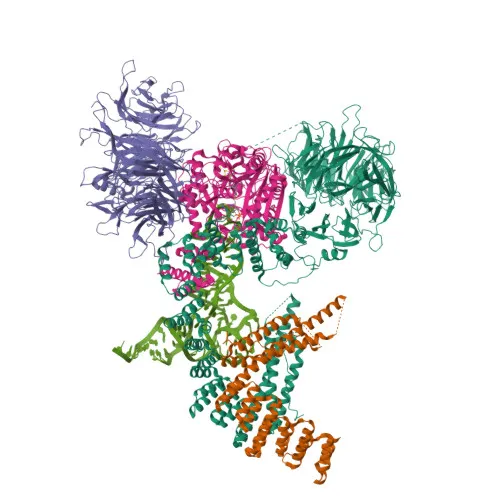
Monoclonal Antibodies
Anti-KAT9/Elp3 Monoclonal Antibody for WB, IHC-P, ELISA - Q9H9T3
Item Number : CM0003499
Price varies based on specs and customizations
- Application
- WB, IHC-P, ELISA
- Cross Reactivity
- Human, Mouse, Rat
- Protein Weight
- 62kDa

Shipping:
Contact us to get shipping details Enjoy On-time Dispatch Guarantee.
Why Choose Us
Easy ordering process, quality products, and dedicated support for your business success.
Core Product Specifications and Parameters
| Parameter | Value |
|---|---|
| Product Name | KAT9/Elp3 Rabbit mAb |
| Remarks/Alias | KAT9; KAT9/Elp3 |
| Species | Human |
| GeneID (Human) | 55140 |
| GeneID | 55140 |
| Immunogen | Recombinant fusion protein containing a sequence corresponding to amino acids 1-547 of human KAT9/Elp3 (Q9H9T3). |
| Source | Rabbit |
| Category | Monoclonal Antibodies |
| Application | WB, IHC-P, ELISA |
| Cross Reactivity | Human, Mouse, Rat |
| SWISS | Q9H9T3 |
| Protein Weight | 62kDa |
| Shipping | Ice bag |
Biological Background: KAT9/Elp3 Function and Localization
- KAT9/Elp3, also known as Elongator complex protein 3 or tRNA uridine(34) acetyltransferase, acts as the catalytic subunit of the elongator complex and mediates formation of carboxymethyluridine in the wobble base at position 34 in tRNAs (PubMed:29415125). Related references: PMID:29415125
- It is required for multiple tRNA modifications, including mcm5U, mcm5s2U, and ncm5U, playing a central role in tRNA processing and translation fidelity.
- While originally proposed to also act as a protein lysine acetyltransferase, recent evidence indicates that ELP3 primarily functions as a tRNA acetyltransferase (PubMed:29415125); it is not a major acetyltransferase of tubulin (PubMed:22153374). Related references: PMID:29415125 PMID:22153374
- KAT9/Elp3 is involved in neurogenesis, regulating the migration and branching of projection neurons in the developing cerebral cortex through a process dependent on alpha-tubulin acetylation (PubMed:19185337). Related references: PMID:19185337
- Subcellular localization studies show both cytoplasmic and nuclear distribution, consistent with its roles in tRNA modification and potential nuclear functions.
- Tissue expression is noted in the cerebellum and spinal motor neurons, linking it to motor neuron biology and neurodegenerative conditions such as amyotrophic lateral sclerosis.
- The protein contains an iron-sulfur cluster and binds RNA and tRNA, with keywords highlighting its involvement in metal-binding, S-adenosyl-L-methionine-dependent methylation, and neurodegeneration.
Experimental Guidance and Technical Tips
- The immunogen corresponds to the full-length human KAT9/Elp3 protein (amino acids 1–547), suggesting the antibody may recognize both native and denatured forms; this design supports Western blot (predicted band ~62 kDa) and IHC-P applications.
- For WB, validate the antibody in lysates from human, mouse, or rat cells known to express ELP3 (e.g., cerebellum or motor neuron lines); include appropriate loading controls.
- In IHC-P, consider antigen retrieval methods (citrate or EDTA buffer) and optimize primary antibody dilution; known expression in cerebellum and spinal cord provides a positive control tissue.
- For ELISA, pairing with a detection antibody against the same recombinant protein used as immunogen may yield a quantitative assay; cross-reactivity with mouse and rat orthologs should be confirmed experimentally.
- Since ELP3 is an iron-sulfur cluster protein, avoid reducing agents that may disrupt the cluster if functional studies are planned; standard reducing SDS-PAGE conditions are suitable for denaturing Western blot.
CamelBio: Your One-Stop Sourcing Bridge
CamelBio provides diagnostic manufacturers, labs, and research institutes with one-stop access to IVD raw materials, technical services, and consulting—covering every stage from concept to clinic. This anti-KAT9/Elp3 antibody supports research and assay development in tRNA modification, neurogenesis, and neurodegeneration fields. Beyond individual antibodies, CamelBio supplies validated antibody pairs, optimized monoclonal/polyclonal antibodies, bulk ancillary reagents, and can assist in sourcing rare-target raw materials to accelerate your IVD kit development and validation workflows.
REQUEST A QUOTE
Our professional team will reply to you within one business day. Please feel free to contact us!