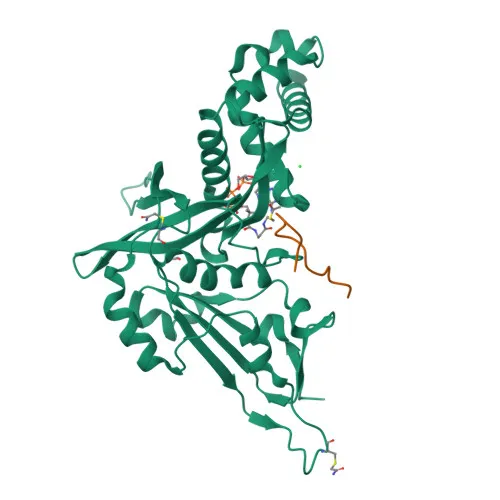
Monoclonal Antibodies
Anti-KAT1/HAT1 Rabbit Monoclonal Antibody (WB, IP, IHC-P, IF/ICC, ELISA) - O14929
Item Number : CM0011236
Price varies based on specs and customizations
- Application
- WB, IP, IHC-P, IF/ICC, ELISA
- Cross Reactivity
- Human, Mouse, Rat
- Protein Weight
- 50 kDa

Shipping:
Contact us to get shipping details Enjoy On-time Dispatch Guarantee.
Why Choose Us
Easy ordering process, quality products, and dedicated support for your business success.
Core Product Specifications and Parameters
| Parameter | Value |
|---|---|
| Product Name | [KO Validated] KAT1/HAT1 Rabbit mAb |
| Remarks/Alias | KAT1; KAT1/HAT1 |
| Species | Human |
| Gene ID | 8520 |
| Immunogen | Recombinant fusion protein containing a sequence corresponding to amino acids 200-400 of human KAT1/HAT1 (NP_003633.2). |
| Source | Rabbit |
| Category | Monoclonal Antibodies |
| Application | WB, IP, IHC-P, IF/ICC, ELISA |
| Cross Reactivity | Human, Mouse, Rat |
| SWISS | O14929 |
| Protein Weight | 50 kDa |
| Shipping | Ice bag |
Biological Background: KAT1/HAT1 Function and Localization
-
KAT1/HAT1 is a histone acetyltransferase that acetylates histone H4 at Lys-5 (H4K5ac) and Lys-12 (H4K12ac), playing a critical role in chromatin assembly and nucleosome formation. Related references: PMID:11585814 PMID:22615379
-
It drives histone H4 production by binding to the H4 promoter, coupling histone synthesis to S-phase progression and ensuring proper chromatin replication. Related references: PMID:31278053
-
Beyond histone acetylation, HAT1 promotes homologous recombination repair by facilitating histone turnover and acetylated H3.3 incorporation at DNA double-strand breaks. Related references: PMID:23653357
-
The enzyme localizes predominantly to the nucleus (nuclear matrix and nucleoplasm) but is also found in the cytoplasm and mitochondria.
-
HAT1 is a member of the histone acetyltransferase family and can use methacryl-CoA to methacrylate histones, expanding its enzymatic repertoire. Related references: PMID:34961760
-
It is subject to post-translational modifications, including acetylation and phosphorylation, which may regulate its activity or localization.
-
During hepatitis B virus infection, HAT1 contributes to viral replication by acetylating histone H4 on the covalently closed circular DNA (cccDNA) minichromosome.
Experimental Guidance and Technical Tips
-
The immunogen comprises amino acids 200–400 of human KAT1/HAT1, a region chosen for generating highly specific monoclonal antibodies; this recombinant sequence may be suitable for antibody specificity validation.
-
For Western blot (WB) analysis, test the antibody against lysates from human, mouse, or rat cell lines, expecting a band at approximately 50 kDa; knockout (KO) validation confirms target specificity.
-
In immunoprecipitation (IP) experiments, optimize antibody concentration and incubation conditions for your specific sample type to achieve efficient enrichment of KAT1/HAT1.
-
For immunohistochemistry (IHC-P and IF/ICC), include appropriate antigen retrieval steps and validate staining patterns using known positive and negative control tissues or cells.
-
The antibody’s reactivity with multiple species (human, mouse, rat) allows flexibility in model system selection; however, cross-reactivity should be verified in your experimental setup.
CamelBio: Your One-Stop Sourcing Bridge
CamelBio provides diagnostic manufacturers and research laboratories with streamlined access to high-quality IVD raw materials, including validated monoclonal antibodies like this anti-KAT1/HAT1 antibody. Our portfolio covers a broad range of chromatin biology and epigenetic targets, offering reliable antibody pairs, bulk reagents, and custom sourcing solutions to support your diagnostic development from concept to clinic.
Product Datasheet
Anti-KAT1/HAT1 Rabbit Monoclonal Antibody (WB, IP, IHC-P, IF/ICC, ELISA) - O14929
REQUEST A QUOTE
Our professional team will reply to you within one business day. Please feel free to contact us!