Monoclonal Antibodies
Anti-Kallikrein 8 Rabbit Monoclonal Antibody for WB, IHC-P, ELISA - O60259
Item Number : CM0005914
Price varies based on specs and customizations
- Application
- WB, IHC-P, ELISA
- Cross Reactivity
- Human
- Protein Weight
- 28kDa

Shipping:
Contact us to get shipping details Enjoy On-time Dispatch Guarantee.
Why Choose Us
Easy ordering process, quality products, and dedicated support for your business success.
Core Product Specifications and Parameters
| Parameter | Value |
|---|---|
| Product Name | Kallikrein 8 Rabbit mAb |
| Remarks/Alias | NP; HNP; NRPN; PRSS19; TADG14; Kallikrein 8 |
| Species | Human |
| GeneID (human) | 11202 |
| GeneID | 11202 |
| Immunogen | Synthetic Peptide: A synthetic peptide corresponding to a sequence within amino acids 161-260 of human Kallikrein 8 (O60259). |
| Source | Rabbit |
| Category | Monoclonal Antibodies |
| Application | WB, IHC-P, ELISA |
| Cross Reactivity | Human |
| SWISS | O60259 |
| Protein Weight | 28kDa |
| Shipping | Ice bag |
Biological Background: Kallikrein-8 Function and Localization
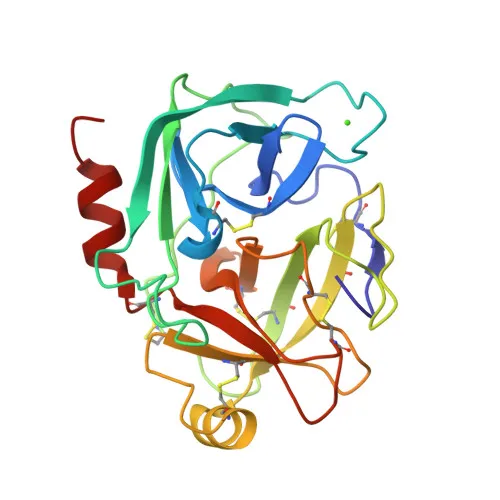
- Kallikrein-8 (Neuropsin) is a serine protease belonging to the tissue kallikrein family, encoded by the KLK8 gene. It exists in multiple isoforms generated by alternative splicing.
- It cleaves substrates such as L1CAM in response to neural activity, promotes neurite outgrowth, and modulates synaptic plasticity, thereby playing a critical role in memory acquisition and hippocampal function.
- The protease also degrades extracellular matrix components including fibronectin, collagen type IV, and fibrinogen, implicating it in tissue remodeling and cancer progression.
- Subcellular localization includes secretion into the extracellular space and cytoplasmic presence, consistent with its roles in both intercellular signaling and intracellular processing.
- Tissue expression is diverse: isoform 1 is abundant in pancreas, isoform 2 is brain-specific, and both are found in fetal tissues. Overexpression is associated with Alzheimer's disease, ovarian carcinoma, and inflammatory skin disorders like psoriasis.
- Key post‑translational features include glycosylation, disulfide bond formation, and activation from a zymogen precursor, as indicated by UniProt keywords.
Experimental Guidance and Technical Tips
- The immunogen is a synthetic peptide corresponding to the 161–260 region of human Kallikrein‑8. This linear epitope design is suitable for Western blot under denaturing conditions.
- For IHC‑P, consider the need for antigen retrieval and validate staining in positive (e.g., skin or brain) and negative control tissues to confirm specificity.
- In ELISA, the peptide immunogen can serve as a positive control to calibrate binding. Ensure that the assay conditions (e.g., coating buffer, blocking agent) are optimized for monoclonal antibodies.
- Because Kallikrein‑8 is both secreted and cytoplasmic, fractionation or specific extraction protocols may be required depending on the target localization in your samples.
CamelBio: Your One-Stop Sourcing Bridge
CamelBio offers diagnostic developers and researchers a streamlined gateway to premium IVD raw materials. For studies involving Kallikrein‑8 in neurodegeneration, cancer, or dermatology, we can supply validated antibody pairs, high‑affinity monoclonal/polyclonal antibodies, and complementary reagents in bulk. Our sourcing network and technical support help you seamlessly scale from discovery to clinical application.
REQUEST A QUOTE
Our professional team will reply to you within one business day. Please feel free to contact us!