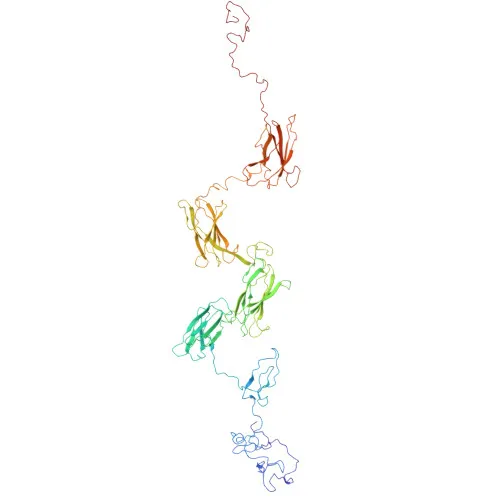
Polyclonal Antibodies
Anti-KAL1 Rabbit Polyclonal Antibody for WB, IF-P, ELISA - P23352
Item Number : CM0019956
Price varies based on specs and customizations
- Application
- WB, IF-P, ELISA
- Cross Reactivity
- Human, Mouse, Rat
- Protein Weight
- 76kDa

Shipping:
Contact us to get shipping details Enjoy On-time Dispatch Guarantee.
Why Choose Us
Easy ordering process, quality products, and dedicated support for your business success.
Core Product Specifications and Parameters
| Parameter | Value |
|---|---|
| Product Name | KAL1 Rabbit pAb |
| Remarks/Alias | HH1; HHA; KAL; KMS; KAL1; ADMLX; WFDC19; KALIG-1 |
| Species | Human |
| Gene ID (Human) | 3730 |
| Immunogen | Synthetic Peptide|A synthetic peptide corresponding to a sequence within amino acids 200-300 of human KAL1 (NP_000207.2). |
| Source | Rabbit |
| Category | Polyclonal Antibodies |
| Application | WB, IF-P, ELISA |
| Cross Reactivity | Human, Mouse, Rat |
| SWISS | P23352 |
| Protein Weight | 76kDa |
| Shipping | Ice bag |
Biological Background: Anosmin-1 (KAL1) Function and Localization
- Anosmin-1, encoded by the ANOS1 gene (also known as KAL1, ADMLX, KALIG1), is a secreted and cell membrane-associated adhesion molecule with a predicted molecular weight of ~76 kDa. It belongs to the whey acidic protein (WAP) domain-containing protein family and exhibits structural features of a serine protease inhibitor.
- In the developing olfactory bulb, Anosmin-1 exerts dual branch-promoting and guidance activity on mitral and tufted cell collaterals, facilitating their correct targeting to the olfactory cortex. It also acts as a chemoattractant for fetal olfactory epithelial cells.
- The protein contains multiple domains, including a WAP domain, fibronectin type III repeats, and a C-terminal region with homology to serine protease inhibitors, enabling interactions with heparin and cell surface molecules.
- Subcellularly, Anosmin-1 is localized at the cell membrane and is also secreted into the extracellular space, consistent with its roles in cell adhesion and chemotaxis.
- Tissue expression studies have confirmed Anosmin-1 protein in the cerebellum. Its expression in the developing olfactory system and other regions underscores its neurodevelopmental importance.
- Post-translational modifications include N-linked glycosylation and disulfide bond formation, which are critical for stability and function. The protein also contains a signal peptide for secretion.
- Mutations in ANOS1 are associated with X-linked Kallmann syndrome, a developmental disorder characterized by hypogonadotropic hypogonadism and anosmia, highlighting its essential role in neuronal migration and olfactory system development.
Experimental Guidance and Technical Tips
- The immunogen is a synthetic peptide from amino acids 200–300 of human KAL1; thus, the antibody recognizes an epitope within this region. Confirm epitope accessibility in your specific assay conditions.
- For Western blotting, the predicted molecular weight is ~76 kDa, but glycosylation and other modifications may cause a shift or multiple bands. Validate using appropriate positive controls (e.g., human cerebellum lysate).
- In immunofluorescence, Anosmin-1 may be detected at the plasma membrane and/or in secretory vesicles. Permeabilization with Triton X-100 or saponin is recommended to visualize intracellular pools, but consider that secreted forms might be lost without fixation optimization.
- For ELISA, the antibody can be used as a capture or detection reagent. Pair it with a validated detection antibody in a sandwich ELISA format, and test against recombinant Anosmin-1 or biological samples to establish working concentrations.
- Cross-reactivity with mouse and rat is reported; however, sequence homology in the immunogen region should be verified to ensure consistent detection across species.
- This polyclonal antibody is suitable for studies of olfactory development, Kallmann syndrome pathology, and cell migration. Consider combining with other neuronal markers for multiplex analysis.
CamelBio: Your One-Stop Sourcing Bridge
CamelBio offers a comprehensive portfolio of IVD raw materials, including validated antibody pairs, optimized monoclonal/polyclonal antibodies, and bulk ancillary reagents. This anti-KAL1 antibody supports neuroscience and rare disease research, particularly for Kallmann syndrome and olfactory development. Our team assists with sourcing rare targets, custom antibody development, and supply chain consolidation to accelerate your diagnostic or research programs from concept to clinic.
REQUEST A QUOTE
Our professional team will reply to you within one business day. Please feel free to contact us!