Polyclonal Antibodies
Anti-JNK3 Polyclonal Antibody for WB and ELISA - P53779
Item Number : CM0021124
Price varies based on specs and customizations
- Application
- WB, ELISA
- Cross Reactivity
- Mouse
- Protein Weight
- 44kDa

Shipping:
Contact us to get shipping details Enjoy On-time Dispatch Guarantee.
Why Choose Us
Easy ordering process, quality products, and dedicated support for your business success.
Core Product Specifications and Parameters
| Parameter | Value |
|---|---|
| Product Name | JNK3 Rabbit pAb |
| Remarks/Alias | JNK3; JNK3A; PRKM10; SAPK1b; p493F12; p54bSAPK |
| Species | Human |
| Gene ID (Human) | 5602 |
| Immunogen | Recombinant protein |
| Source | Rabbit |
| Category | Polyclonal Antibodies |
| Application | WB, ELISA |
| Cross Reactivity | Mouse |
| SWISS | P53779 |
| Protein Weight | 44kDa |
| Shipping | Ice bag |
Biological Background: JNK3 Function and Localization
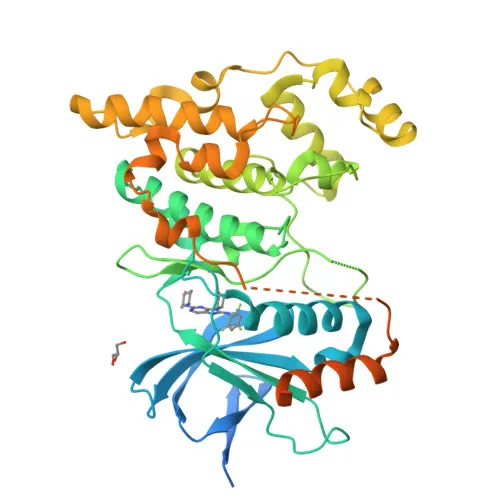
- Mitogen-activated protein kinase 10 (MAPK10), also known as JNK3, SAPK1b, or p493F12, is a serine/threonine-protein kinase belonging to the MAP kinase family.
- It is a key component of the stress-activated protein kinase/c-Jun N-terminal kinase (SAP/JNK) signaling pathway, activated by extracellular stimuli such as pro-inflammatory cytokines or physical stress, and plays critical roles in neuronal proliferation, differentiation, migration, and apoptosis.
- MAPK10 phosphorylates transcription factors like c-Jun and ATF2 to regulate AP-1 transcriptional activity, and also targets substrates such as STMN2, APP, and CLOCK-BMAL1, thereby influencing neuronal apoptosis, amyloid-beta signaling, and circadian rhythms (PubMed:22441692). Related references: PMID:22441692
- The kinase is phosphorylated and activated by upstream dual-specificity kinases MAP2K4/MKK4 and MAP2K7/MKK7 in the canonical MAPK cascade.
- It phosphorylates JUND, and this phosphorylation is inhibited in the presence of MEN1 (PubMed:22327296). Related references: PMID:22327296
- Subcellular localization includes the cytoplasm, membrane, nucleus, and mitochondrion.
- Tissue expression is highly specific to a subset of neurons in the nervous system, including the hippocampus, cerebellum, striatum, brain stem, and weakly in spinal cord, with very weak expression in testis and kidney.
- Alternative splicing, ATP-binding, and palmitoylation are noted features, and chromosomal rearrangements have been associated with epilepsy and intellectual disability.
Experimental Guidance and Technical Tips
- The immunogen comprises amino acids 175-464 of human JNK3, covering a region that includes the kinase domain, which is highly conserved; this may contribute to the observed cross-reactivity with mouse.
- For Western blot, the predicted molecular weight is approximately 44 kDa; however, note that Uniprot lists a calculated molecular weight of ~52.5 kDa, possibly due to isoforms or post-translational modifications; validate with specific cell or tissue lysates.
- For ELISA, titration and optimization are recommended; consider using recombinant JNK3 protein as a standard.
- Since JNK3 expression is neuron-specific, brain tissue or neuronal cell lines are appropriate positive controls.
CamelBio: Your One-Stop Sourcing Bridge
CamelBio provides diagnostic manufacturers and research institutes with a comprehensive portfolio of IVD raw materials, including validated antibody pairs and bulk reagents for kinase signaling targets like JNK3. Whether you need optimized polyclonal antibodies, ancillary reagents, or rare target sourcing, our one-stop platform streamlines your development pipeline from concept to clinic.
REQUEST A QUOTE
Our professional team will reply to you within one business day. Please feel free to contact us!