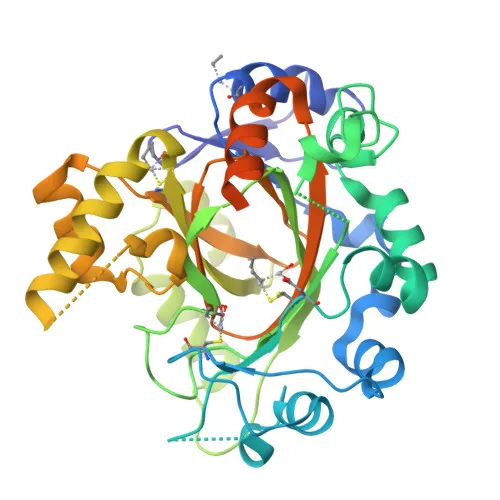
Polyclonal Antibodies
Anti-JMJD1C Rabbit Polyclonal Antibody for WB, IHC-P, ELISA - Q15652
Item Number : CM0023332
Price varies based on specs and customizations
- Application
- WB, IHC-P, ELISA
- Cross Reactivity
- Human, Mouse, Rat
- Protein Weight
- 285kDa

Shipping:
Contact us to get shipping details Enjoy On-time Dispatch Guarantee.
Why Choose Us
Easy ordering process, quality products, and dedicated support for your business success.
Core Product Specifications and Parameters
| Parameter | Value |
|---|---|
| Product Name | JMJD1C Rabbit pAb |
| Remarks/Alias | KDM3C; TRIP8; TRIP-8; JMJD1C |
| Species | Human |
| Gene ID (Human) | 221037 |
| Gene ID | 221037 |
| Immunogen | Recombinant fusion protein containing a sequence corresponding to amino acids 354-448 of human JMJD1C (NP_116165.1) |
| Source | Rabbit |
| Category | Polyclonal Antibodies |
| Application | WB, IHC-P, ELISA |
| Cross Reactivity | Human, Mouse, Rat |
| SWISS | Q15652 |
| Protein Weight | 285kDa |
| Shipping | Ice bag |
Biological Background: JMJD1C Function and Localization
- JMJD1C (Jumonji domain-containing protein 1C), also known as KDM3C, TRIP8, and JHDM2C, is a member of the JMJD1/KDM3 family of lysine demethylases.
- It catalyzes the demethylation of lysine residues on non-histone substrates, such as STAT3 and MDC1, regulating key cellular processes. Demethylation of MDC1 promotes its interaction with RNF8 and facilitates RNF8-dependent ubiquitination, essential for DNA double-strand break repair. Related references: PMID:24240613
- The enzymatic activity of JMJD1C toward histone proteins remains debated; while it may act as a context-specific histone demethylase (e.g., H3K9me2 demethylation at lipogenic gene promoters), it may also function as a scaffold that recruits other active demethylase complexes. Related references: PMID:23593242 PMID:24240613 PMID:32034158
- In the liver, JMJD1C is recruited by USF1 to lipogenic promoters in response to insulin or feeding, potentially enhancing chromatin accessibility and lipogenic gene transcription. Related references: PMID:32034158
- JMJD1C localizes to the nucleus and functions as a coactivator of the androgen receptor, playing an indispensable role in spermatogenesis.
- The protein contains zinc-finger domains and belongs to the dioxygenase superfamily, requiring iron as a cofactor for its demethylase activity. Post-translational modifications, such as phosphorylation and ubiquitination, modulate its function.
- With a molecular weight of approximately 285 kDa, JMJD1C is a large multi-domain chromatin regulator implicated in transcription regulation and DNA repair.
Experimental Guidance and Technical Tips
- The immunogen encompasses amino acids 354–448 of human JMJD1C, an N‑terminal region distinct from the catalytic Jumonji domain. Researchers should consider this when designing domain-specific detection or functional studies.
- For Western blotting, JMJD1C migrates at approximately 285 kDa. Use a low‑percentage SDS‑PAGE gel (e.g., 6–8%) and extended transfer times to ensure efficient transfer of this high‑molecular‑weight protein.
- In immunohistochemistry (IHC‑P), signal may be nuclear. Include appropriate tissue controls and validate staining in the relevant species (human, mouse, or rat).
- ELISA applications can be developed for quantitative detection; optimal coating and detection conditions should be determined experimentally.
CamelBio: Your One-Stop Sourcing Bridge
CamelBio provides diagnostic manufacturers and researchers with one-stop access to high-quality IVD raw materials, including this anti-JMJD1C polyclonal antibody for chromatin regulation and DNA repair studies. Our portfolio extends to validated antibody pairs, bulk ancillary reagents, and custom sourcing of rare-target antibodies, supporting your assay development from research to clinical application.
REQUEST A QUOTE
Our professional team will reply to you within one business day. Please feel free to contact us!