Polyclonal Antibodies
Anti-JAG2 Rabbit Polyclonal Antibody for WB, IF/ICC, ELISA - Q9Y219
Item Number : CM0018458
Price varies based on specs and customizations
- Application
- WB, IF/ICC, ELISA
- Cross Reactivity
- Human, Mouse, Rat
- Protein Weight
- 133kDa

Shipping:
Contact us to get shipping details Enjoy On-time Dispatch Guarantee.
Why Choose Us
Easy ordering process, quality products, and dedicated support for your business success.
Core Product Specifications and Parameters
| Parameter | Value |
|---|---|
| Product Name | JAG2 Rabbit pAb |
| Remarks/Alias | HJ2; SER2; LGMDR27; JAG2 |
| Species | Human |
| Gene ID (Human) | 3714 |
| Gene ID | 3714 |
| Immunogen | Recombinant protein: Recombinant fusion protein containing a sequence corresponding to amino acids 24-200 of human JAG2 (NP_002217.3). |
| Source | Rabbit |
| Category | Polyclonal Antibodies |
| Application | WB, IF/ICC, ELISA |
| Cross Reactivity | Human, Mouse, Rat |
| SWISS | Q9Y219 |
| Protein Weight | 133kDa |
| Shipping | Ice bag |
Biological Background: JAG2 Function and Localization
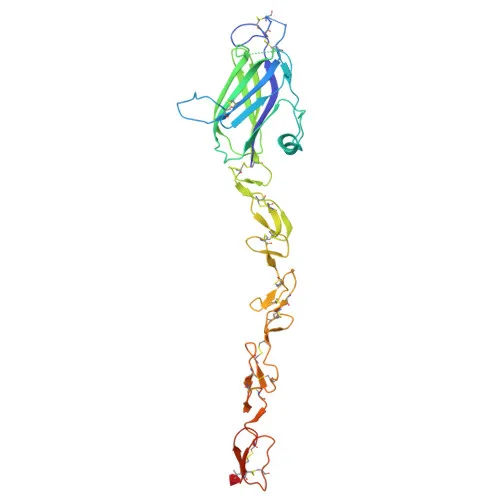
- JAG2 encodes Protein jagged-2, a single-pass type I transmembrane protein that belongs to the Jagged family of Notch ligands.
- It contains a signal peptide, multiple EGF-like repeats, a cysteine-rich domain, and a cytoplasmic tail, with predicted molecular weight of approximately 133 kDa.
- As a putative Notch ligand, JAG2 mediates cell–cell communication through the Notch signaling pathway, influencing cell fate decisions, proliferation, and differentiation.
- JAG2 is involved in limb development and likely plays broader roles in embryonic patterning and tissue morphogenesis.
- Subcellularly, JAG2 localizes to the plasma membrane, consistent with its role in receptor–ligand interactions at the cell surface.
- Tissue expression is predominant in heart, placenta, and skeletal muscle, lower in pancreas, and very low in brain, lung, liver, and kidney.
- Mutations in JAG2 are associated with limb-girdle muscular dystrophy (LGMDR27), highlighting its importance in muscle maintenance.
- Alternative splicing produces multiple isoforms, and the protein undergoes glycosylation and phosphorylation, which may modulate its activity.
Experimental Guidance and Technical Tips
- The immunogen covers the N-terminal extracellular region (amino acids 24–200), potentially recognizing the mature ligand exposed on the cell surface.
- For Western blot, a band around 133 kDa is expected; validate with positive lysates from JAG2-expressing tissues such as heart or skeletal muscle.
- In immunofluorescence/ICC, expect membrane staining; include appropriate permeabilization steps to detect the intracellular epitope if required.
- Cross-reactivity with mouse and rat enables comparative studies; however, always confirm specificity in the respective species.
- ELISA applications can be explored; consider pairing this antibody with a detection antibody targeting a distinct epitope for sandwich assays.
- Alternative splicing and post-translational modifications may result in multiple bands; use freshly prepared lysates and protease/phosphatase inhibitors.
- Store aliquots upon arrival at -20°C or -80°C as recommended; avoid repeated freeze–thaw cycles.
CamelBio: Your One-Stop Sourcing Bridge
CamelBio provides diagnostic manufacturers, laboratories, and research institutes with comprehensive access to IVD raw materials, technical services, and consulting—from concept to clinic. This anti-JAG2 antibody supports developmental biology and muscular dystrophy research, and we can supply validated antibody pairs, optimized monoclonal/polyclonal antibodies, bulk ancillary reagents, and rare target raw-material sourcing to streamline your workflows. Partner with CamelBio to accelerate assay development and secure a reliable supply chain.
REQUEST A QUOTE
Our professional team will reply to you within one business day. Please feel free to contact us!