Polyclonal Antibodies
Anti-IRF7 Rabbit Polyclonal Antibody for WB, ELISA - Q92985
Item Number : CM0014566
Price varies based on specs and customizations
- Application
- WB, ELISA
- Cross Reactivity
- Mouse
- Protein Weight
- 54kDa

Shipping:
Contact us to get shipping details Enjoy On-time Dispatch Guarantee.
Why Choose Us
Easy ordering process, quality products, and dedicated support for your business success.
Core Product Specifications and Parameters
| Parameter | Specification |
|---|---|
| Product Name | IRF7 Rabbit pAb |
| Remarks/Alias | IMD39; IRF-7; IRF7A; IRF7B; IRF7C; IRF7H; IRF-7H; IRF7 |
| Species | Human |
| GeneID (Human) | 3665 |
| GeneID | 3665 |
| Immunogen | Synthetic peptide corresponding to a sequence within amino acids 50-150 of human IRF7 (NP_001563.2) |
| Source | Rabbit |
| Category | Polyclonal Antibodies |
| Application | WB, ELISA |
| Cross Reactivity | Mouse |
| SWISS | Q92985 |
| Protein Weight | 54kDa |
| Shipping | Ice bag |
Biological Background: IRF7 Function and Localization
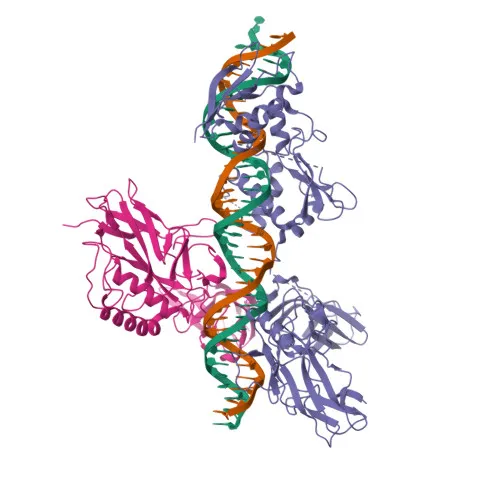
- IRF7 is a key transcriptional regulator of type I interferon (IFN)-dependent immune responses, playing a critical role in the innate immune response against DNA and RNA viruses (PubMed:28342865, PubMed:28768858). Related references: PMID:28342865 PMID:28768858
- It controls the transcription of type I IFN genes (IFN-alpha and IFN-beta) and IFN-stimulated genes (ISG) by binding to an interferon-stimulated response element (ISRE) in their promoters (PubMed:17574024, PubMed:32972995). Related references: PMID:17574024 PMID:32972995
- In uninfected cells, IRF7 exists in an inactive form in the cytoplasm; following viral infection or TLR signaling, it is phosphorylated by IKBKE and TBK1 kinases, leading to dimerization and nuclear translocation where it activates transcription.
- IRF7 regulates EBV latency by binding to the Q promoter of EBNA1 (PubMed:11073981, PubMed:12374802, PubMed:15361868). Related references: PMID:11073981 PMID:12374802 PMID:15361868
- IRF7 is expressed predominantly in spleen, thymus, and peripheral blood leukocytes, and localizes to both the nucleus and cytoplasm according to activation state.
- Known by multiple aliases including IMD39, IRF-7, IRF7A, IRF7B, IRF7C, IRF7H, and IRF-7H; it undergoes post‑translational modifications such as acetylation, phosphorylation, and ubiquitination, consistent with its roles in antiviral defense and transcription regulation.
Experimental Guidance and Technical Tips
- For Western blotting, expect a band around 54 kDa; use positive controls such as immune cell lines or tissues expressing IRF7.
- Optimize antibody dilution through titration experiments; typical starting ranges for polyclonal antibodies in WB are 1:500–1:2000, but validation in your specific system is essential.
- For ELISA, ensure the peptide immunogen or recombinant IRF7 is properly coated; consider a blocking step to minimize non‑specific binding.
- The antibody cross‑reacts with mouse IRF7, making it suitable for mouse model studies; however, verify performance in mouse samples if required.
- Due to the polyclonal nature, batch‑to‑batch variability may occur; request consistency data if needed.
CamelBio: Your One‑Stop Sourcing Bridge
As a one‑stop IVD raw‑material sourcing partner, CamelBio provides high‑quality antibodies like this anti‑IRF7 polyclonal antibody to support your innate immunity and virology research. We offer validated antibody pairs, bulk ancillary reagents, and access to rare target raw materials, ensuring you can efficiently develop robust diagnostic assays from concept to clinic.
REQUEST A QUOTE
Our professional team will reply to you within one business day. Please feel free to contact us!