Polyclonal Antibodies
Anti-IRF4 Polyclonal Antibody for WB, ELISA - Q15306
Item Number : CM0017229
Price varies based on specs and customizations
- Application
- WB, ELISA
- Cross Reactivity
- Human, Mouse, Rat
- Protein Weight
- 52kDa

Shipping:
Contact us to get shipping details Enjoy On-time Dispatch Guarantee.
Why Choose Us
Easy ordering process, quality products, and dedicated support for your business success.
Core Product Specifications and Parameters
| Parameter | Value |
|---|---|
| Product Name | IRF4 Rabbit pAb |
| Remarks/Alias | MUM1; LSIRF; SHEP8; NF-EM5; IRF4 |
| Species | Human |
| Gene ID (Human) | 3662 |
| Gene ID | 3662 |
| Immunogen | Recombinant fusion protein containing a sequence corresponding to amino acids 150-350 of human IRF4 (NP_002451.2) |
| Source | Rabbit |
| Category | Polyclonal Antibodies |
| Application | WB, ELISA |
| Cross Reactivity | Human, Mouse, Rat |
| SWISS | Q15306 |
| Protein Weight | 52kDa |
| Shipping | Ice bag |
Biological Background: IRF4 Function and Localization
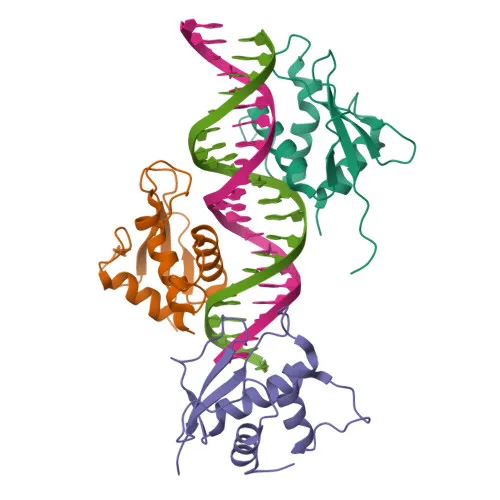
- IRF4 (Interferon regulatory factor 4), also known as LSIRF, MUM1, or NF-EM5, is a transcription factor encoded by the IRF4 gene in humans.
- It functions as a transcriptional activator by binding to the interferon-stimulated response element (ISRE) of the MHC class I promoter.
- Together with the transcription factor PU.1, IRF4 binds to the immunoglobulin lambda light chain enhancer, suggesting a role in B‑cell differentiation.
- It is likely involved in ISRE‑targeted signal transduction mechanisms that are specific to lymphoid cells.
- IRF4 drives CD8⁺ dendritic cell differentiation by forming a complex with the BATF–JUNB heterodimer, leading to cooperative binding at AICE motifs (5′‑TGAnTCA/GAAA‑3′) and activation of immune‑specific genes.
- The protein localizes to both the nucleus and cytoplasm, and is expressed predominantly in lymphoid tissues.
- IRF4 is subject to alternative splicing, is phosphorylated, and has been linked to chromosomal rearrangements in multiple myeloma; disease‑associated variants exist.
Experimental Guidance and Technical Tips
- The immunogen covers amino acids 150–350 of human IRF4. In Western blot, a band around 52 kDa is expected; consider using appropriate molecular weight markers for confirmation.
- As a polyclonal antibody, it may detect multiple isoforms arising from alternative splicing or post‑translational modifications; validate specificity in your sample system.
- For ELISA applications, optimize coating antigen concentration and detection conditions to achieve the desired sensitivity.
- The antibody is reported to cross‑react with mouse and rat IRF4. When working with these species, confirm reactivity by Western blot or ELISA using relevant positive controls.
CamelBio: Your One-Stop Sourcing Bridge
CamelBio streamlines IVD raw‑material procurement by offering a comprehensive portfolio of antibodies, including polyclonal and monoclonal options, along with antigen‑matched pairs for assay development. For researchers studying IRF4 in immune cell differentiation or transcriptional regulation, we provide reliable access to this IRF4 polyclonal antibody and can source additional reagents such as recombinant proteins, ELISA kits, and bulk ancillary materials. Let CamelBio bridge your concept‑to‑clinic needs with efficient supply‑chain solutions.
REQUEST A QUOTE
Our professional team will reply to you within one business day. Please feel free to contact us!