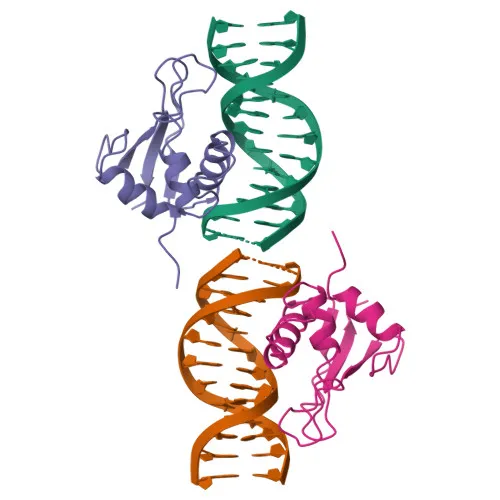
Polyclonal Antibodies
Anti-IRF1 Rabbit Polyclonal Antibody for WB, ELISA - P15314
Item Number : CM0028540
Price varies based on specs and customizations
- Application
- WB, ELISA
- Cross Reactivity
- Mouse
- Protein Weight
- 37 kDa

Shipping:
Contact us to get shipping details Enjoy On-time Dispatch Guarantee.
Why Choose Us
Easy ordering process, quality products, and dedicated support for your business success.
Core Product Specifications and Parameters
| Parameter | Value |
|---|---|
| Product Name | IRF1 Rabbit pAb |
| Remarks/Alias | Irf-1 |
| Species | Mouse |
| Gene ID (Human) | 3659 |
| Gene ID | 16362 |
| Immunogen | Synthetic peptide corresponding to a sequence within amino acids 113-212 of human IRF1 (NP_032416.1). |
| Source | Rabbit |
| Category | Polyclonal Antibodies |
| Application | WB, ELISA |
| Cross Reactivity | Mouse |
| SWISS | P15314 |
| Protein Weight | 37 kDa |
| Shipping | Ice bag |
Biological Background: IRF1 Function and Localization
- IRF1 is a transcriptional regulator with diverse functions in cellular responses such as host defense, hematopoiesis, inflammation, and cell growth control. Related references: PMID:11244049, PMID:11846971, PMID:11846974
- It binds to ISRE sequences to modulate expression of genes involved in antiviral, antibacterial, anti-proliferative, apoptotic, and immune pathways. Related references: PMID:12387893, PMID:17018642, PMID:18955028
- It also represses genes related to cell cycle progression and immune tolerance, including BIRC5, cyclins, CDKs, FOXP3, and TLR4. Related references: PMID:18641303
- IRF1 localizes to both the nucleus and cytoplasm, consistent with its transcriptional and extranuclear regulatory functions.
- Post-translational modifications, including acetylation, phosphorylation, and ubiquitin-like conjugation, modulate IRF1 activity and stability.
- IRF1 is critical for immune cell development, influencing NK cell activity, macrophage IL-12 production, Th1 differentiation, and CD8+ T-cell maturation. Related references: PMID:11244049, PMID:11846971, PMID:11846974
- It functions as a tumor suppressor, antagonizing tumor growth and promoting anti-tumor immune responses. Related references: PMID:11244049, PMID:11846971, PMID:11846974
Experimental Guidance and Technical Tips
- The immunogen corresponds to a central region (aa 113-212) of human IRF1, which shares sequence similarity with mouse IRF1 (confirmed cross-reactivity). For western blot, expect a band near 37 kDa in mouse samples; consider optimizing exposure times to capture both basal and induced signals.
- For ELISA applications, validate antibody coating and dilution factors using a recombinant IRF1 protein or cell lysates as a positive control; a secondary detection system should be optimized accordingly.
- Due to the polyclonal nature, lot-to-lot consistency should be verified when used in quantitative assays; pilot experiments are recommended.
CamelBio: Your One-Stop Sourcing Bridge
CamelBio supports diagnostic manufacturers, laboratories, and research institutes by providing a comprehensive range of IVD raw materials, technical services, and consulting—from concept to clinical application. This anti-IRF1 antibody targets a key transcriptional regulator involved in immunity, inflammation, and oncology, making it suitable for development of research and diagnostic kits. Beyond single antibodies, CamelBio offers validated antibody pairs, bulk monoclonal/polyclonal antibodies, ancillary reagents, and sourcing of rare-target raw materials to streamline your IVD development pipeline.
REQUEST A QUOTE
Our professional team will reply to you within one business day. Please feel free to contact us!