Polyclonal Antibodies
Anti-INTS10 Rabbit Polyclonal Antibody for WB, IF/ICC, ELISA - Q9NVR2
Item Number : CM0015079
Price varies based on specs and customizations
- Application
- WB, IF/ICC, ELISA
- Cross Reactivity
- Human, Mouse
- Protein Weight
- 82kDa

Shipping:
Contact us to get shipping details Enjoy On-time Dispatch Guarantee.
Why Choose Us
Easy ordering process, quality products, and dedicated support for your business success.
Core Product Specifications and Parameters
| Parameter | Value |
|---|---|
| Product Name | INTS10 Rabbit pAb |
| Remarks/Alias | INT10; C8orf35; INTS10 |
| Species | Human |
| GeneID (Human) | 55174 |
| GeneID | 55174 |
| Immunogen | Recombinant fusion protein containing a sequence corresponding to amino acids 451-710 of human INTS10 (NP_060612.2) |
| Source | Rabbit |
| Category | Polyclonal Antibodies |
| Application | WB, IF/ICC, ELISA |
| Cross Reactivity | Human, Mouse |
| SWISS | Q9NVR2 |
| Protein Weight | 82kDa |
| Shipping | Ice bag |
Biological Background: INTS10 Function and Localization
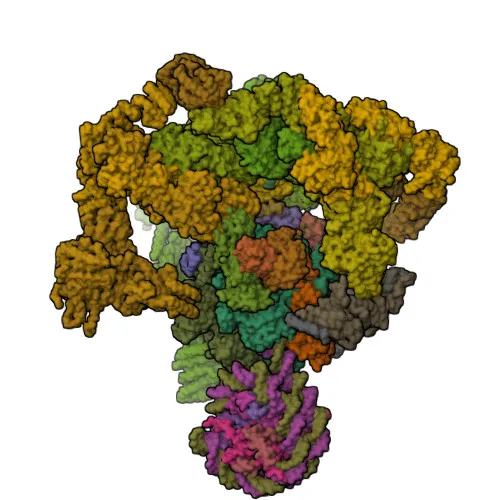
- INTS10 is a component of the integrator complex, a multiprotein complex that terminates RNA polymerase II (Pol II) transcription in the promoter-proximal region of genes. Related references: PMID:38570683, PMID:38823386
- The integrator complex provides a quality checkpoint during transcription elongation by driving premature termination of transcripts that are unfavorably configured for elongation. Related references: PMID:38570683
- The complex terminates transcription by catalyzing dephosphorylation of the Pol II CTD, degrading the nascent RNA, and promoting Pol II release. Related references: PMID:38570683
- The integrator complex also terminates synthesis of non-coding Pol II transcripts, including enhancer RNAs, small nuclear RNAs, telomerase RNAs, and long non-coding RNAs. Related references: PMID:16239144, PMID:32647223
- Within the integrator complex, INTS10 is part of the tail module that acts as a platform for the recruitment of transcription factors at promoters. Related references: PMID:38823386
- INTS10 may not be involved in the recruitment of cytoplasmic dynein to the nuclear envelope, likely as part of the integrator complex. Related references: PMID:23904267
- INTS10 localizes to the nucleus and is subject to post-translational modifications including isopeptide bond formation, phosphorylation, and ubiquitin-like conjugation.
Experimental Guidance and Technical Tips
- For Western blot (WB), use a gel percentage appropriate for the predicted molecular weight of ~82 kDa; include positive and negative controls from relevant species.
- For immunofluorescence/immunocytochemistry (IF/ICC), expect nuclear staining; optimize fixation and permeabilization conditions based on sample type.
- For ELISA, validate antigen coating conditions and antibody titration to achieve optimal signal-to-noise ratio.
- The immunogen corresponds to a C-terminal fragment (aa 451–710); consider this region for epitope mapping or competitive assays.
- When using mouse samples, confirm cross-reactivity under your specific experimental conditions, as cross-reactivity is manufacturer-reported but may vary.
CamelBio: Your One-Stop Sourcing Bridge
CamelBio is a one-stop sourcing partner for IVD raw materials, offering validated antibody pairs, optimized polyclonal and monoclonal antibodies, bulk ancillary reagents, and rare target sourcing. This anti-INTS10 antibody supports researchers studying integrator complex–mediated transcription termination, with applications in oncology, neurobiology, and gene regulation. For integrated procurement from discovery to clinical supply, CamelBio streamlines your raw material needs.
Product Datasheet
Anti-INTS10 Rabbit Polyclonal Antibody for WB, IF/ICC, ELISA - Q9NVR2
REQUEST A QUOTE
Our professional team will reply to you within one business day. Please feel free to contact us!