Polyclonal Antibodies
Anti-Insulin Receptor Rabbit Polyclonal Antibody for WB, IP, ELISA - P06213
Item Number : CM0020304
Price varies based on specs and customizations
- Application
- WB, IP, ELISA
- Cross Reactivity
- Human, Mouse, Rat
- Protein Weight
- 156kDa

Shipping:
Contact us to get shipping details Enjoy On-time Dispatch Guarantee.
Why Choose Us
Easy ordering process, quality products, and dedicated support for your business success.
Core Product Specifications and Parameters
| Parameter | Value |
|---|---|
| Product Name | Insulin Receptor Rabbit pAb |
| Remarks/Alias | HHF5; CD220; Insulin Receptor |
| Species | Human |
| GeneID (Human) | 3643 |
| GeneID | 3643 |
| Immunogen | Recombinant protein or recombinant fusion protein containing a sequence corresponding to amino acids 1281-1382 of human INSR (NP_000199.2). |
| Source | Rabbit |
| Category | Polyclonal Antibodies |
| Application | WB, IP, ELISA |
| Cross Reactivity | Human, Mouse, Rat |
| SWISS | P06213 |
| Protein Weight | 156kDa |
| Shipping | Ice bag |
Biological Background: Insulin Receptor Function and Localization
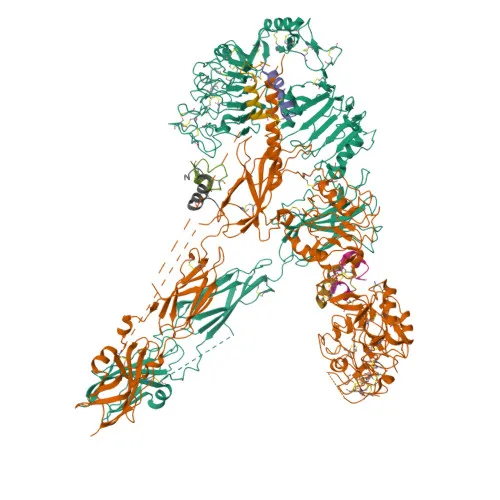
- The insulin receptor (INSR) is a receptor tyrosine kinase that initiates intracellular signaling cascades upon insulin binding, regulating metabolic and mitogenic processes.
- Insulin binding triggers phosphorylation of insulin receptor substrates (IRS1-4) and adaptors (SHC, GAB1), leading to activation of the PI3K-AKT/PKB pathway (metabolic actions) and the Ras-MAPK pathway (cell growth and differentiation).
- The PI3K-AKT pathway promotes glucose uptake via SLC2A4/GLUT4 translocation and regulates gluconeogenic/lipogenic enzyme expression through FOXO transcription factors; it also activates mTORC1 to control protein synthesis and cell growth.
- INSR exists as two alternatively spliced isoforms (Long and Short); the Short isoform displays higher affinity for IGFII. Hybrid receptors with IGF1R can bind IGF1 and IGFs with varying affinities.
- Hybrid receptors composed of IGF1R and the Long INSR isoform are activated with high affinity by IGF1 but not significantly by insulin (PubMed:12138094). Related references: PMID:12138094
- Conversely, studies show hybrid receptors of both isoforms exhibit similar binding characteristics, each binding IGF1 with low insulin affinity (PubMed:16831875). Related references: PMID:16831875
- INSR is predominantly localized at the cell membrane and cycles through late endosomes and lysosomes, consistent with its role in signal transduction and receptor recycling.
- Tissue expression is highest in insulin target tissues (liver, adipose, skeletal muscle) and also detected in various other tissues; the receptor is frequently overexpressed in tumors including breast, colon, and lung carcinomas.
- INSR is synthesized as a pro-receptor and undergoes proteolytic cleavage into α and β subunits; it is further regulated by phosphorylation, disulfide bonding, S-nitrosylation, and ubiquitination.
Experimental Guidance and Technical Tips
- The immunogen corresponds to amino acids 1281-1382 in the C-terminal region of human INSR (NP_000199.2). Consider verifying specificity against this epitope using peptide competition assays if needed.
- For Western blot, the predicted molecular weight is ~156 kDa (pro-receptor); however, under reducing conditions, the processed α (~135 kDa) and β (~95 kDa) subunits may also be detected. Optimize sample preparation accordingly.
- The antibody cross-reacts with human, mouse, and rat INSR as indicated; validate reactivity in your specific experimental system using positive and negative controls.
- In immunoprecipitation, use appropriate antibody concentration and ensure efficient elution to preserve protein interactions for downstream analysis.
- ELISA applications may require titration of the antibody and assay conditions; consider using known standards for calibration.
CamelBio: Your One-Stop Sourcing Bridge
CamelBio serves as a one-stop IVD raw-material partner, providing this rabbit anti-INSR polyclonal antibody to fuel research into insulin signaling, diabetes, and cancer. Beyond this product, we offer validated antibody pairs, optimized monoclonal and polyclonal antibodies, bulk ancillary reagents, and custom sourcing for rare targets, ensuring seamless progression from concept to clinic.
Product Datasheet
Anti-Insulin Receptor Rabbit Polyclonal Antibody for WB, IP, ELISA - P06213
REQUEST A QUOTE
Our professional team will reply to you within one business day. Please feel free to contact us!