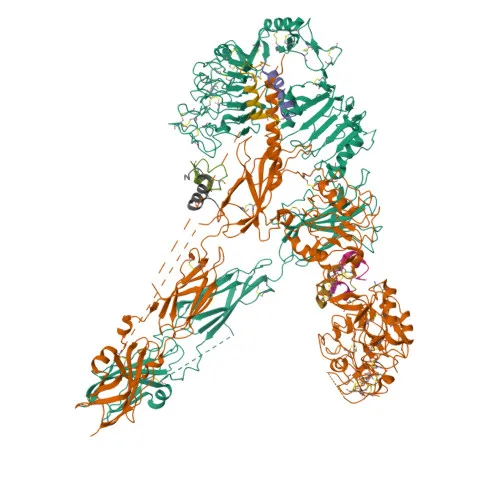
Monoclonal Antibodies
Anti-Insulin Receptor Rabbit Monoclonal Antibody for WB, ELISA - P06213
Item Number : CM0002473
Price varies based on specs and customizations
- Application
- WB, ELISA
- Cross Reactivity
- Human, Mouse, Rat
- Protein Weight
- 156kDa

Shipping:
Contact us to get shipping details Enjoy On-time Dispatch Guarantee.
Why Choose Us
Easy ordering process, quality products, and dedicated support for your business success.
Core Product Specifications and Parameters
| Parameter | Value |
|---|---|
| Product Name | Insulin Receptor Rabbit mAb |
| Remarks/Alias | HHF5; CD220; Insulin Receptor |
| Species | Human |
| Gene ID (Human) | 3643 |
| Immunogen | A synthetic peptide corresponding to a sequence within amino acids 900-1000 of human Insulin Receptor (P06213). |
| Source | Rabbit |
| Category | Monoclonal Antibodies |
| Application | WB, ELISA |
| Cross Reactivity | Human, Mouse, Rat |
| SWISS | P06213 |
| Protein Weight | 156kDa |
| Shipping | Ice bag |
Biological Background: Insulin Receptor Function and Localization
- The insulin receptor is a receptor tyrosine kinase that mediates the pleiotropic actions of insulin, including metabolic regulation and cell growth.
- Binding of insulin triggers autophosphorylation and recruitment of adaptor proteins (IRS1-4, SHC), activating two major pathways: the PI3K-AKT pathway responsible for metabolic effects (e.g., GLUT4 translocation) and the Ras-MAPK pathway controlling cell growth and differentiation.
- Two alternatively spliced isoforms (Long and Short) exist; Isoform Short shows higher affinity for IGFII. Hybrid receptors with IGF1R exhibit complex ligand-binding properties: Related references: PMID:12138094 PMID:16831875
- The receptor localizes to the cell membrane and is internalized into late endosomes and lysosomes upon activation.
- Predominantly expressed in classical insulin target tissues (liver, adipose, skeletal muscle) and also found in many other tissues; overexpressed in multiple tumor types, including breast, colon, and lung carcinomas.
- It is a glycoprotein and phosphoprotein, modified by disulfide bonds, proteolytic cleavage, and ubiquitin-like conjugation, which regulate its maturation and signaling.
- Genetic defects in INSR are linked to diabetes mellitus and severe insulin resistance syndromes.
Experimental Guidance and Technical Tips
- The immunogen corresponds to residues 900–1000 within the intracellular region of the insulin receptor; this epitope is present in both the full-length pro-receptor and the mature beta subunit, potentially enabling detection of both forms.
- For Western blotting, consider that the pro-receptor migrates at ~156 kDa, while the cleaved beta chain often appears around 95 kDa under reducing conditions. Validate detection sensitivity for both precursor and processed forms in your experimental system.
- For ELISA, use recombinant intracellular domain protein or lysates from INSR-expressing cells as antigen; confirm specificity with appropriate negative controls.
- The antibody cross-reacts with mouse and rat INSR, making it useful for translational studies; however, species-specific validation is recommended.
CamelBio: Your One-Stop Sourcing Bridge
CamelBio offers a comprehensive portfolio of validated IVD raw materials, including this anti-insulin receptor monoclonal antibody for research into insulin signaling, diabetes, and oncology. Our supply capabilities extend to optimized antibody pairs, bulk ancillary reagents, and rare target raw-material sourcing to support your assay development and manufacturing needs. We are committed to accelerating your journey from concept to clinic with reliable, one-stop procurement solutions.
Product Datasheet
Anti-Insulin Receptor Rabbit Monoclonal Antibody for WB, ELISA - P06213
REQUEST A QUOTE
Our professional team will reply to you within one business day. Please feel free to contact us!