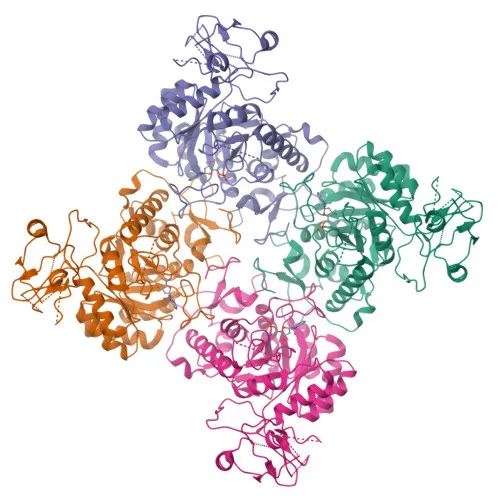
Polyclonal Antibodies
Anti-IMPDH1 Rabbit Polyclonal Antibody for WB, IF/ICC, ELISA - P20839
Item Number : CM0028436
Price varies based on specs and customizations
- Application
- WB, IF/ICC, ELISA
- Cross Reactivity
- Human, Mouse, Rat
- Protein Weight
- 55kDa

Shipping:
Contact us to get shipping details Enjoy On-time Dispatch Guarantee.
Why Choose Us
Easy ordering process, quality products, and dedicated support for your business success.
Core Product Specifications and Parameters
| Parameter | Value |
|---|---|
| Product Name | IMPDH1 Rabbit pAb |
| Remarks/Alias | IMPD; RP10; IMPD1; LCA11; IMPDH-I; sWSS2608; IMPDH1 |
| Species | Human |
| Gene ID (Human) | 3614 |
| Gene ID | 3614 |
| Immunogen | Recombinant fusion protein containing a sequence corresponding to amino acids 434-563 of human IMPDH1 (NP_899066.1) |
| Source | Rabbit |
| Category | Polyclonal Antibodies |
| Application | WB, IF/ICC, ELISA |
| Cross Reactivity | Human, Mouse, Rat |
| SWISS | P20839 |
| Protein Weight | 55kDa |
| Shipping | Ice bag |
Biological Background: IMPDH1 Function and Localization
- IMPDH1 encodes inosine-5'-monophosphate dehydrogenase 1, a key enzyme that catalyzes the rate-limiting conversion of IMP to XMP in the de novo synthesis of guanine nucleotides, essential for cell growth and proliferation.
- This protein also exhibits single-stranded nucleic acid-binding activity, suggesting possible involvement in RNA and/or DNA metabolism beyond its metabolic role.
- IMPDH1 is predominantly localized in the cytoplasm but can also be detected in the nucleus, indicating dynamic subcellular distribution.
- Tissue specificity: IMPDH type I is the main isoform in normal leukocytes, whereas type II predominates in tumor cells, linking IMPDH1 expression to differentiation and malignancy.
- The gene undergoes alternative splicing, generating multiple isoforms, and is classified under the IMPDH family with conserved CBS domains.
- Disease associations include Leber congenital amaurosis (LCA11) and retinitis pigmentosa (RP10), highlighting roles beyond metabolism in retinal health.
- Post-translational modifications include phosphorylation and methylation, and the protein binds metal ions such as potassium, with NAD as a cofactor for its oxidoreductase activity.
Experimental Guidance and Technical Tips
- The immunogen corresponds to the C-terminal region (aa 434-563) of human IMPDH1, which may improve specificity; however, cross-reactivity with isoforms or other IMPDH family members should be validated in the experimental context.
- For Western blot, a band at approximately 55 kDa is expected; consider using a positive control such as HeLa or Jurkat cell lysates, and optimize primary antibody dilution based on the detection system.
- In immunofluorescence/ICC, fix cells with an appropriate method (e.g., 4% PFA) and permeabilize to allow nuclear access; note that both cytoplasmic and nuclear signals may be observed.
- For ELISA applications, the recombinant immunogen can serve as a coating antigen to assess antibody binding; titrate the antibody to determine optimal working concentration.
CamelBio: Your One-Stop Sourcing Bridge
CamelBio connects diagnostic manufacturers and research labs with a comprehensive portfolio of IVD raw materials, including validated antibody pairs, optimized polyclonal and monoclonal antibodies, and bulk ancillary reagents. For IMPDH1-related studies in cell proliferation, purine metabolism, and cancer biology, we offer reliable sourcing support and technical consulting to accelerate your assay development from concept to clinic. Contact us to explore how we can bridge your raw-material needs.
Product Datasheet
Anti-IMPDH1 Rabbit Polyclonal Antibody for WB, IF/ICC, ELISA - P20839
REQUEST A QUOTE
Our professional team will reply to you within one business day. Please feel free to contact us!