Monoclonal Antibodies
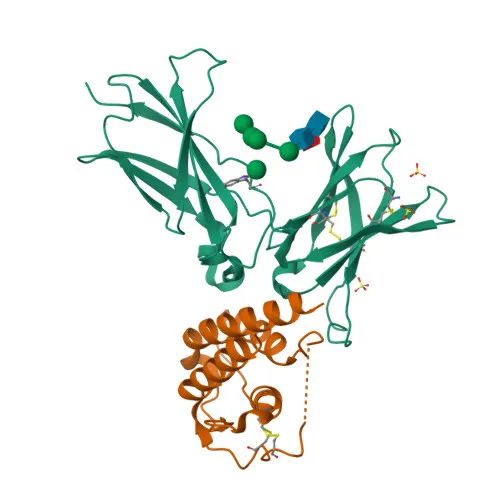
Anti-IL21 Rabbit Monoclonal Antibody for WB and ELISA - Q9HBE4
Item Number : CM0005678
Price varies based on specs and customizations
- Application
- WB, ELISA
- Cross Reactivity
- Human
- Protein Weight
- 17KDa/18KDa

Shipping:
Contact us to get shipping details Enjoy On-time Dispatch Guarantee.
Why Choose Us
Easy ordering process, quality products, and dedicated support for your business success.
Core Product Specifications and Parameters
| Parameter | Value |
|---|---|
| Product Name | IL21 Rabbit mAb |
| Remarks/Alias | Za11; IL-21; CVID11; IL21 |
| Species | Human |
| Gene ID (Human) | 59067 |
| Immunogen | Recombinant fusion protein containing a sequence corresponding to amino acids 25-162 of human IL21 (NP_068575.1) |
| Source | Rabbit |
| Category | Monoclonal Antibodies |
| Application | WB, ELISA |
| Cross Reactivity | Human |
| SWISS | Q9HBE4 |
| Protein Weight | 17KDa/18KDa |
| Shipping | Ice bag |
Biological Background: IL21 Function and Localization
- Interleukin-21 (IL21), also referred to as Za11, is a cytokine encoded by the IL21 gene and belongs to the gamma-chain receptor cytokine family.
- IL21 exerts immunoregulatory activity by promoting the transition between innate and adaptive immunity and inducing the production of IgG1 and IgG3 in B-cells (By similarity).
- Together with IL6, IL21 controls the early generation of T follicular helper (Tfh) cells and is essential for effective antibody responses to acute viral infections (By similarity).
- In synergy with IL15, IL21 may enhance the proliferation and maturation of natural killer (NK) cells, and when combined with IL15 and IL18, it stimulates interferon gamma production in T-cells and NK cells. Related references: PMID:11081504, PMID:15178704
- During T-cell mediated immune responses, IL21 may inhibit dendritic cell (DC) activation and maturation (By similarity).
- IL21 is a secreted glycoprotein containing a disulfide bond, and alternative splicing generates additional isoforms; it is predominantly expressed in activated CD4-positive T-cells, not in CD8-positive T-cells, B-cells, or monocytes.
- The mature protein has a predicted molecular weight of approximately 18.6 kDa (UniProt) and commonly migrates at 17–18 kDa in SDS-PAGE, consistent with the observed band sizes.
Experimental Guidance and Technical Tips
- The immunogen covers amino acids 25-162 of mature human IL21, enabling recognition of the secreted cytokine; verify reactivity in samples derived from activated CD4+ T-cells or other expression systems.
- For Western blotting, a band at 17–18 kDa is expected; consider using low-molecular-weight markers and optimizing transfer conditions. Due to potential glycosylation, slight mass shifts may occur.
- In ELISA applications, this monoclonal antibody may serve as a capture or detection reagent; however, pairing compatibility should be validated with the intended sandwich format.
- Since IL21 can be expressed at low levels, concentrate cell supernatants or enrich specific cell populations to improve detection sensitivity.
CamelBio: Your One-Stop Sourcing Bridge
CamelBio serves as a comprehensive sourcing partner for IVD raw materials, offering validated antibody pairs, optimized monoclonal antibodies, and bulk ancillary reagents for diagnostic and research applications. For projects targeting IL21 or other cytokines, we provide tailored support to rapidly connect you with qualified raw materials from early development through commercialization. Our streamlined supply network assists in reducing lead times and securing rare-target reagents, empowering your immunology and diagnostic programs.
REQUEST A QUOTE
Our professional team will reply to you within one business day. Please feel free to contact us!
Related Articles
From a 36-Hour Wait to a 30-Minute Decision: The Workflow Advantage of Rapid Antibody-Based Immunosensors
Rapid antibody-based immunosensors compress analyte detection from 24–36 hours to about 30 minutes, changing workflows, decisions, and assay design.
Multiplex Micro-Array Immunoassays: The Antibody Bottleneck Behind Faster, Smarter Diagnostics
Explore how multiplex micro-array immunoassays increase speed and data density, and why antibody specificity, conjugates, and consistency limit scale.