Polyclonal Antibodies
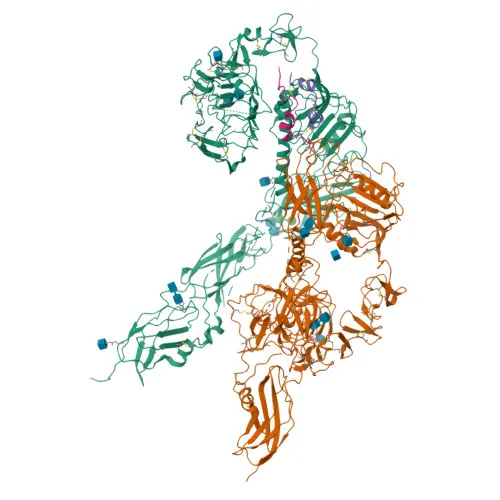
Anti-IGF1R Rabbit Polyclonal Antibody for WB, ELISA - P08069
Item Number : CM0018374
Price varies based on specs and customizations
- Application
- WB, ELISA
- Cross Reactivity
- Human, Mouse, Rat
- Protein Weight
- 155kDa

Shipping:
Contact us to get shipping details Enjoy On-time Dispatch Guarantee.
Why Choose Us
Easy ordering process, quality products, and dedicated support for your business success.
Core Product Specifications and Parameters
| Parameter | Value |
|---|---|
| Product Name | [KD Validated] IGF1R Rabbit pAb |
| Remarks/Alias | IGFR; CD221; IGFIR; JTK13; 1R |
| Species | Human |
| GeneID | 3480 |
| Immunogen | Recombinant fusion protein containing a sequence corresponding to amino acids 1201-1367 of human IGF1R (NP_000866.1). |
| Source | Rabbit |
| Category | Polyclonal Antibodies |
| Application | WB, ELISA |
| Cross Reactivity | Human, Mouse, Rat |
| SWISS | P08069 |
| Protein Weight | 155kDa |
| Shipping | Ice bag |
Biological Background: IGF1R Function and Localization
- Encodes a receptor tyrosine kinase that mediates insulin-like growth factor 1 (IGF1) signaling. Activated IGF1R binds IGF1 with high affinity and IGF2 and insulin with lower affinity, triggering autophosphorylation and tyrosine phosphorylation of substrates such as IRS1/2, Shc, and 14-3-3 proteins.
- Downstream signaling occurs primarily via the PI3K-AKT/PKB and Ras-MAPK pathways, promoting cell proliferation, survival, and protein synthesis; also signals through JAK/STAT and JNK pathways.
- Forms hybrid receptors with the insulin receptor (INSR). Hybrid receptors containing IGF1R and INSR isoform Long bind IGF1 with high affinity, IGF2 with low affinity, and are not significantly activated by insulin (PubMed:12138094). Hybrid receptors containing IGF1R and INSR isoform Short, as well as Long, both bind IGF1 and have a low affinity for insulin (PubMed:16831875). Related references: PMID:12138094 PMID:16831875
- Localizes to the cell membrane.
- Expressed in a variety of tissues, including muscle, heart, kidney, adipose tissue, fibroblasts, spleen, and placenta. Overexpressed in multiple tumors such as melanomas, colon, pancreas, prostate, and kidney cancers.
- Post-translational modifications include autophosphorylation, glycoprotein modifications, disulfide bonds, and ubiquitin-like conjugation.
- Plays a critical role in tumor transformation and survival of malignant cells; gene is associated with disease variants.
Experimental Guidance and Technical Tips
- The immunogen covers the C-terminal intracellular domain (residues 1201-1367), which is highly conserved across human, mouse, and rat IGF1R, supporting cross-reactivity in these species.
- For Western blot, the full-length unprocessed receptor migrates at ~155 kDa, while the cleaved α and β subunits appear at ~135 kDa and ~95 kDa, respectively. Use appropriate loading controls and validate in your sample system.
- In ELISA, consider using recombinant IGF1R protein or peptide competition to confirm specificity. Optimize coating and detection conditions for your assay format.
- The product is labeled as KD validated, suggesting potential use in confirming IGF1R knockdown efficiency by immunoblotting. Validate under your experimental conditions.
CamelBio: Your One-Stop Sourcing Bridge
CamelBio provides diagnostic manufacturers, laboratories, and research institutes with one-stop access to IVD raw materials, technical services, and consulting. This anti-IGF1R polyclonal antibody supports oncology and growth factor signaling research. Explore our range of validated antibody pairs, bulk ancillary reagents, and custom sourcing solutions to meet your assay development needs.
REQUEST A QUOTE
Our professional team will reply to you within one business day. Please feel free to contact us!