Polyclonal Antibodies
Anti-HVEM/TNFRSF14 Rabbit pAb for WB, ELISA - Q92956
Item Number : CM0020975
Price varies based on specs and customizations
- Application
- WB, ELISA
- Cross Reactivity
- Human
- Protein Weight
- 30kDa

Shipping:
Contact us to get shipping details Enjoy On-time Dispatch Guarantee.
Why Choose Us
Easy ordering process, quality products, and dedicated support for your business success.
Core Product Specifications and Parameters
| Parameter | Value |
|---|---|
| Product Name | HVEM/TNFRSF14 Rabbit pAb |
| Remarks/Alias | TR2; ATAR; HVEA; HVEM; CD270; LIGHTR; HVEM/TNFRSF14 |
| Species | Human |
| GeneID (Human) | 8764 |
| GeneID | 8764 |
| Immunogen | Recombinant fusion protein containing a sequence corresponding to amino acids 39-202 of human HVEM/TNFRSF14 (NP_003811.2). |
| Source | Rabbit |
| Category | Polyclonal Antibodies |
| Application | WB, ELISA |
| Cross Reactivity | Human |
| SWISS | Q92956 |
| Protein Weight | 30kDa |
| Shipping | Ice bag |
Biological Background: HVEM/TNFRSF14 Function and Localization
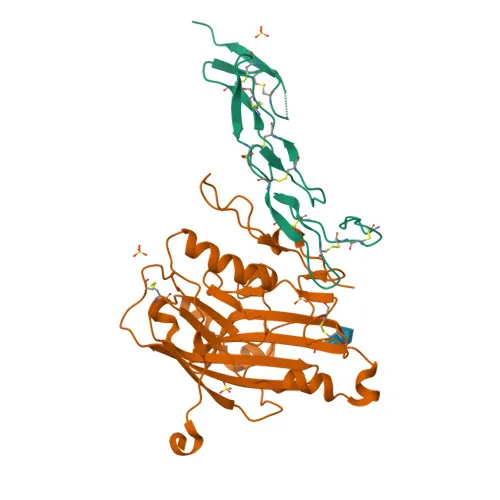
- HVEM/TNFRSF14 is a member of the tumor necrosis factor receptor superfamily (TNFRSF), also known as herpesvirus entry mediator A (HveA), TR2, ATAR, CD270, and LIGHTR.
- It serves as a receptor for four distinct ligands: the TNF superfamily members TNFSF14/LIGHT and homotrimeric LTA, and the immunoglobulin superfamily members BTLA and CD160, mediating both stimulatory and inhibitory signaling (PubMed:10754304, PubMed:18193050, PubMed:23761635). Related references: PMID:10754304, PMID:18193050, PMID:23761635
- HVEM signals via the TRAF2-TRAF3 E3 ligase pathway, promoting immune cell survival and differentiation (PubMed:9153189, PubMed:9162022). Related references: PMID:9153189, PMID:9162022
- It participates in bidirectional cell-cell contact signaling between antigen-presenting cells and lymphocytes; ligation by LIGHT delivers costimulatory signals to T cells, enhancing proliferation and effector functions (PubMed:10754304). Related references: PMID:10754304
- Interaction with CD160 on NK cells enhances IFNG production and anti-tumor immune response (PubMed:23761635). Related references: PMID:23761635
- Binding of CD160 on activated CD4+ T cells down-regulates CD28 costimulatory signaling, restricting memory and alloantigen-specific immune response (PubMed:18193050). Related references: PMID:18193050
- HVEM may interact in cis or in trans with BTLA, with cis interactions maintaining a resting state in naïve T cells and trans interactions providing survival signals to effector T cells (PubMed:19915044). Related references: PMID:19915044
- HVEM acts as a cellular receptor for herpes simplex virus 1 and 2 (HSV-1 and HSV-2) entry.
- HVEM is widely expressed, with the highest expression in lung, spleen and thymus. It is expressed in a subpopulation of B cells, monocytes, and naïve T cells (PubMed:18193050, PubMed:19915044). Related references: PMID:18193050, PMID:19915044
Experimental Guidance and Technical Tips
- The immunogen encompasses the extracellular ligand-binding domain (amino acids 39-202), suggesting the antibody may recognize the native receptor in membrane preparations or soluble extracellular fragments.
- For Western blot, the predicted molecular weight is approximately 30 kDa; consider optimizing reducing conditions and sample loading to confirm specificity.
- ELISA protocols can be developed using recombinant HVEM protein or cell-based assays; validate antibody performance in your relevant sample system.
CamelBio: Your One-Stop Sourcing Bridge
CamelBio provides integrated sourcing solutions for IVD manufacturers and researchers developing assays around immune checkpoint and herpesvirus entry targets. Our portfolio includes validated antibody pairs, optimized polyclonal and monoclonal antibodies, and bulk ancillary reagents for HVEM/TNFRSF14-related research and diagnostic applications.
REQUEST A QUOTE
Our professional team will reply to you within one business day. Please feel free to contact us!