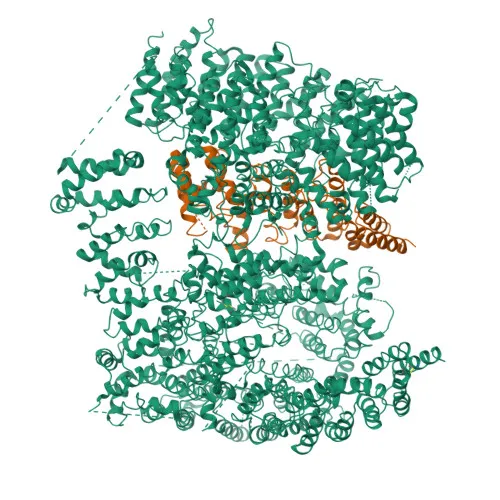
Monoclonal Antibodies
Anti-Huntingtin Monoclonal Antibody for WB, IF-F, ELISA - P42858
Item Number : CM0002973
Price varies based on specs and customizations
- Application
- WB, IF-F, ELISA
- Cross Reactivity
- Human, Mouse, Rat
- Protein Weight
- 348 kDa

Shipping:
Contact us to get shipping details Enjoy On-time Dispatch Guarantee.
Why Choose Us
Easy ordering process, quality products, and dedicated support for your business success.
Core Product Specifications and Parameters
| Parameter | Value |
|---|---|
| Product Name | [KO Validated] Huntingtin Rabbit mAb |
| Remarks/Alias | HD; IT15; LOMARS; Huntingtin |
| Species | Human |
| GeneID | 3064 |
| Immunogen | Synthetic peptide corresponding to a sequence within amino acids 1-100 of human Huntingtin (P42858) |
| Source | Rabbit |
| Category | Monoclonal Antibodies |
| Application | WB, IF-F, ELISA |
| Cross Reactivity | Human, Mouse, Rat |
| SWISS | P42858 |
| Protein Weight | 348 kDa |
| Shipping | Ice bag |
Biological Background: Huntingtin Function and Localization
- Huntingtin, also known as Huntington disease protein (HD protein), is encoded by the HTT gene (also designated HD or IT15) and is widely expressed, with highest levels in the brain.
- It is a large ~348 kDa protein that may play a role in microtubule-mediated transport and vesicle function, promoting the formation of autophagic vesicles.
- Subcellular localization includes the cytoplasm, nucleus, early endosomes, and autophagosomes, reflecting its involvement in intracellular trafficking and autophagy.
- In the brain, huntingtin is prominently found in the cerebellar cortex, neocortex, striatum, and hippocampal formation, localizing to nerve fibers, varicosities, and nerve endings.
- Mutations involving a CAG triplet repeat expansion in the HTT gene lead to Huntington disease, an autosomal dominant neurodegenerative disorder characterized by motor, cognitive, and psychiatric symptoms.
- Post-translational modifications include acetylation, myristoylation, phosphorylation, and ubiquitin conjugation, which may regulate its function and interactions.
Experimental Guidance and Technical Tips
- As a rabbit monoclonal antibody, it offers high specificity and lot-to-lot consistency for reproducible results.
- The immunogen is a synthetic peptide within the N-terminal region (aa 1-100), ensuring recognition of full-length huntingtin protein.
- For Western blotting, use a low-percentage gel (e.g., 6-8%) to resolve the large ~348 kDa protein; verify transfer efficiency with appropriate molecular weight markers.
- This antibody is reported to be KO validated, indicating specificity; consider including appropriate knockout or knockdown controls in your experiments.
- For immunofluorescence, optimizing fixation (e.g., 4% PFA) and permeabilization (e.g., 0.1% Triton X-100) may improve detection of huntingtin in cytoplasmic and nuclear compartments.
- Validate cross-reactivity in your specific samples, as species cross-reactivity (human, mouse, rat) is based on supplier data; test under your experimental conditions.
- ELISA applications may require pairing with a capture or detection antibody; evaluate different combinations and coating conditions.
CamelBio: Your One-Stop Sourcing Bridge
CamelBio serves as a comprehensive sourcing partner for IVD raw materials, supporting your entire diagnostic development journey from concept to clinic. This Huntingtin antibody is part of our extensive catalog of validated monoclonal and polyclonal antibodies for research and diagnostic applications. We also offer customized sourcing for rare targets, bulk ancillary reagents, and technical consultation to accelerate your projects.
REQUEST A QUOTE
Our professional team will reply to you within one business day. Please feel free to contact us!