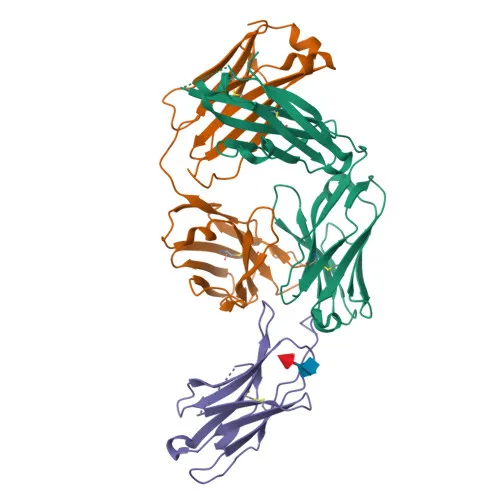
Monoclonal Antibodies
Anti-Human/Monkey PD-1/CD279 Monoclonal Antibody for FC - Q15116
Item Number : CM0009962
Price varies based on specs and customizations
- Application
- FC
- Cross Reactivity
- Human, Cynomolgus
- Protein Weight
- 32kDa

Shipping:
Contact us to get shipping details Enjoy On-time Dispatch Guarantee.
Why Choose Us
Easy ordering process, quality products, and dedicated support for your business success.
Core Product Specifications and Parameters
| Parameter | Value |
|---|---|
| Product Name | Rabbit anti-Human/Monkey PD-1/CD279 mAb |
| Remarks/Alias | PD1; PD-1; CD279; SLEB2; hPD-1; hPD-l; hSLE1 |
| Species | Human |
| GeneID (Human) | 5133 |
| GeneID | 5133 |
| Immunogen | Recombinant fusion protein containing a sequence corresponding to amino acids 25-168 of human PD-1/CD279 (NP_005009.2) |
| Source | Rabbit |
| Category | Monoclonal Antibodies |
| Application | FC |
| Cross Reactivity | Human, Cynomolgus |
| SWISS | Q15116 |
| Protein Weight | 32kDa |
| Shipping | Ice bag |
Biological Background: PD-1 Function and Localization
- PD-1 is an inhibitory receptor on antigen-activated T-cells that plays a critical role in induction and maintenance of immune tolerance to self. Related references: PMID:21276005 PMID:31754127 PMID:32184441
- It delivers inhibitory signals upon binding to ligands CD274/PDCD1L1 and CD273/PDCD1LG2. Related references: PMID:21276005 PMID:26602187
- Following T-cell receptor (TCR) engagement, PD-1 associates with the TCR-CD3 complex at the immunological synapse and directly inhibits T-cell activation by recruiting PTPN11/SHP-2, leading to dephosphorylation of key proximal signaling molecules. Related references: PMID:32184441
- The PD-1-mediated inhibitory pathway is exploited by tumors to attenuate anti-tumor immunity and escape destruction by the immune system, thereby facilitating tumor survival. Related references: PMID:28951311
- Blockage of the PD-1 pathway results in the reversal of the exhausted T-cell phenotype and the normalization of the anti-tumor response, providing a rationale for cancer immunotherapy. Related references: PMID:22658127 PMID:25034862 PMID:25399552
- PD-1 is a glycoprotein containing an immunoglobulin-like domain, disulfide bonds, and undergoes phosphorylation, ubiquitination, and isopeptide bond formation, consistent with its role as a signaling receptor.
- Subcellular localization is primarily at the cell membrane, where it functions as a transmembrane receptor.
Experimental Guidance and Technical Tips
- For flow cytometry, titrate the antibody to determine the optimal concentration for your specific cell type and experimental conditions.
- Include appropriate isotype controls and Fc receptor blocking steps to minimize nonspecific binding.
- Validate PD-1 expression in your sample system, as it is induced upon T-cell activation; resting T cells express low levels.
- The fluorophore is compatible with standard 488 nm lasers; ensure compensation settings are optimized in multicolor panels.
- The immunogen corresponds to the extracellular domain (amino acids 25-168), so the antibody should recognize the native cell surface protein; avoid fixation/permeabilization protocols that may alter the epitope unless validated by the end user.
CamelBio: Your One-Stop Sourcing Bridge
CamelBio supports diagnostic manufacturers and researchers with a comprehensive portfolio of validated IVD raw materials, including this anti-PD-1 monoclonal antibody for immune checkpoint studies. As your sourcing bridge, we offer optimized antibody pairs, bulk ancillary reagents, and procurement of rare-target raw materials, streamlining your assay development from concept to clinic. Whether you need ready-to-use conjugates or custom antibody sourcing, CamelBio connects you to a reliable supply of critical reagents for oncology and immunology applications.
REQUEST A QUOTE
Our professional team will reply to you within one business day. Please feel free to contact us!