Monoclonal Antibodies
Anti-Human TREM1 (CD354) Monoclonal Antibody for Flow Cytometry - Q9NP99
Item Number : CM0009020
Price varies based on specs and customizations
- Application
- FC
- Cross Reactivity
- Human
- Protein Weight
- 18kDa/26kDa

Shipping:
Contact us to get shipping details Enjoy On-time Dispatch Guarantee.
Why Choose Us
Easy ordering process, quality products, and dedicated support for your business success.
Core Product Specifications and Parameters
| Parameter | Value |
|---|---|
| Product Name | Rabbit anti-Human TREM1 mAb |
| Remarks/Alias | CD354; TREM-1 |
| Species | Human |
| Gene ID (Human) | 54210 |
| Gene ID | 54210 |
| Immunogen | Recombinant protein|Recombinant fusion protein containing a sequence corresponding to amino acids 21-200 of human TREM1 (NP_061113.1). |
| Source | Rabbit |
| Category | Monoclonal Antibodies |
| Application | FC |
| Cross Reactivity | Human |
| SWISS | Q9NP99 |
| Protein Weight | 18kDa/26kDa |
| Shipping | Ice bag |
Biological Background: TREM1 (CD354) Function and Localization
-
TREM1 (Triggering receptor expressed on myeloid cells 1, also known as TREM-1, CD354) is a cell surface receptor of the immunoglobulin superfamily that plays pivotal roles in both innate and adaptive immunity by amplifying inflammatory responses. Related references: PMID:10799849 PMID:21393102
-
Upon binding ligands such as PGLYRP1, HMGB1, or HSP70, TREM1 multimerizes and associates with the adaptor protein TYROBP/DAP12, triggering downstream signaling. Related references: PMID:17568691 PMID:25595774 PMID:29568119
-
The activated TREM1-TYROBP complex initiates a SYK-mediated phosphorylation cascade, activating BTK, MAPK1/3, and PLCG, which collectively promote the release of pro-inflammatory cytokines and chemokines from neutrophils and macrophages. Related references: PMID:14656437 PMID:21659545 PMID:17098818
-
TREM1 synergistically amplifies inflammatory signals triggered by Toll-like receptors (TLRs) and NOD-like receptors (NLRs), and is critically involved in the pathophysiology of septic shock and atherosclerosis. Related references: PMID:11323674
-
In addition to its pro-inflammatory role, TREM1 can act as a decoy receptor, counterbalancing its own signaling by neutralizing ligands.
-
TREM1 is predominantly expressed on the cell membrane of myeloid lineage cells (monocytes, macrophages, neutrophils, dendritic cells), with higher expression in adult liver, lung, and spleen compared to fetal tissues; a soluble isoform is also secreted.
-
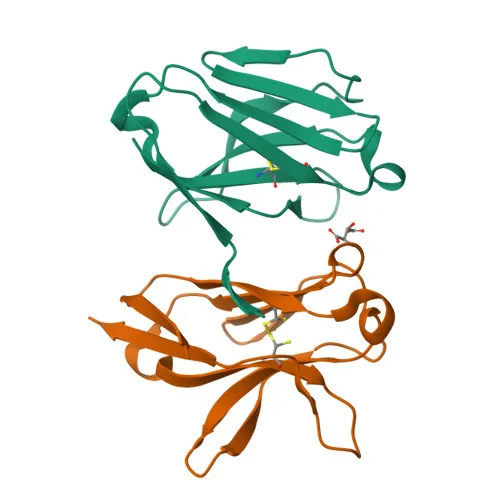
The protein contains an immunoglobulin-like domain, a transmembrane helix, and disulfide bonds, with a calculated molecular weight of approximately 26.4 kDa; alternative splicing yields isoforms with varying masses.
Experimental Guidance and Technical Tips
- The immunogen covers the extracellular domain (amino acids 21–200), which includes the ligand-binding region, suggesting the antibody likely recognizes the native, membrane-bound receptor.
- For flow cytometry, consider using a standard surface staining protocol on live, unfixed human myeloid cells (e.g., PBMCs, monocyte-derived macrophages) and include appropriate isotype and Fc-blocking controls.
- Given the low to moderate expression levels on resting cells, signal sensitivity may vary; optimization of antibody titration and instrument settings is recommended.
CamelBio: Your One-Stop Sourcing Bridge
CamelBio provides diagnostic manufacturers and research laboratories with a one-stop supply chain for IVD raw materials, supporting projects from concept to clinic. This anti-human TREM1 monoclonal antibody is a valuable tool for flow cytometry-based studies of innate immunity and inflammatory diseases. Beyond individual reagents, we offer validated antibody pairs, bulk ancillary reagents, and assisted sourcing for rare targets—ensuring a reliable and comprehensive procurement experience for your development needs.
Product Datasheet
Anti-Human TREM1 (CD354) Monoclonal Antibody for Flow Cytometry - Q9NP99
REQUEST A QUOTE
Our professional team will reply to you within one business day. Please feel free to contact us!