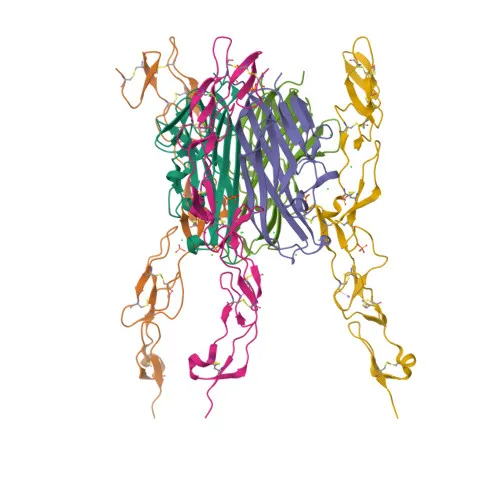
Monoclonal Antibodies
ABflo 488 Anti-Human RANKL/CD254 Monoclonal Antibody for Flow Cytometry (Intracellular) - O14788
Item Number : CM0009276
Price varies based on specs and customizations
- Application
- Flow Cytometry (Intracellular)
- Cross Reactivity
- Human
- Protein Weight
- 27kDa/30kDa/35kDa

Shipping:
Contact us to get shipping details Enjoy On-time Dispatch Guarantee.
Why Choose Us
Easy ordering process, quality products, and dedicated support for your business success.
Core Product Specifications and Parameters
| Parameter | Value |
|---|---|
| Product Name | Rabbit anti-Human RANKL/CD254 mAb |
| Remarks/Alias | ODF; OPGL; sOdf; CD254; OPTB2; RANKL; TNLG6B; TRANCE; hRANKL2 |
| Species | Human |
| GeneID | 8600 |
| Immunogen | Recombinant fusion protein containing a sequence corresponding to amino acids 136-317 of human RANKL/CD254 (NP_003692.1) |
| Source | Rabbit |
| Category | Monoclonal Antibodies |
| Application | Flow Cytometry (Intracellular) |
| Cross Reactivity | Human |
| SWISS | O14788 |
| Protein Weight | 27kDa/30kDa/35kDa |
| Shipping | Ice bag |
Biological Background: RANKL/CD254 Function and Localization
- RANKL (TNFSF11, TRANCE, OPGL, ODF, CD254) is a member of the tumor necrosis factor (TNF) ligand superfamily, expressed as both a membrane-bound and soluble cytokine.
- It serves as a key osteoclast differentiation and activation factor by binding to TNFRSF11A/RANK and TNFRSF11B/OPG, leading to NFATC1 nuclear translocation and osteoclast-specific gene induction. Related references: PMID:22664871
- Beyond bone remodeling, RANKL enhances dendritic cell-mediated T-cell proliferation and may regulate T-cell/dendritic cell crosstalk in immune responses.
- Alternative splicing and proteolytic cleavage generate multiple isoforms, with observed protein weights of 27, 30, and 35 kDa reflecting potential glycosylation and processing.
- Subcellular localization includes the cell membrane (type II single-pass membrane protein), cytoplasm, and a secreted form, enabling both juxtacrine and paracrine signaling.
- Tissue expression is highest in peripheral lymph nodes, with lower levels in spleen, leukocytes, bone marrow, heart, placenta, skeletal muscle, stomach, and thyroid.
Experimental Guidance and Technical Tips
- The immunogen corresponds to the extracellular domain (aa 136–317), covering the receptor-binding region; this ABflo 488 conjugate is validated for intracellular flow cytometry and may require permeabilization buffers.
- For detecting surface RANKL on live cells, titration and fixation-free protocols should be optimized independently, as the antibody is raised against a recombinant protein and may recognize both membrane-bound and soluble forms.
- Given human specificity, use human-derived samples (e.g., activated T cells, osteoblasts, lymph node cells) and confirm cross-reactivity with relevant controls.
- ABflo 488 exhibits spectral properties similar to Alexa Fluor 488; ensure laser and filter compatibility (excitation ~488 nm, emission ~520 nm) for optimal signal detection.
CamelBio: Your One-Stop Sourcing Bridge
CamelBio streamlines IVD raw-material procurement by offering a comprehensive portfolio of validated antibodies, including this ABflo 488-conjugated anti-RANKL monoclonal antibody, for bone metabolism and immune-oncology research. Our single-source model covers everything from concept to clinic—delivering optimized monoclonal/polyclonal antibodies, bulk ancillary reagents, and rare-target sourcing support to accelerate assay development and manufacturing scale-up.
Product Datasheet
ABflo 488 Anti-Human RANKL/CD254 Monoclonal Antibody for Flow Cytometry (Intracellular) - O14788
REQUEST A QUOTE
Our professional team will reply to you within one business day. Please feel free to contact us!