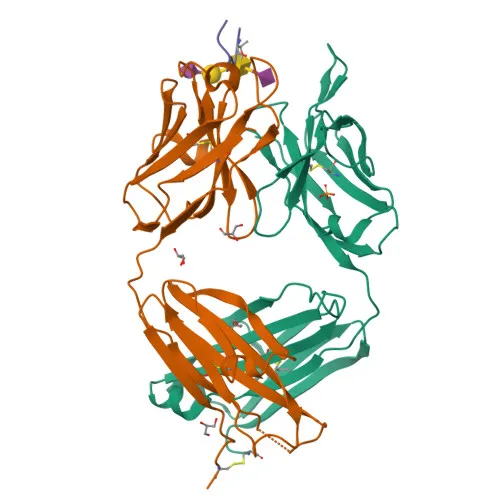
Monoclonal Antibodies
Anti-Human Podoplanin Monoclonal Antibody () for Flow Cytometry - Q86YL7
Item Number : CM0009228
Price varies based on specs and customizations
- Application
- FC
- Cross Reactivity
- Human
- Protein Weight
- 12kDa/16kDa/18kDa/24kDa

Shipping:
Contact us to get shipping details Enjoy On-time Dispatch Guarantee.
Why Choose Us
Easy ordering process, quality products, and dedicated support for your business success.
Core Product Specifications and Parameters
| Parameter | Value |
|---|---|
| Product Name | Rabbit anti-Human Podoplanin mAb |
| Remarks/Alias | PDPN; AGGRUS; GP36; GP40; Gp38; HT1A-1; OTS8; PA2.26; T1A; T1A-2; T1A2; TI1A; podoplanin |
| Species | Human |
| GeneID (human) | 10630 |
| GeneID | 10630 |
| Immunogen | Recombinant fusion protein containing a sequence corresponding to amino acids 21-123 of Human Podoplanin (NM_006474.5) |
| Source | Rabbit |
| Category | Monoclonal Antibodies |
| Application | FC |
| Cross Reactivity | Human |
| SWISS | Q86YL7 |
| Protein Weight | 12kDa/16kDa/18kDa/24kDa |
| Shipping | Ice bag |
Biological Background: Podoplanin Function and Localization
- Podoplanin (PDPN, Aggrus, Gp36, T1A) is a type I transmembrane glycoprotein with multiple isoforms generated by alternative splicing, ranging from ~12 to 24 kDa. Post-translational modifications include extensive sialic acid addition.
- PDPN mediates platelet activation and aggregation through interaction with CLEC1B, a crucial role in separating blood and lymphatic vessels during development. This effect is antagonized by CD9 binding, attenuating platelet aggregation.
Related references:
PMID:14522983
PMID:15231832
PMID:17222411
PMID:18541721 - Through interactions with ERM proteins (MSN, EZR), PDPN promotes epithelial-mesenchymal transition (EMT), activating RHOA and enhancing cell migration and invasiveness.
Related references:
PMID:17046996
PMID:21376833 - In epithelial and tumor cells, PDPN binding to CD44 drives directional cell migration, while interaction with LGALS8 may link the lymphatic endothelium to the extracellular matrix.
Related references:
PMID:20962267
PMID:19268462 - In keratinocytes, PDPN overexpression induces elongated morphology, actin reorganization, increased motility, and reduced adhesion.
Related references:
PMID:15515019 - PDPN localizes to the plasma membrane and membrane protrusions including lamellipodia, filopodia, microvilli, ruffles, and invadopodia, as well as membrane rafts, apical/basolateral domains, and the cytosol. In invadopodia, it regulates extracellular matrix degradation by activating RHOC-ROCK-LIMK-CFL1 signaling.
Related references:
PMID:25486435 - PDPN is highly expressed in placenta, lung, skeletal muscle, and brain, and weakly in kidney and liver. It is upregulated in colorectal tumors and early oral squamous cell carcinomas, suggesting a role in tumor progression.
- Despite early hypotheses, PDPN does not function as a water channel or regulate aquaporin-type water channels, nor does it influence folate or amino acid transport.
Related references:
PMID:9651190
Experimental Guidance and Technical Tips
- The immunogen covers the extracellular N-terminal region (amino acids 21-123), making this antibody suitable for live-cell, non-permeabilized flow cytometry staining of membrane-bound podoplanin.
- Because podoplanin is heavily glycosylated, ensure that recombinant or native antigen sources preserve native PTMs for optimal antibody recognition.
- The conjugate emits in the far-red spectrum (~647 nm), ideal for multi-color flow panels—validate compensation settings and antibody titration in your experimental system.
- For each experiment, include proper isotype controls and confirm reactivity in podoplanin-positive cell types such as lymphatic endothelial cells or tumor lines.
CamelBio: Your One-Stop Sourcing Bridge
CamelBio provides diagnostic manufacturers and research labs with one-stop access to premium IVD raw materials, including monoclonal antibodies targeting key cancer and developmental biomarkers like podoplanin. From validated antibody pairs and bulk reagents to custom antibody development, we streamline the sourcing of rare and difficult target raw materials, enabling accelerated assay development from concept to clinic. Contact us to discuss your podoplanin assay needs or explore our complete portfolio of flow cytometry reagents.
Product Datasheet
Anti-Human Podoplanin Monoclonal Antibody () for Flow Cytometry - Q86YL7
REQUEST A QUOTE
Our professional team will reply to you within one business day. Please feel free to contact us!