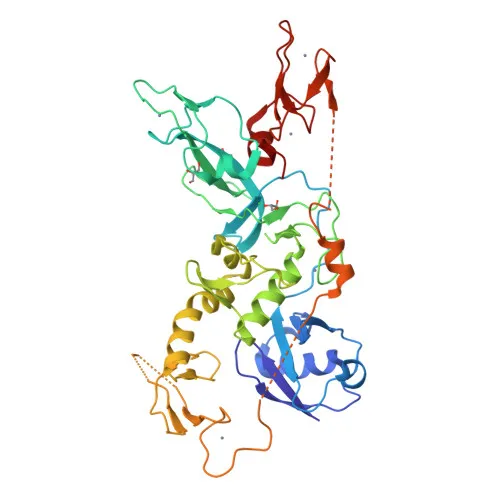
Polyclonal Antibodies
Anti-Human Parkin Polyclonal Antibody for WB, IHC-P, IF/ICC, ELISA - O60260
Item Number : CM0013191
Price varies based on specs and customizations
- Application
- WB, IHC-P, IF/ICC, ELISA
- Cross Reactivity
- Human, Mouse, Rat
- Protein Weight
- 52kDa

Shipping:
Contact us to get shipping details Enjoy On-time Dispatch Guarantee.
Why Choose Us
Easy ordering process, quality products, and dedicated support for your business success.
Core Product Specifications and Parameters
| Parameter | Value |
|---|---|
| Product Name | Human Parkin Rabbit pAb |
| Remarks/Alias | PDJ; AR-JP; LPRS2; PARK2; Parkin |
| Species | Human |
| GeneID (Human) | 5071 |
| GeneID | 5071 |
| Immunogen | Recombinant fusion protein containing a sequence corresponding to amino acids 1-387 of human Parkin (NP_004553.2) |
| Source | Rabbit |
| Category | Polyclonal Antibodies |
| Application | WB, IHC-P, IF/ICC, ELISA |
| Cross Reactivity | Human, Mouse, Rat |
| SWISS | O60260 |
| Protein Weight | 52kDa |
| Shipping | Ice bag |
Biological Background: Parkin Function and Localization
-
Parkin, encoded by the PRKN (PARK2) gene, is an E3 ubiquitin-protein ligase that functions within a multiprotein complex to catalyze the covalent attachment of ubiquitin moieties onto substrate proteins, mediating cellular processes including protein degradation, mitochondrial quality control, and cell survival. Related references: PMID:10888878, PMID:10973942, PMID:11431533
-
Parkin ubiquitinates a wide array of substrates, including SYT11, VDAC1, BCL2, CCNE1, GPR37, RHOT1/MIRO1, MFN1, MFN2, SNCAIP, TOMM20, and ZNF746; it can mediate monoubiquitination as well as various polyubiquitin chain linkages (Lys-6, Lys-11, Lys-48, Lys-63) depending on the cellular context. Related references: PMID:29311685, PMID:32047033, PMID:10888878, PMID:10973942, PMID:11431533, PMID:19229105, PMID:20889974, PMID:25474007
-
A key function of Parkin is to maintain mitochondrial integrity; upon mitochondrial damage, PINK1-mediated phosphorylation recruits Parkin to the outer mitochondrial membrane, where it ubiquitinates proteins to promote mitophagy and mitochondrial fission, thereby eliminating dysfunctional organelles. Related references: PMID:11439185, PMID:18957282, PMID:19029340, PMID:24660806, PMID:24784582, PMID:25474007
-
Parkin directly ubiquitinates mitochondrial outer membrane proteins such as TOMM20, MFN1, MFN2, MIRO1, and USP30, triggering mitophagy and preventing the fusion of damaged mitochondria with healthy networks; it also regulates mitochondrial motility via MIRO1 degradation. Related references: PMID:19029340, PMID:19966284, PMID:21753002, PMID:22396657, PMID:23620051
-
Beyond mitophagy, Parkin protects cells from apoptosis by monoubiquitinating BCL2 to promote autophagy, limiting mitochondrial calcium influx, and transcriptionally repressing p53; it may also function as a tumor suppressor. Related references: PMID:20889974, PMID:19801972, PMID:32047033, PMID:12719539, PMID:11439185
-
Homozygous or compound heterozygous mutations in PRKN are a major cause of autosomal recessive juvenile Parkinson's disease (PDJ); Parkin is highly expressed in the brain, especially in the substantia nigra, and its levels are reduced in the brain of PARK2 patients and in many tumors. Related references: PMID:9560156, PMID:12719539, PMID:14614460, PMID:19501131
Experimental Guidance and Technical Tips
- The immunogen covers the N-terminal 387 amino acids of human Parkin, suggesting the antibody may recognize multiple epitopes and could detect endogenous Parkin as well as recombinant protein.
- For Western blot, a band around 52 kDa is expected; however, minor bands may appear due to post-translational modifications or isoforms, and it is recommended to include appropriate controls (e.g., Parkin-knockout lysates).
- Given the cross-reactivity with mouse and rat, this antibody may be suitable for studying Parkin in rodent models of Parkinson's disease; consider validating the antibody in your specific tissue or cell system using IHC-P or IF/ICC, with co-staining for mitochondrial markers.
- Optimal working dilutions and conditions should be determined empirically for each application; initial dilutions of 1:500-1:2000 for WB, 1:50-1:200 for IHC-P, and 1:50-1:200 for IF/ICC are commonly used for polyclonal antibodies.
- For ELISA, the antibody can be used as a capture or detection antibody when paired with an appropriate secondary antibody; performance may vary with antigen presentation.
CamelBio: Your One-Stop Sourcing Bridge
CamelBio provides integrated access to IVD raw materials, technical support, and consulting services, supporting diagnostic manufacturers and research laboratories from concept to clinic. As a B2B partner, we offer validated antibody pairs, optimized polyclonal and monoclonal antibodies, bulk ancillary reagents, and sourcing for rare-target raw materials, including those for neuroscience and mitochondrial disease research. Our team can help streamline your procurement of Parkin antibodies and related reagents, accelerating your assay development and biomarker discovery programs.
Product Datasheet
Anti-Human Parkin Polyclonal Antibody for WB, IHC-P, IF/ICC, ELISA - O60260
REQUEST A QUOTE
Our professional team will reply to you within one business day. Please feel free to contact us!