Polyclonal Antibodies
Anti-Human Parkin Polyclonal Antibody for WB, IF, IHC, ELISA - O60260
Item Number : CM0018324
Price varies based on specs and customizations
- Application
- WB, IF-P, IHC-P, ELISA
- Cross Reactivity
- Human, Mouse, Rat
- Protein Weight
- 52kDa

Shipping:
Contact us to get shipping details Enjoy On-time Dispatch Guarantee.
Why Choose Us
Easy ordering process, quality products, and dedicated support for your business success.
Core Product Specifications and Parameters
| Parameter | Value |
|---|---|
| Product Name | Human Parkin Rabbit pAb |
| Remarks/Alias | PDJ; AR-JP; LPRS2; PARK2; Parkin |
| Species | Human |
| GeneID (Human) | 5071 |
| GeneID | 5071 |
| Immunogen | Recombinant protein | Recombinant fusion protein containing a sequence corresponding to amino acids 81-280 of human Parkin (NP_004553.2). |
| Source | Rabbit |
| Category | Polyclonal Antibodies |
| Application | WB, IF-P, IHC-P, ELISA |
| Cross Reactivity | Human, Mouse, Rat |
| SWISS | O60260 |
| Protein Weight | 52kDa |
| Shipping | Ice bag |
Biological Background: Parkin Function and Localization
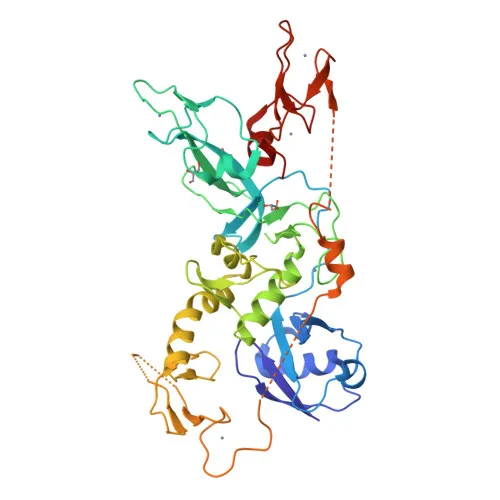
- Parkin (PRKN) is an E3 ubiquitin-protein ligase that functions in a multiprotein complex to attach ubiquitin to substrate proteins, including SYT11, VDAC1, BCL2, and many others. It can catalyze monoubiquitination and various polyubiquitin chain linkages (Lys-6, Lys-11, Lys-48, Lys-63) depending on the cellular context. Related references: PMID:10888878, PMID:10973942, PMID:11431533, PMID:19229105, PMID:20889974, PMID:25474007, PMID:29311685, PMID:32047033
- Parkin participates in the removal of aberrant proteins by mediating 'Lys-63'-linked polyubiquitination of misfolded substrates such as PARK7, targeting them to aggresomes for degradation. It also ubiquitinates a glycosylated isoform of SNCAIP, which may contribute to Lewy-body formation. Related references: PMID:17846173, PMID:19229105, PMID:11431533, PMID:11590439, PMID:15105460
- In partnership with PINK1, parkin coordinates mitochondrial quality control. Following mitochondrial damage, it is recruited to the outer mitochondrial membrane and promotes mitophagy by ubiquitinating proteins such as VDAC1, TOMM20, RHOT1/MIRO1, MFN1, and USP30. Related references: PMID:11439185, PMID:18957282, PMID:19029340, PMID:24660806, PMID:24784582, PMID:25474007, PMID:27534820, PMID:32047033, PMID:19966284, PMID:21753002, PMID:25621951
- Parkin regulates mitochondrial dynamics by promoting the degradation of fusion proteins such as MFN2, thereby preventing the refusion of damaged mitochondria. It also controls mitochondrial motility through the ubiquitination and subsequent degradation of MIRO1 and MIRO2. Related references: PMID:23620051, PMID:22396657
- Beyond mitochondrial maintenance, parkin limits reactive oxygen species, regulates cyclin-E during neuronal apoptosis, transcriptionally represses p53, and may act as a tumor suppressor and synaptic function modulator. Related references: PMID:18541373, PMID:12628165, PMID:19801972, PMID:12719539, PMID:11439185
- The protein is localized in the cytoplasm, cytosol, nucleus, endoplasmic reticulum, and mitochondria, and is enriched in neuronal projections and synapses.
- Parkin is highly expressed in the brain, heart, testis, and skeletal muscle, and is downregulated in tumors and absent in the brain of PARK2 patients. Related references: PMID:19501131, PMID:9560156, PMID:12719539, PMID:14614460, PMID:12628165
- Keywords include Parkinson disease, neurodegeneration, autophagy, zinc-finger, and phosphoprotein, highlighting its critical role in neuronal health and disease.
Experimental Guidance and Technical Tips
- The immunogen corresponds to residues 81–280, covering the N-terminal ubiquitin-like domain and part of the RING0 domain; this conserved region supports the reported cross-reactivity with mouse and rat.
- For Western blotting, expect a band at approximately 52 kDa. Validate specificity with appropriate positive and negative controls in your sample system.
- For immunofluorescence and immunohistochemistry, optimize fixation and permeabilization conditions, and confirm staining patterns in well-characterized tissues such as brain or skeletal muscle.
- In ELISA applications, this polyclonal antibody may serve as a capture or detection reagent; titrate to determine optimal working concentrations.
- Given parkin's central role in mitophagy and neurodegeneration, this antibody is well-suited for mechanistic studies in cell lines and rodent models.
CamelBio: Your One-Stop Sourcing Bridge
CamelBio serves as a comprehensive sourcing partner for IVD raw materials, offering validated antibody pairs, optimized polyclonal and monoclonal antibodies, bulk ancillary reagents, and rare-target sourcing. This anti-parkin antibody exemplifies our capability to supply key reagents for neurodegenerative disease research and mitochondrial biology. Our one-stop procurement support helps diagnostic developers and researchers streamline their workflow from concept to clinic.
Product Datasheet
Anti-Human Parkin Polyclonal Antibody for WB, IF, IHC, ELISA - O60260
REQUEST A QUOTE
Our professional team will reply to you within one business day. Please feel free to contact us!